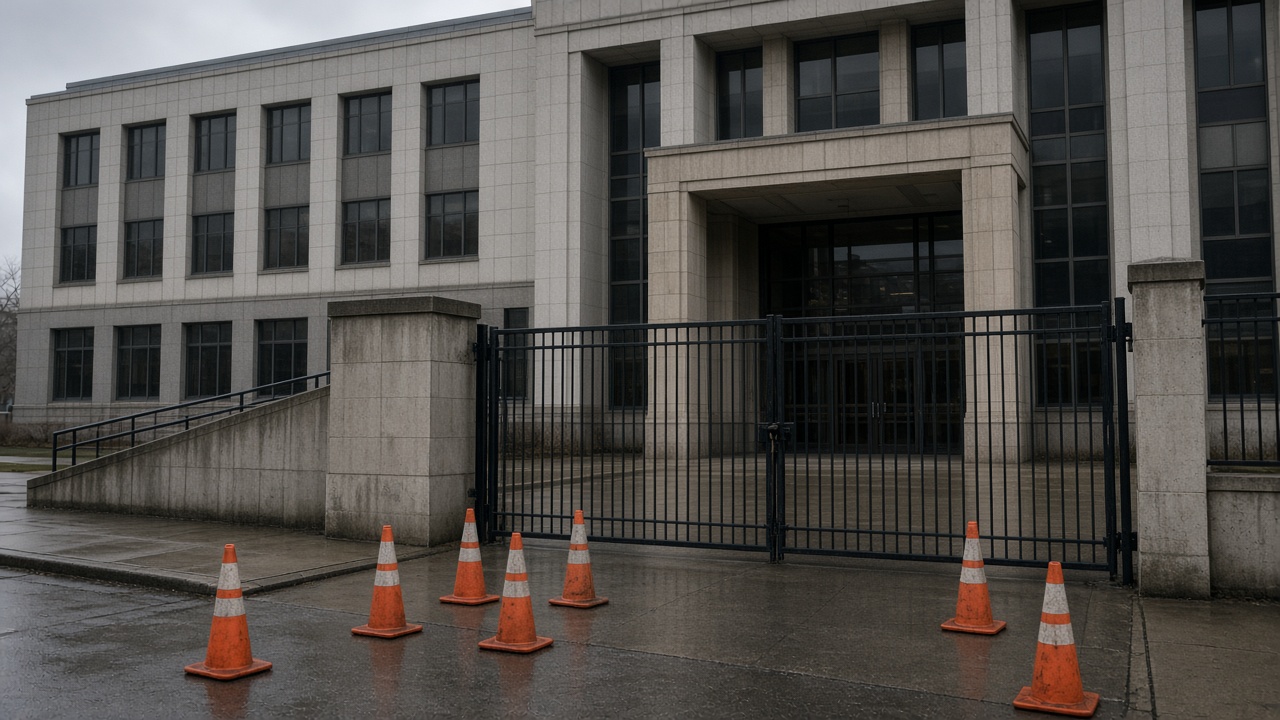
Congress missed a September 30 funding deadline, and by Saturday, October 3, the partial federal shutdown entered its third day with the E-Verify system that employers use to confirm work authorization sitting offline while hiring managers still face hard Form I-9 deadlines.
What stopped on October 1
Non-essential federal employees were furloughed at 12:01 a.m. Eastern on October 1 when lawmakers failed to pass a continuing resolution. Essential security and law-enforcement staff—including Transportation Security Administration screeners and air-traffic controllers—remain on the job without pay until appropriations return.
E-Verify, the web portal run by the Department of Homeland Security, stopped accepting new queries when the lapse began. Corporate immigration teams received guidance to continue onboarding but to note the outage and create cases retroactively once the system reactivates.
Employer paperwork that does not pause
Form I-9 rules still require employers to complete verification within three business days of a new hire’s start date. During past shutdowns, DHS has historically granted leeway after service restarts, but that flexibility is policy—not a statute employers can assume in advance.
Human-resources departments should document each hire with timestamps showing when E-Verify was unavailable, keep copies of List A or List B/C documents used for manual review, and avoid delaying start dates solely because the portal is dark unless counsel advises otherwise for regulated contractors.
Immigration backlogs beyond I-9
Consular affairs remain funded through fees, yet passport offices located in shuttered federal buildings may limit walk-in hours. Employers sponsoring foreign workers should expect slower responses on optional practical training and status extensions if USCIS service centers are short-staffed.
PERM labor certifications and immigration court hearings can slip when support staff are furloughed. Legal teams are advising clients to file time-sensitive petitions early and to keep travelers’ original documents accessible in case appointments reschedule with little notice.
Political clock
Negotiations in the House and Senate hinge on spending levels and policy riders tied to the midterm calendar. Each party is framing the lapse as proof the other side will not fund border security or domestic programs, but for payroll departments the fight is operational: every day E-Verify stays down adds another stack of pending cases to reconcile when the lights return.
State and local governments are not directly funded by the lapse, but grants that flow through federal agencies can freeze, affecting highway projects and public-health hires that depend on Washington matching funds.
Checklist for Monday morning
Assign one owner to monitor the E-Verify and USCIS home pages for restoration announcements. Batch-create pending cases the same hour service returns to avoid a week-end backlog, and communicate with new hires in writing that their employment start is not contingent on a government website’s uptime—even when verification must still be completed.
Contractors and grant-funded hires
Federal contractors must still meet Defense Contract Audit Agency and agency-specific flow-down clauses even when government contracting officers are unreachable. Legal teams are telling clients to document every attempt to reach contracting officers about stop-work orders versus continued performance.
Public universities that rely on NIH or NSF grants may see payment systems stall even when campus HR keeps hiring faculty. Research labs should check whether subawards require E-Verify on postdocs paid through federal pass-through accounts.
Payroll and benefits continuity
Furloughed federal workers lose paychecks until retroactive funding passes, a pattern Congress has followed in past lapses but never guarantees in advance. Essential employees working without pay can strain household budgets within two weeks, which local credit unions and utilities sometimes address with skip-a-pay programs announced city by city.
Members of Congress still draw salaries during shutdowns under the Constitution’s compensation clause, a fact constituent services offices brace for when angry callers compare their empty pay stubs with lawmakers’ uninterrupted direct deposit.