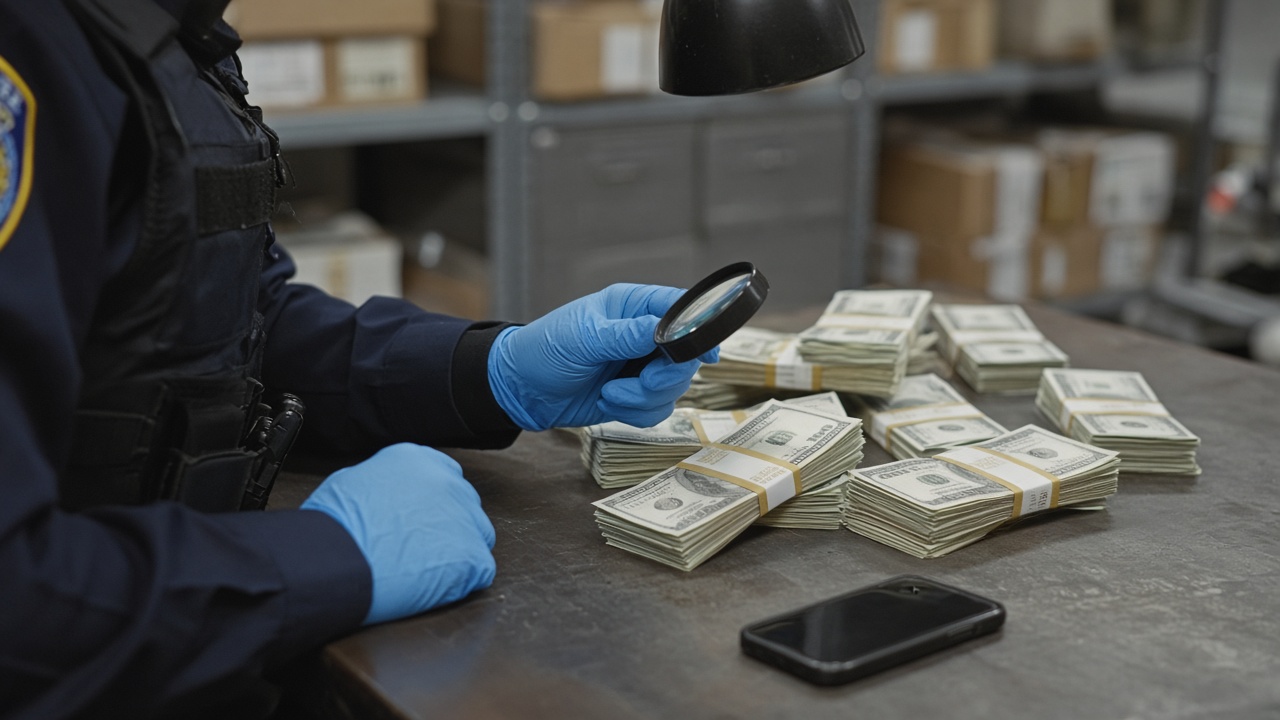
Taoyuan prosecutors charged three suspects Saturday with printing and distributing counterfeit NT$1,000 notes after convenience-store clerks in Zhongli flagged mismatched serial fonts on bundles customers tried to break for change, according to an indictment summary city police posted. Investigators said the ring marketed “training props” in encrypted messaging apps, then shipped dyed paper stacks via courier lockers to buyers who resold them to night-market gamblers.
How clerks caught the notes
Two FamilyMart cashiers triggered silent alarms when ultraviolet strips failed on otherwise convincing portraits. Central Bank anti-counterfeit guides teach frontline staff to compare micro-lettering on the lower border; these notes used laser printers that blurred the strokes. Police matched courier receipts to a Taoyuan warehouse lease signed under a shell tutoring company.
Detectives seized NT$4.6 million in face-value counterfeits, though experts said effective circulation was lower because many sheets were unfinished without holographic bands.
Messaging-app sales pitch
Undercover officers joined a channel advertising “movie money” discounted 30 percent against face value. Sellers required cryptocurrency deposits and banned screenshots. When a buyer complained about color fading, moderators threatened to leak chat logs—a tactic investigators used to secure platform metadata from a Taiwanese exchange compliance team.
The case is separate from Criminal Investigation Bureau warnings about fake .gov.tw cash-handout pages ahead of stimulus debates; this ring targeted physical notes, not phishing links.
Penalties and deterrence
Counterfeiting currency carries heavy prison terms under Taiwan’s Criminal Code. Prosecutors are seeking asset freezes on courier accounts and the warehouse landlord’s security deposit. Central Bank officials asked retailers to keep UV pens stocked after Mid-Autumn cash spikes.
What shoppers should do
Police urged residents to refuse torn or waxy notes from strangers splitting large bills at night markets. Legitimate change-making should happen at bank counters or stored-value kiosks with recorded transactions.
Until trials conclude, the public safety message is narrow but concrete: Taoyuan police linked messaging-app sales to counterfeit NT$1,000 bundles, and clerks who read Central Bank typography guides stopped the notes before they spread.