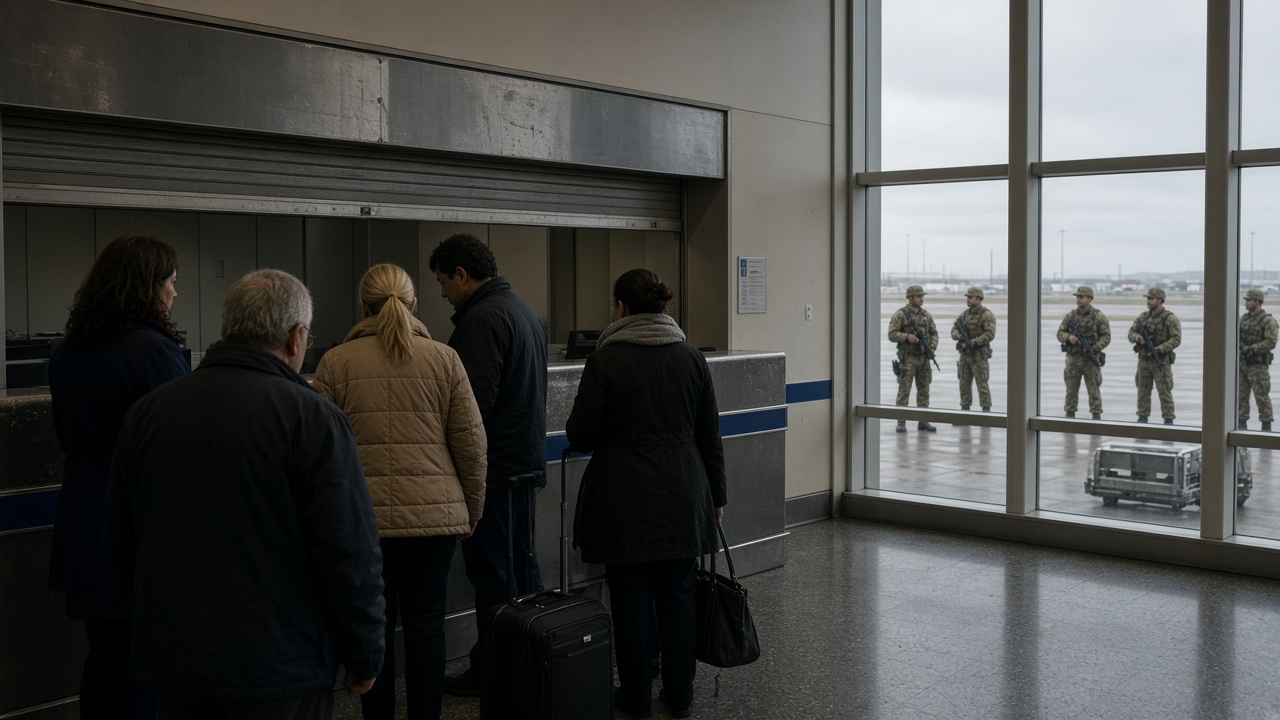
Ethiopian federal forces have regained control of the airport serving Mekelle, the capital of the northern Tigray region, according to several people in the city who spoke to The Associated Press on Saturday. The accounts, which could not be independently verified, describe a reversal of the runway seizure that forced Ethiopian Airlines to halt commercial service to Tigray and deepened fears that a 2022 peace deal is unraveling.
What residents reported
Those who provided the information declined to be named, citing uncertainty over who held which parts of the city and the risk of reprisal. They said federal units were again in charge of Alula Aba Nega Airport, the main air link for a region still recovering from a two-year war that killed hundreds of thousands of people by many estimates.
It was not immediately clear when federal forces recaptured the airfield. Tigray People's Liberation Front fighters took the airport on Sept. 23, according to prior reporting from the city, prompting the flag carrier to suspend flights to Mekelle as well as to Axum and Shire. The African Union urged restraint after that takeover, warning that renewed tension threatened the Pretoria agreement that ended open fighting between federal troops—backed by Eritrea and allied militias—and the TPLF.
Aviation and isolation
Ethiopian Airlines has not announced a restart of Mekelle service. For civilians, the suspension compounds disruptions to banking, communications and other basic services that residents described to the AP earlier in the week. Some said roads connecting Tigray with the neighboring Afar region had been closed to civilian traffic, though the news agency could not confirm those closures on the ground.
Commercial aviation is often the first service to disappear when control of a provincial capital shifts, and the quickest signal to diplomats that a truce is failing. Aid groups have warned that even brief closures lengthen delivery times for medical supplies in a region where malnutrition rates never fully normalized after the last war.
Political stakes for Abiy
Prime Minister Abiy Ahmed has spent much of the past year trying to bring Tigray's leadership to heel after TPLF chairman Debretsion Gebremichael openly challenged his authority. Federal offensives since the summer have not produced a durable settlement; instead, they have revived images of siege—closed runways, contested checkpoints and anonymous casualty reports from both sides.
Ethiopian government spokespeople did not issue a detailed battlefield statement about the airport in the hours after the AP published its Saturday dispatch from Kampala. Eritrea's role in any new federal push remains opaque, though Asmara backed Addis Ababa during the 2020–2022 conflict and has not publicly broken with Abiy since.
What monitors are watching next
Diplomats will look for three concrete signs before treating Saturday's accounts as a turning point: an Ethiopian Airlines schedule update, an AU or U.S. statement on humanitarian corridors, and verifiable movement of aid trucks through Afar. Without at least one of those, the runway may simply change hands again—as it did when Tigrayan forces first occupied the terminal late last month.
For now, the reported federal presence at Alula Aba Nega is less a declared victory than a fragile fact on the ground. Mekelle's residents, still largely cut off from the banking system and from routine flights, have little visibility into whether the next development is a ceasefire line or another escalation toward the city's outskirts.