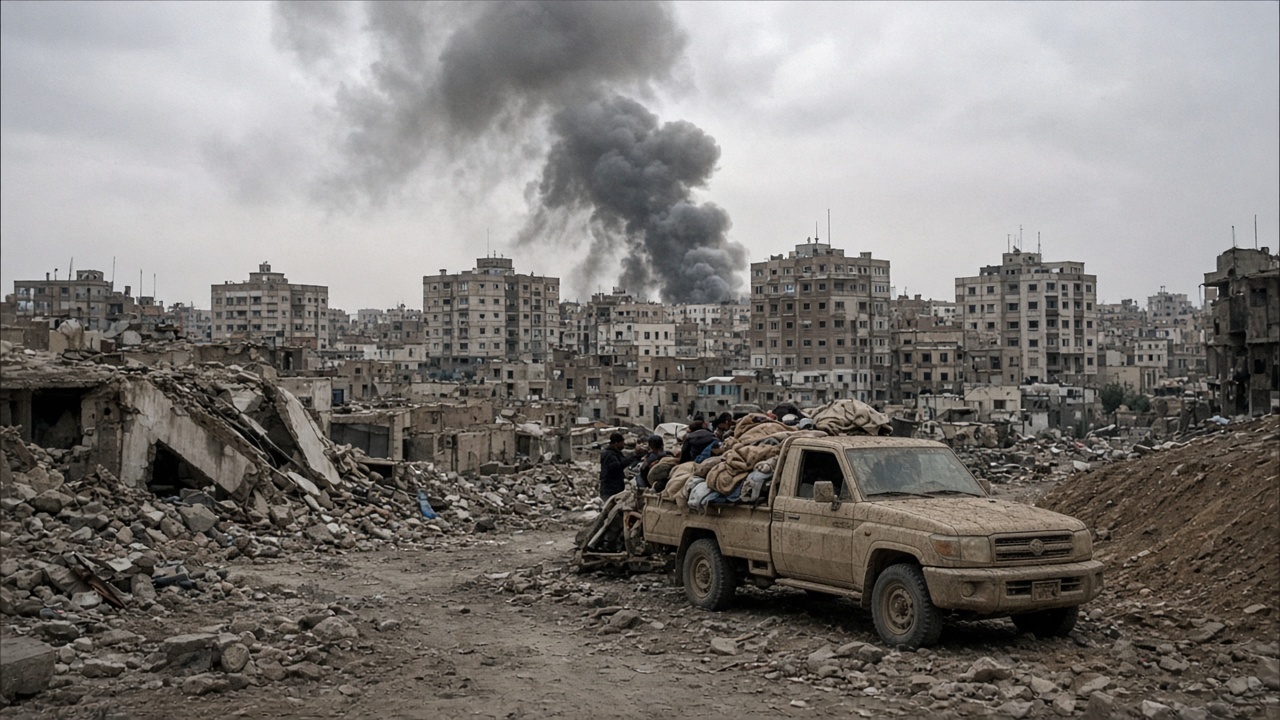
Forces aligned with Yemen’s internationally recognised government carried out air attacks on Sanaa early Sunday as fighting between the Iran-backed Houthis and the Saudi-led coalition escalated for a third straight weekend, according to regional broadcasters and Houthi-run media.
The strikes on the rebel-held capital came hours after Houthi military spokesman Yahya Saree claimed a separate barrage against energy infrastructure in Riyadh, a claim Saudi officials have not confirmed. On the ground, spokesmen for government troops said coalition aircraft and artillery hit Houthi reinforcements on the Tor al-Baha front and along the Taiz axis, part of a broader push to roll back rebel gains since a 2022 truce collapsed in July.
Displacement climbs as front lines shift
Al Jazeera correspondents reporting from southern Yemen described families leaving districts north of Aden with mattresses and cooking pots, joining informal camps that have expanded as shelling moved closer to transit corridors. The United Nations and Red Cross have not published fresh displacement totals for the weekend, but field workers in Aden said arrivals spiked after Houthi forces seized the port of Mocha and nearby islands in the Bab al-Mandeb strait in mid-September, a choke point for oil and container traffic.
Colonel Majed Abdullah al-Nazili, a spokesman for government forces, told Saudi state media that coalition units conducted 97 “precise targeting operations” in a 24-hour window ending Sunday morning. He said the strikes killed or wounded at least 260 Houthi fighters and destroyed or disabled 44 vehicles. Those figures could not be independently verified, and the Houthis rarely disclose their own casualties.
Regional stakes beyond Yemen’s borders
The renewed violence intersects with wider Middle East tensions. U.S. President Donald Trump told reporters Saturday that Washington would soon decide its next steps toward Iran, while Defense Secretary Pete Hegseth said the Pentagon was keeping military options open. Iran has armed and advised the Houthis for years, and Gulf capitals treat rebel missile and drone launches as an extension of Tehran’s reach into the Red Sea.
Commercial insurers have already widened war-risk premiums for vessels transiting the Bab al-Mandeb, and shipping executives said some operators were routing around Africa rather than accept delays from Houthi harassment. Even when strikes miss tankers, the uncertainty feeds into diesel and crude benchmarks that European and Asian refiners watch closely.
What negotiators face now
United Nations envoy offices have not announced a new round of talks, and both sides appear to be bargaining with battlefield facts. Government officials say they will not accept a partition that leaves the Houthis in control of Yemen’s western ports, while rebel leaders frame the Saudi air campaign as proof that Riyadh cannot secure its own territory.
Humanitarian agencies warn that any prolonged siege of Sanaa would compound fuel and food shortages in a country where millions already depend on aid. For now, the immediate question is whether coalition forces can translate air sorties into durable gains south of the capital—or whether the pattern of quick Houthi counterattacks that followed the Mocha offensive will repeat along the Aden approaches.