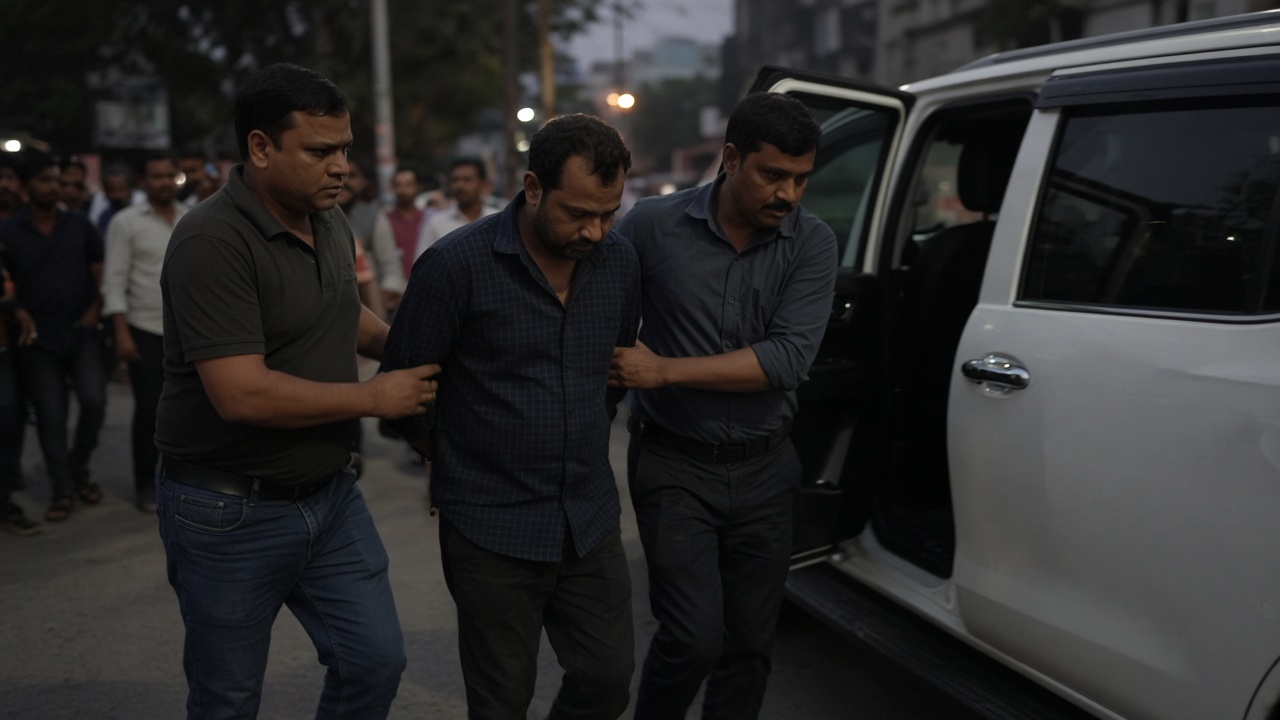
Assam police arrested two men, including a retired army jawan who was still employed on a contractual basis with the military, after central agencies passed intelligence alleging the pair shared security-related information with contacts in Pakistan, Chief Minister Himanta Biswa Sarma said on Sunday.
The state's Special Task Force picked up a 31-year-old Bihar resident from a rented house in Guwahati during the night between Friday and Saturday, according to a police statement. Sarma told reporters that investigators believe the men were in touch with Pakistani handlers and that details about troop movements were among the material at issue. The suspects will be handed to federal agencies, he said.
How the operation unfolded
Assam Police said the STF acted on inputs from central security agencies. Officers recovered a mobile phone, SIM cards and documents during the search, the force said, adding that questioning was continuing. Police did not name either suspect in the public statement, consistent with Indian practice while espionage probes are active.
Sarma's account aligned with the police timeline: the Guwahati arrest followed what he described as coordinated intelligence work rather than a chance detention at the border. He did not specify which formation's movements were discussed, but northeastern India hosts multiple army and paramilitary deployments along sensitive corridors facing China and Myanmar as well as the wider Indo-Pakistani security picture.
Why the jawan detail matters
Retired personnel who return as contract workers often retain access to installations, convoy schedules or logistics networks that outsiders lack. India's defence ministry has tightened vetting after several honey-trap and social-media recruitment cases in recent years, but state leaders said Saturday's arrests show gaps remain when individuals move between formal service and short-term contracts.
Federal investigators from the National Investigation Agency and military intelligence typically take over cross-border espionage files once state police establish initial custody. Sarma said Assam would transfer the men once paperwork is complete, signalling that New Delhi—not Dispur—will drive any prosecution under the Official Secrets Act or related statutes.
Regional security context
The arrests land amid renewed diplomatic friction with Pakistan. India and Pakistan summoned each other's diplomats last week after the Border Security Force said it killed two men attempting to cross the Punjab border, a claim Islamabad rejected as the killing of unarmed civilians. Espionage allegations on Indian soil add another layer to that tension without directly linking the Guwahati case to the border incident.
Assam itself has seen periodic counter-intelligence activity because Guwahati is a hub for personnel transiting the northeast. Security analysts cautioned against treating a two-person detention as proof of a wider network until federal charges spell out evidence, but they said the combination of a former jawan and alleged Pakistan contact will trigger reviews of contract hiring practices.
What happens next
Prosecutors must decide whether to file formal charges within the statutory custody window or seek remand extensions while digital forensics run on seized devices. Sarma promised further disclosures if the central probe clears public release, but officials stressed that operational details may stay classified.
For residents in Guwahati, the episode is a reminder that espionage cases are not confined to border districts. For the army, the priority will be auditing who still holds access badges after retirement—and whether contract roles need the same counter-intelligence screening as active-duty postings.