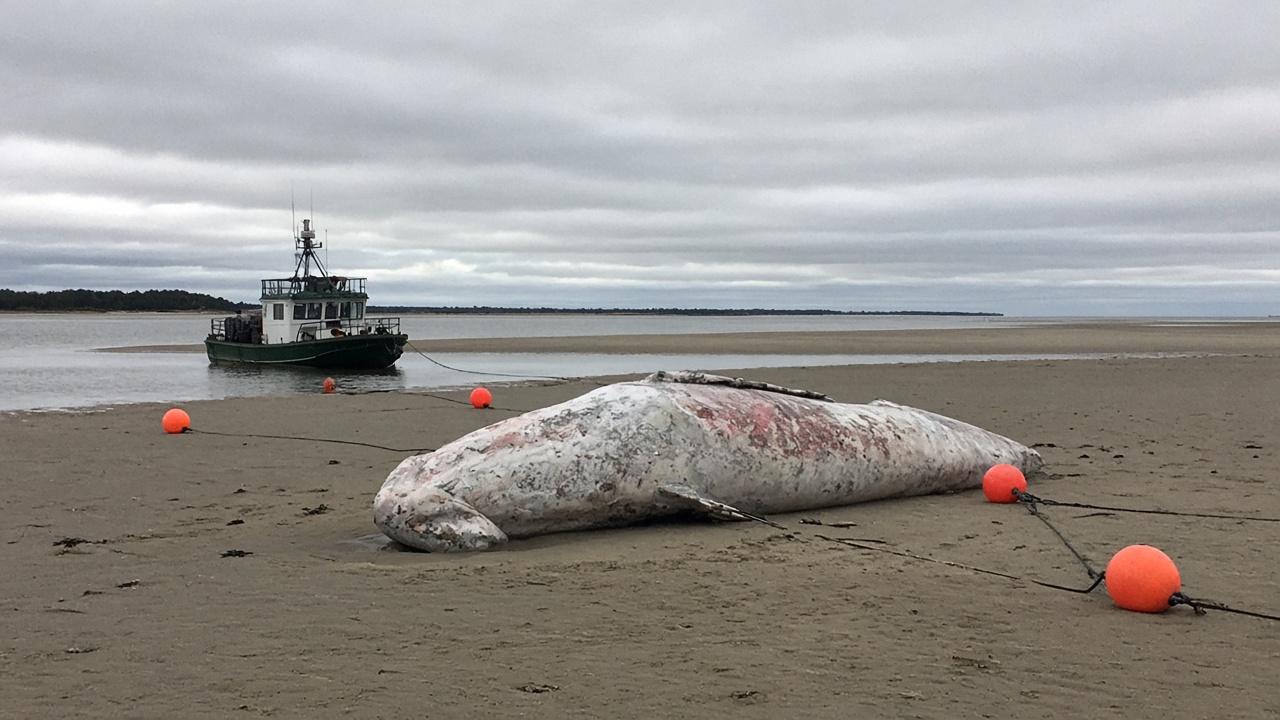
Authorities removed a dead juvenile humpback whale from a sandbar on the Clarence River near Iluka on Sunday afternoon, more than 24 hours after volunteers first reported the carcass west of the coastal town on the New South Wales Mid North Coast. The operation followed Shark Smart warnings about increased shark activity and advice from marine scientists that decomposing tissue could draw predators toward river mouths and nearby beaches during the long weekend.
How the whale reached the sandbar
Volunteer group ORRCA told ABC News it was notified about 1:30 p.m. on Saturday. Responders initially hoped the animal might be stranded alive, but found it had already died. Macquarie University marine biologist Culum Brown said he was surprised the whale had traveled roughly 11 kilometers up the Clarence, a distance that suggests it may have been unwell before it settled on the bar. Crown Lands, which manages the waterway with the Department of Primary Industries and Regional Development, organized the removal and towed the carcass out to sea.
Photographs published by the ABC showed the whale partially submerged on a narrow sand strip, with onlookers kept back as machinery prepared the lift. Brown said oils and fluids from a whale left in place for a day would “leach all sorts of good smells” into the water—signals sharks can detect from long distances. He recommended keeping people out of the river and adjacent surf for about a week, acknowledging that was unwelcome news during a holiday weekend.
Official warnings and local response
The Department of Primary Industries and Regional Development posted on Shark Smart social channels that increased shark activity had been reported in the area. Iluka, at the mouth of the Clarence, is a popular fishing and swimming spot where river current meets ocean swell. Local residents told the ABC they had watched the carcass from the shore while authorities assessed whether towing was feasible without breaking the body apart in shallow water.
Brown noted that even after removal, residual scent plumes can linger in estuaries with limited flushing. Unlike an open-coast stranding that might be dispersed by surf, a river bar can concentrate attractants along channels boats and swimmers use daily. Surf clubs and charter operators along the Clarence were left to relay the scientist’s caution until water-quality and wildlife officers clear routine monitoring.
What swimmers should expect
No additional shark encounters were confirmed in public statements on Sunday, but wildlife agencies typically extend advisory periods after whale removals because verification takes time. Crown Lands did not immediately publish a timeline for reopening advice, and the ABC reported the tow completed Sunday afternoon. For Iluka, the episode underscores how a single carcass can shift risk calculations for an entire estuary: the whale is gone, but the biochemical trail it left behind is the hazard officials are now managing into the new week.