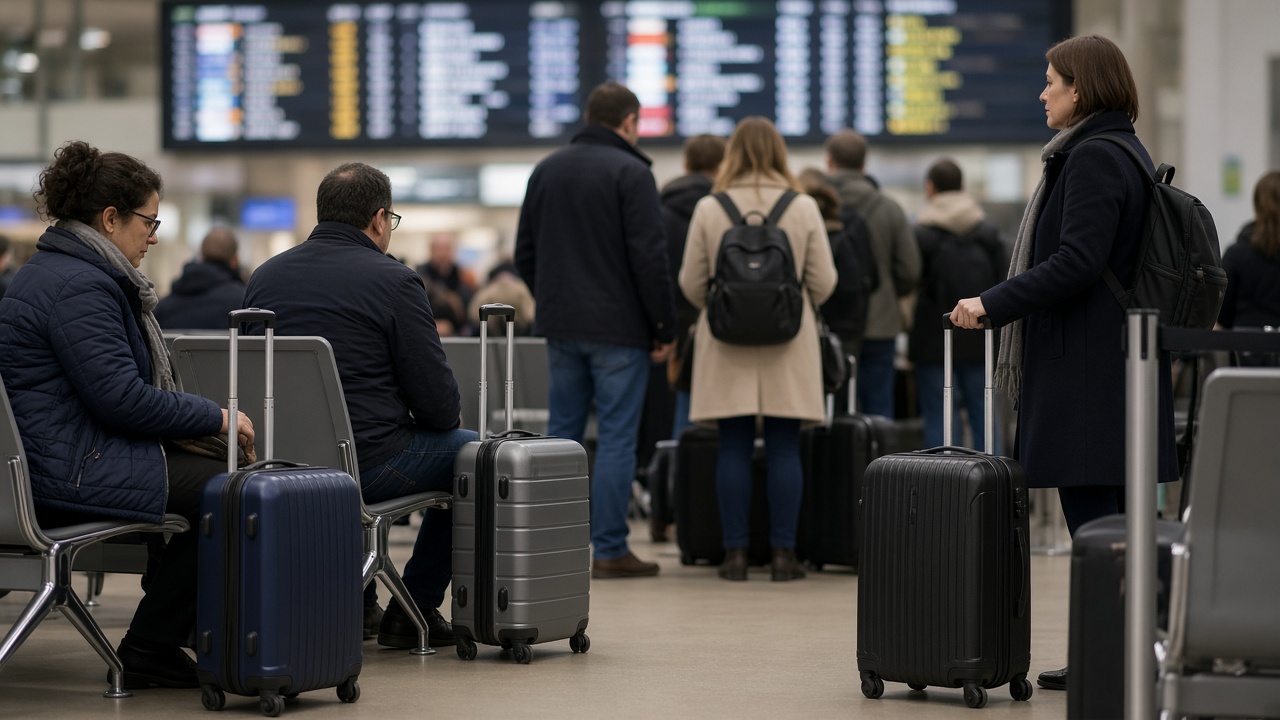
The U.S. Department of Transportation will narrow airline liability for some flight disruptions starting Oct. 19, reclassifying ten delay triggers so carriers are no longer automatically required to provide hotel rooms, meal vouchers, or cash compensation when those events occur.
What changes on Oct. 19
Under the revised framework reported by consumer advocates and local news outlets, disruptions caused by aircraft cleaning after a passenger death, extreme-weather damage to planes, baggage-system outages, cybersecurity attacks, government IT failures, overheated brakes, unscheduled maintenance, medical emergencies, unruly passengers, and airport closures tied to volcanic ash or wind shear will no longer be presumed “controllable” by the airline.
That distinction matters because DOT’s automatic refund rule for canceled or significantly changed flights still applies broadly, but the extra assistance passengers received during long controllable delays—think hotel blocks after a midnight cancellation—can disappear when the cause shifts categories.
What travelers keep
Carriers must still refund refundable fares when they cancel a flight, and credit-card trip protections may cover meals or hotels even when federal rules do not. Document everything: screenshot the delay code in the airline app, save texts about rebooking, and note the agent’s name if you are offered a voucher instead of a refund.
Children and basic economy tickets follow the same refund standards as other fares when the airline cancels, but change fees for voluntary moves remain unless your fare class includes flexibility.
Holiday booking stakes
October is when many families finalize Thanksgiving and December itineraries. If you are buying tickets now, compare policies on the carrier’s contract of carriage page, not just the marketing summary. Budget airlines that already offered minimal amenities may change little; full-service carriers could reduce discretionary vouchers now that weather-adjacent events sit outside the mandatory list.
Check the credit card used for purchase, too. Premium travel cards often include trip-delay insurance after a six- or twelve-hour threshold, independent of DOT classifications.
This weekend’s operations picture
Separately, the Federal Aviation Administration’s Sunday morning national status report flagged possible ground-delay programs later in the day for Boston, San Diego, Reagan National, Seattle, Atlanta, Orlando, and Tampa as autumn weather and runway work stack up. Disruptions from FAA programs still differ legally from airline mechanical cancellations, so save boarding passes and delay notifications if you plan to dispute charges.
The Oct. 19 rule change does not eliminate passenger rights entirely, but it shifts the burden to prove an airline could have prevented a delay. Travelers who assume every overnight stranding comes with a hotel coupon should read the fine print before the holiday rush—and pack a backup charger while they are at it.