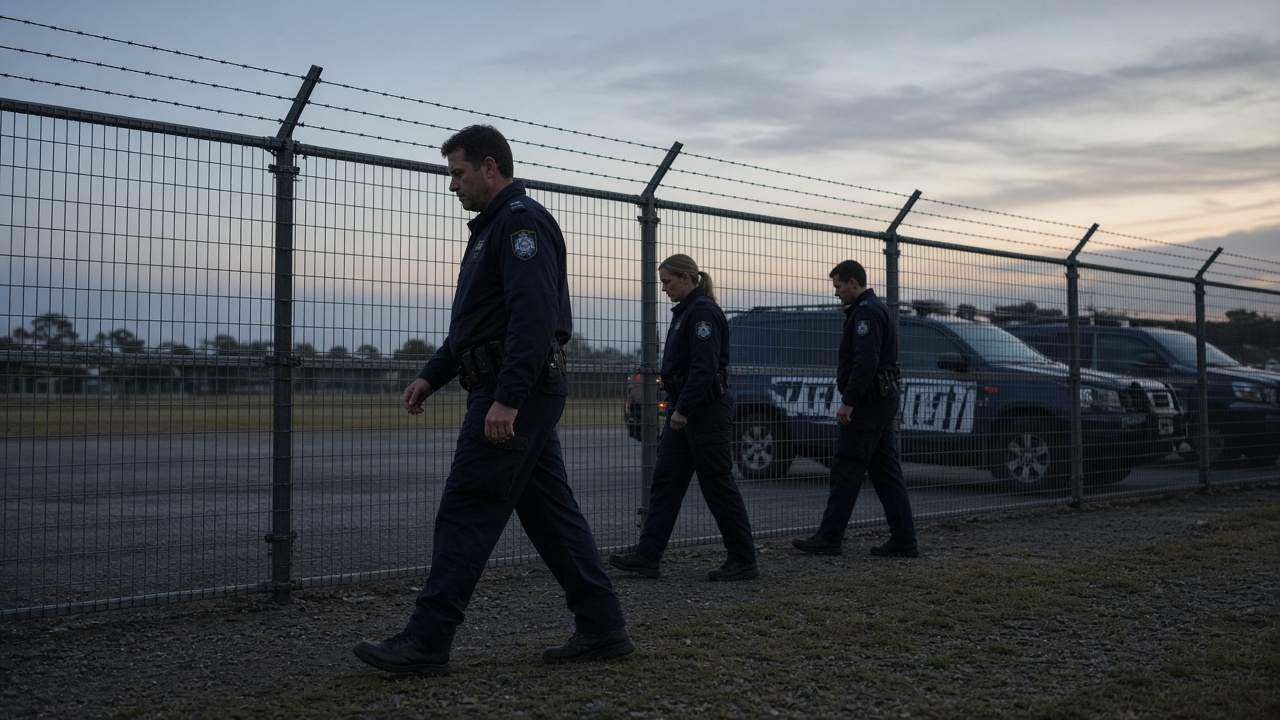
Australian Federal Police have confirmed that counter-terrorism investigators are examining the accused flydubai co-pilot’s years in Melbourne, opening a domestic thread in a case that began when flight FZ1073 plunged thousands of feet before an emergency landing in Saudi Arabia.
The Victorian Joint Counter Terrorism Team — comprising AFP, Victoria Police and the Australian Security Intelligence Organisation — is probing whether the Omani national was radicalised during a student visa stay from 2015 to 2017, sources familiar with the inquiry told Australian media on Sunday. Authorities stressed the work is ongoing and that any public update would come “at an appropriate time.”
What happened on the Tel Aviv-bound flight
The incident unfolded on a flydubai service headed for Tel Aviv with 174 people aboard. UAE prosecutors have said the co-pilot used a crash axe to attack the captain in what they described as an attempted hijack and terrorist act; the aircraft dropped roughly 14,000 feet in under thirty seconds before diverting to Tabuk in north-western Saudi Arabia. Both pilots survived, though the captain was stabbed.
International outlets have widely named the co-pilot as Hammam al-Hammami. The Guardian and ABC reported that Australian agencies are now mapping his travel and education history after it emerged he held a student visa issued in 2014 and studied in Victoria before leaving in 2017. His visa was cancelled in 2019 for failing to maintain enrolment, not initially on character grounds, the ABC reported.
Why Australia opened a file
Canberra routinely traces foreign nationals who spent formative years in the country when overseas attacks raise terrorism questions. ASIO’s involvement signals intelligence officers are reviewing associations, online activity and any contact with extremist networks during the Melbourne period — standard procedure, but politically sensitive given the scale of the alleged mid-air assault.
Prime Minister Anthony Albanese and Home Affairs officials have not detailed findings. The inquiry sits alongside the UAE criminal prosecution and flydubai’s internal safety review. For Australian regulators, the case also revives debate over how student visa compliance data is shared when enrolment lapses but no security flag was raised at the time.
Aviation security ripples
Airlines and regulators worldwide tightened cockpit-access rules after the Germanwings disaster; an axe attack between pilots on a low-cost carrier bound for Israel tests a different vulnerability set — trusted crew members and emergency tools kept aboard for firefighting. Flydubai has not publicly commented on procedural changes since the Tabuk landing.
Australian travellers are unlikely to see immediate policy shifts from a single overseas prosecution, but security agencies may brief carriers on red-flag patterns if the JCTT uncovers domestic contacts. Insurance and liability lawyers will also watch whether victims sue in Australian courts based on the attacker’s prior residency.
What investigators are likely to ask
Former counter-terrorism investigators say the team will reconstruct the co-pilot’s Melbourne timeline: housing, mosques or community groups, flight-school classmates, and any prior police interactions. They will compare that picture with material seized by Emirati authorities and intelligence shared through Five Eyes channels.
Until those threads converge, Australia’s public position remains narrow: the JCTT is active, the man’s visa history is documented, and radicalisation during his student years is a hypothesis under test — not a finding. The next visible milestone may be a UAE court appearance or an AFP statement if domestic links crystallise into charges or preventative orders.