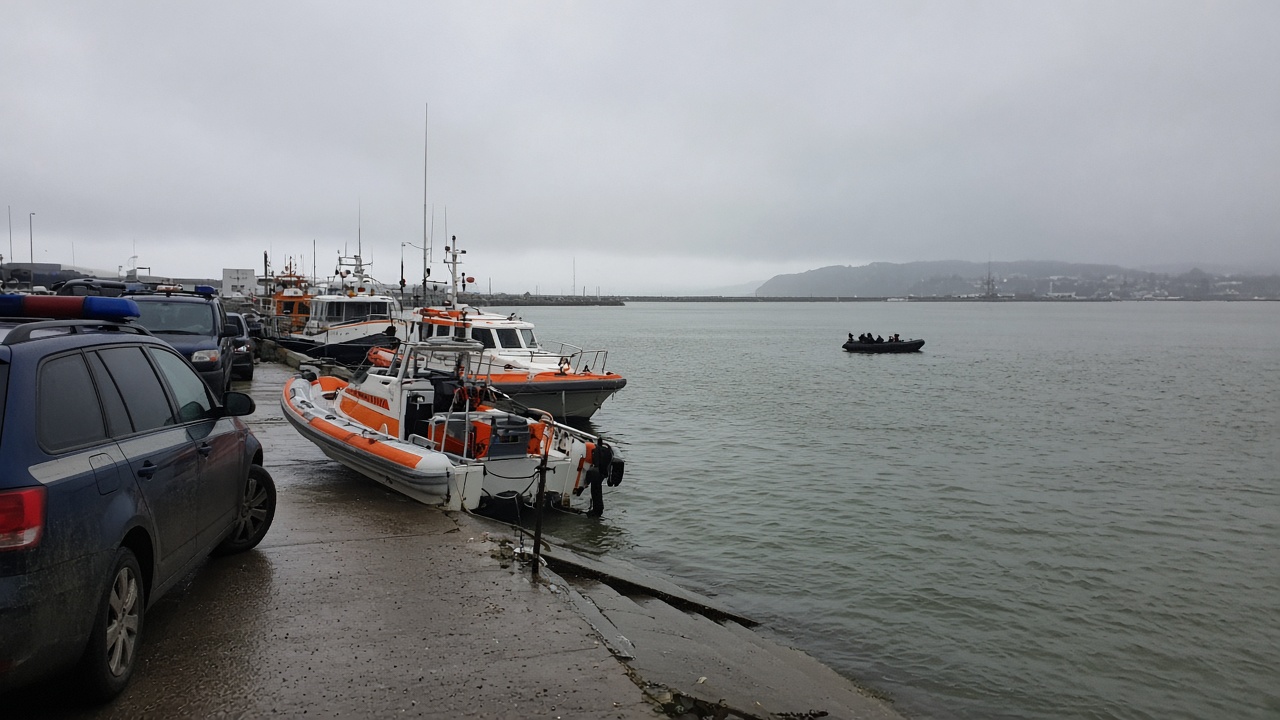
A small boat carrying about 120 people appeared to be heading for Gosport on Sunday afternoon, drawing Royal National Lifeboat Institution crews, Hampshire Police and a crowd of anti-migration protesters to the Hampshire coast in one of the year's most westerly Channel arrivals.
Ship-tracking data suggested the dinghy left near Utah Beach in Normandy on Sunday morning, according to BBC reporting, and was later shadowed by French rescue vessels before entering waters off Gosport. French media put the head count at roughly 120. The Border Security Command monitors crossings around the clock, a Home Office spokesperson said, adding that it remains "vital we continue to detain, check and process every small boat arrival."
Police powers and the shore scene
Hampshire Police said officers were deployed to Gosport to "support our partners in the event of an emergency at sea." The force imposed conditions under the Public Order Act and invoked powers prohibiting face coverings in the area. A cordon was placed on Haslar Road, where protesters and police faced off for much of the afternoon.
Witness accounts described a mostly peaceful atmosphere punctuated by chants of "shame on you" and "deport the lot" as some demonstrators blocked police vans from advancing. Ambulances and coaches were also reported in the area, standard contingency when a large boat is expected to land. Similar scenes unfolded last month when protesters massed in Gosport expecting an arrival that was ultimately taken to Dover instead.
Why this crossing stands out
Departures far west along the south coast have been uncommon in recent years, yet this was the third such attempt in about a month, underscoring how smuggling networks continue to probe new landing points even as overall numbers fall. The provisional total for Channel crossings in 2026 stood at 19,451 by Sunday — down 43 percent on the same point last year and 23 percent below the 2024 pace, according to Home Office figures cited by the BBC.
The politics around each arrival remain heated. Reform UK and other groups have used western landings to argue that enforcement is failing, while charities warn that confrontational protests risk inflaming tensions when exhausted passengers — including children — step ashore. Sunday's standoff in Gosport offered another example of how migration policy plays out street by street, not only in Westminster committees.
What happens after landing
When a boat is intercepted inshore, Border Force and immigration officials typically transfer occupants to processing centres for security screening and asylum interviews. The Home Office did not confirm on Sunday evening whether the Gosport-bound vessel had been brought ashore in Hampshire or redirected, as happened during last month's false alarm.
Regardless of the final landing site, the episode adds pressure on Andy Burnham's government to show it can manage both humanitarian obligations and public order on the coast. Ministers have invested in drones, joint patrols with France and faster returns agreements, yet each high-visibility arrival still tests local police capacity and the government's promise to "stop the boats" without abandoning legal routes for refugees.
For Gosport residents, the day ended with uncertainty about whether the dinghy would dock locally or be escorted eastward. For the passengers at sea, the immediate question was simpler: whether they would reach dry land before nightfall, and whether the reception waiting on shore would be rescue workers or a political confrontation.