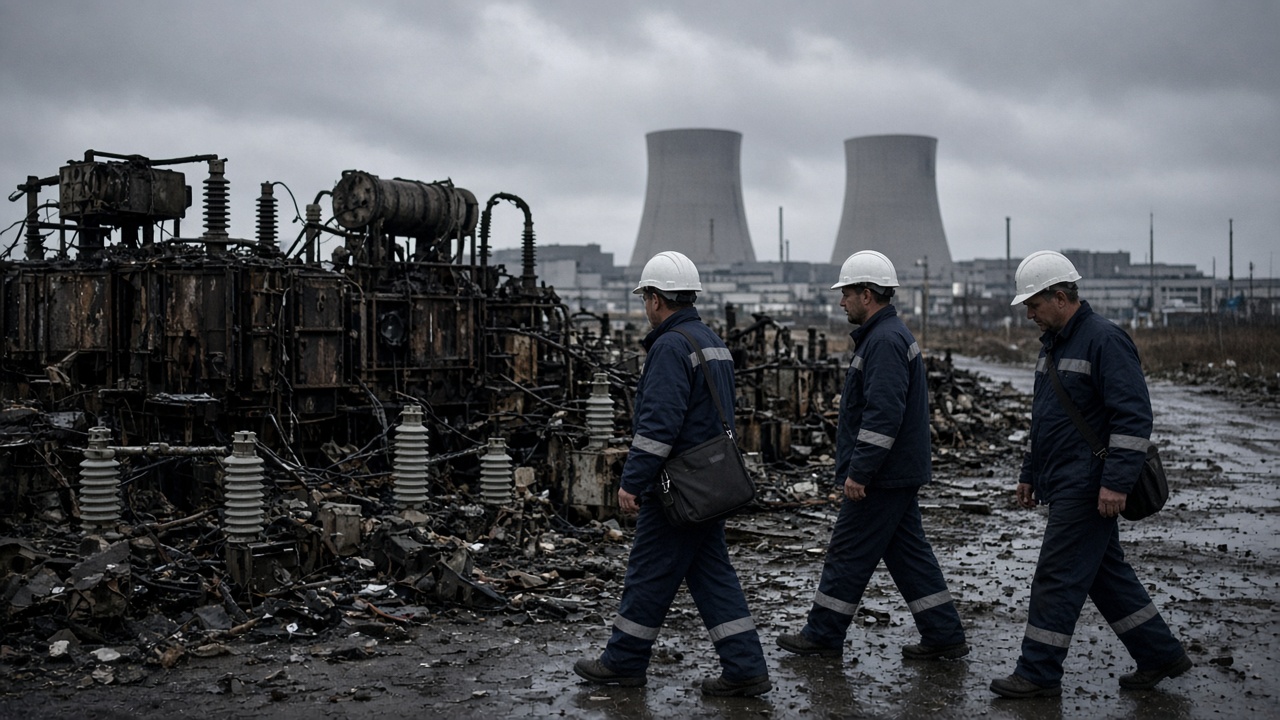
The International Atomic Energy Agency said Saturday that Director General Rafael Grossi is negotiating a new localized ceasefire between Russia and Ukraine so repair crews can reach the Zaporizhzhia Thermal Power Plant, whose transformers feed off-site electricity to the Zaporizhzhia Nuclear Power Plant. The agency said it wants the pause in place soon and described the arrangement as the eighth IAEA-brokered local truce aimed at keeping external power connected to the occupied station.
What the agency says was hit
In a statement posted on social media, the IAEA said it had been informed of drone attacks in recent weeks that “further threatened nuclear safety and security” at the ZNPP. It listed strikes on Sept. 19, 20 and 27 against the nearby thermal plant, reporting damage to transformers that are important for supplying off-site power to the nuclear site. The six-reactor ZNPP has lost external power repeatedly since fighting intensified around Enerhodar; IAEA monitors have been on site since September 2022.
The agency also cited a Sept. 22 attack that “reportedly disabled an off-site radiation monitoring station,” reducing the ability to track readings near the plant, and said other strikes damaged buildings in Enerhodar, where many plant staff live. Grossi called attacks that endanger nuclear safety “completely unacceptable” and urged “maximum military restraint” around the plant and its power infrastructure.
Why diesel and grid lines still matter
A separate IAEA update on Oct. 2 underscored how tight the margin has become. Grossi said the ZNPP was weighing whether to keep fewer emergency diesel generators on automatic standby because diesel reserves remain low after the plant ran on backup generators for nearly three weeks during extended off-site power losses in August and September. Replenishment has been slowed by military activity, he said.
The plant has suffered 10 off-site power losses since June alone, according to the agency, and currently relies on a single 330-kilovolt line. Maintenance on higher-voltage switchyard equipment was postponed, the IAEA team reported, and contractors arrived late for work meant to harden the thermal plant’s supply to the reactors. Grossi said prompt fuel deliveries and completed grid repairs would have an “large positive impact” on safety.
What a localized ceasefire would do
The proposed pause is narrow: it is not a wider battlefield truce but a window for technicians to fix thermal-plant equipment that Moscow and Kyiv both acknowledge is tied to reactor cooling and monitoring. Previous IAEA-facilitated local ceasefires have allowed similar repair windows; the agency framed the current talks as a repeat of that model rather than a new diplomatic framework.
Russia has controlled the ZNPP since March 2022; Ukraine and its allies treat the occupation as illegal while still engaging through the IAEA on safety mechanics. Each side has accused the other of shelling and drone strikes near the facility. Grossi’s public statements have focused on verifiable power and monitoring gaps rather than assigning blame for individual incidents.
What happens next
The IAEA said Grossi is working with both governments so the ceasefire can take effect “very soon,” without publishing a firm timetable. Even a brief halt would need agreement on routes, timing and verification for repair teams and equipment. Until transformers and transmission paths are restored, the plant remains vulnerable to another external blackout that would force greater reliance on diesel generators with uncertain resupply.
Western capitals watching the talks have treated Zaporizhzhia as the highest-risk nuclear site in the war. For plant operators, the immediate question is whether the eighth local pause holds long enough for thermal-plant repairs to stabilize the one remaining major off-site line—and whether radiation monitoring knocked offline can be brought back before the next round of fighting near Enerhodar.