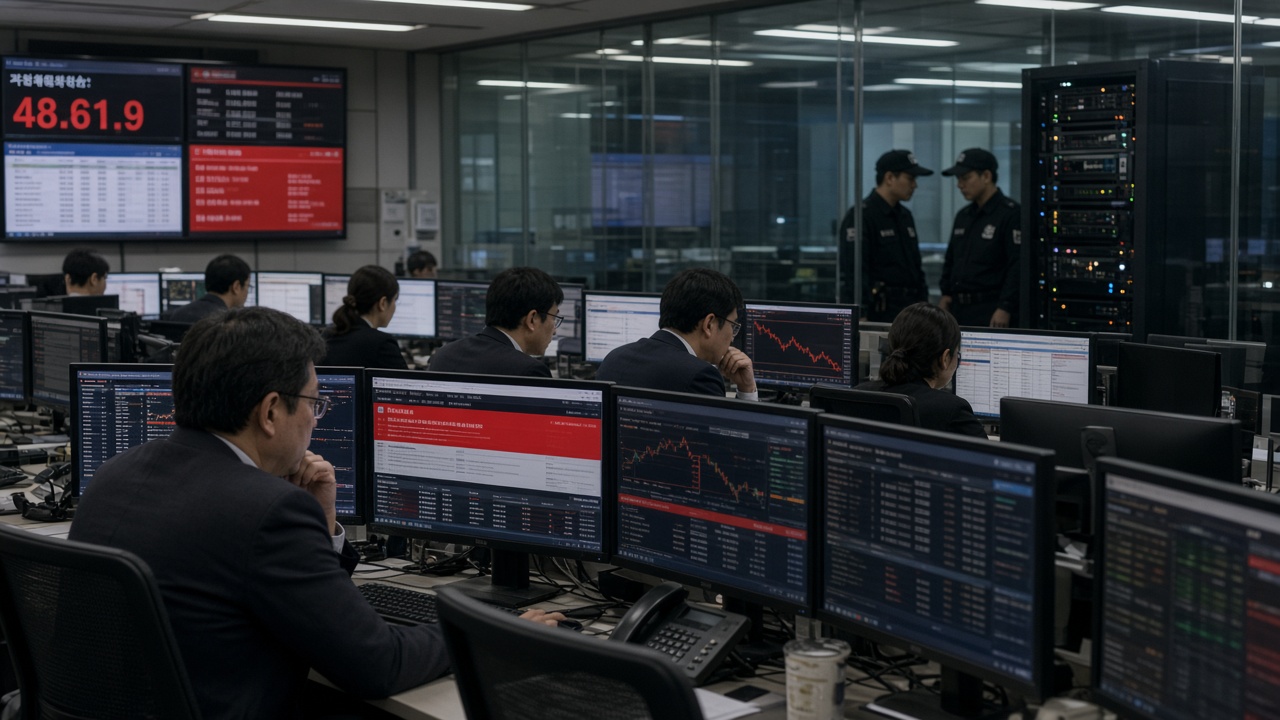
South Korea’s mutual finance and consumer-finance sector reported a wave of cyber intrusions on Sunday, extending a banking data crisis that began last week at Shinhan Bank and KB Kookmin Bank to lenders that rarely make national headlines.
Presidential spokesperson Kang Yu-jung said President Lee Jae Myung was briefed on leaks at commercial banks and non-bank institutions including Yegaram Savings Bank and Hyundai Capital. Lee instructed officials to treat the incidents with “grave awareness” and to pursue thorough investigations and countermeasures, according to SBS News.
How the attacks spread beyond big banks
Regulators said confirmed personal-data losses have surpassed 60,000 individuals, a figure that could rise as forensic reviews continue. The Financial Services Commission convened an emergency meeting Sunday afternoon at the Government Complex in Seoul with heads of industry associations and chief executives from affected firms.
Investigators told lawmakers that intruders often targeted back-office portals—loan-agent progress trackers, relationship-manager mobile tools and other employee menus with lighter authentication than customer-facing apps. At Shinhan, attackers probed a loan-consultant inquiry page for roughly 30 hours starting 28 September, exfiltrating 25,727 data fields before the bank blocked internet protocol addresses and suspended services, according to materials the lender submitted to the National Assembly.
KB Kookmin Bank reported a 42-hour intrusion through employee “RM Agent” and “PB Agent” applications, leaking 153 customer records in the initial tally reviewed by Democratic Party lawmaker Park Min-gyu’s office. Hana Bank and BNK Busan Bank disclosed smaller but similar patterns, while savings banks said they were still scanning legacy web modules.
AI-assisted tooling under scrutiny
Financial authorities are not ruling out that artificial-intelligence agents helped automate credential stuffing and data parsing, though they cautioned that tooling varied between incidents and that attribution remains open. Traffic appeared to route through internet addresses registered in South Korea, the United States, Japan, Hong Kong, Singapore, Vietnam, Thailand and the United Kingdom, complicating quick attribution.
The Financial Supervisory Service already dispatched on-site teams to major banks earlier in the week; Sunday’s session focused on whether mutual finance cooperatives—which serve small merchants and regional borrowers—maintain the same logging and segmentation standards as tier-one lenders.
Customer exposure and notification duties
Banks must notify victims under Korea’s Personal Information Protection Act when sensitive fields such as resident registration numbers or loan balances are accessed. Consumer groups urged the FSC to publish a unified timeline showing when each institution detected anomalies, arguing that staggered disclosures eroded trust.
Credit-card issuers and payment apps, still mindful of a high-profile leak at Toss Payments last month, said they were running redundant scans on partner APIs. Telecom carriers reported higher call volumes to consumer-protection hotlines even though regulators said no wire transfers had been confirmed from the leaked datasets alone.
Government and market response
FSC Chairman Lee Eog-weon and Financial Supervisory Service Governor Lee Chan-jin chaired the emergency session, according to the presidential office. Traders said the Kospi financial sub-index opened lower Monday in Seoul, though analysts noted that prior breaches had produced only short-lived sell-offs when remediation costs stayed contained.
Opposition lawmakers demanded a parliamentary audit and asked whether a single organized group orchestrated the campaign. For now, Seoul’s priority is containment: patch employee portals, rotate keys, and determine whether mutual finance servers shared vendors that attackers mapped once and exploited repeatedly.