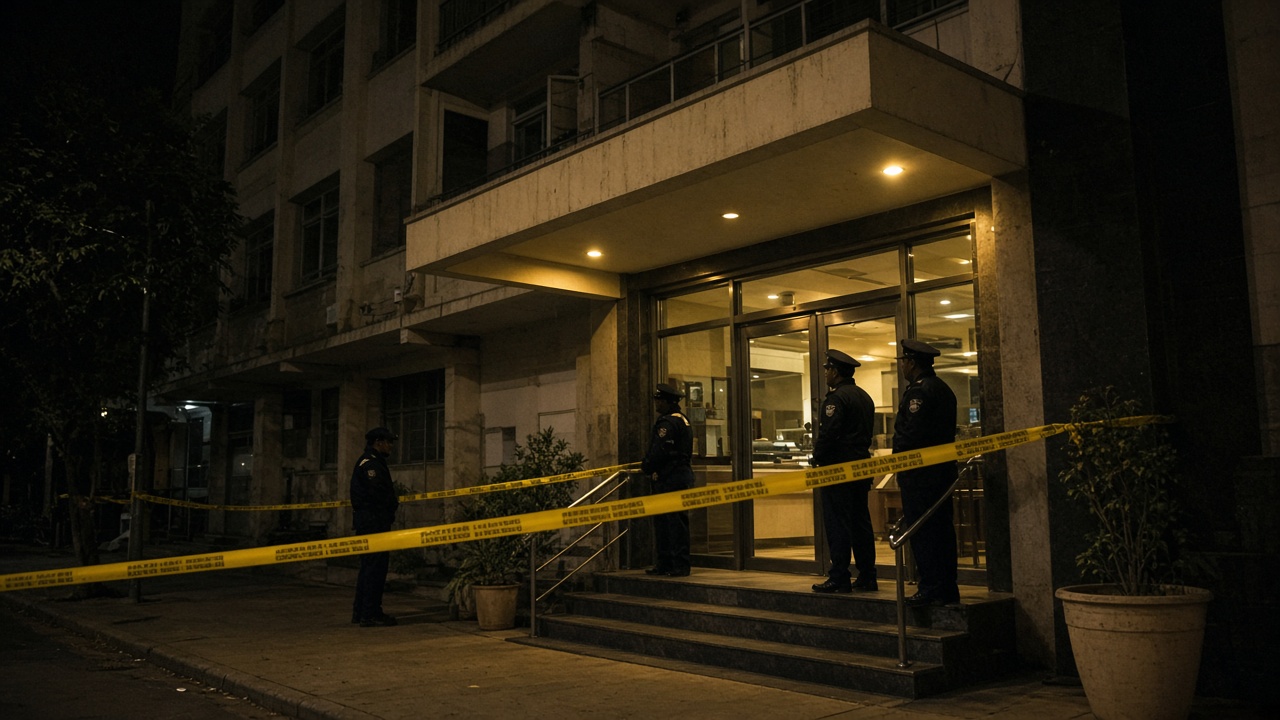
Japanese police arrested a U.S. Marine early Sunday on suspicion of killing a woman at a hotel in Naha, Okinawa’s capital, in a case that immediately drew a formal protest from Prime Minister Sanae Takaichi to the United States.
Lance Cpl. Devin Jacob Ballard, 20, is accused of killing Anna Yagi, 39, at the property on Saturday and taking her wallet and backpack, Okinawa prefectural police said. Ballard, assigned to Marine Corps Air Station Futenma, was taken into custody around 1 a.m. Sunday; police said he denied the allegations.
Political pressure in Tokyo
Takaichi described the death as an alleged robbery and murder and said she had lodged a protest with Washington over the incident. Japan’s Ministry of Defense said it was “deeply outraged by the extremely brutal and heinous crime committed by a U.S. Marine,” language that signals how quickly the case has moved from a local homicide file to a bilateral security irritant.
Okinawa hosts the bulk of the 18,000 U.S. Marines stationed in Japan, and crimes involving service members have repeatedly strained the Status of Forces Agreement framework that governs jurisdiction and base operations. Governor Genta Koja called the incident a “tremendous shock” for residents who live beside the bases, while opposition lawmakers in Tokyo renewed calls for tighter curfews and clearer accountability when suspects are in U.S. custody.
What U.S. officials say
The III Marine Expeditionary Force, headquartered on Okinawa, said it was cooperating with Japanese authorities on “allegations of serious criminal actions by a Marine” and that the service member remained in local custody. U.S. Ambassador to Japan George Glass told Japan’s foreign ministry and Okinawa Governor Genta Koja that Washington would provide full cooperation as detectives continued their work.
Under the current SOFA practice, Japanese investigators typically lead murder cases on Japanese territory even when the suspect is American, but political leaders still face pressure to show residents that alliance benefits do not come at the cost of impunity.
Next steps on the island
Police have not released a motive or detailed timeline beyond the hotel location in central Naha, a city that depends heavily on tourism and sees frequent rotations of U.S. personnel from Futenma, a base that has been at the center of relocation debates for more than a decade.
Takaichi’s government is preparing defense and budget legislation this autumn, and any spike in Okinawan anger could complicate parliamentary negotiations over host-nation support costs. For now, Naha police said forensic teams would remain at the hotel while prosecutors decide whether to seek an indictment.