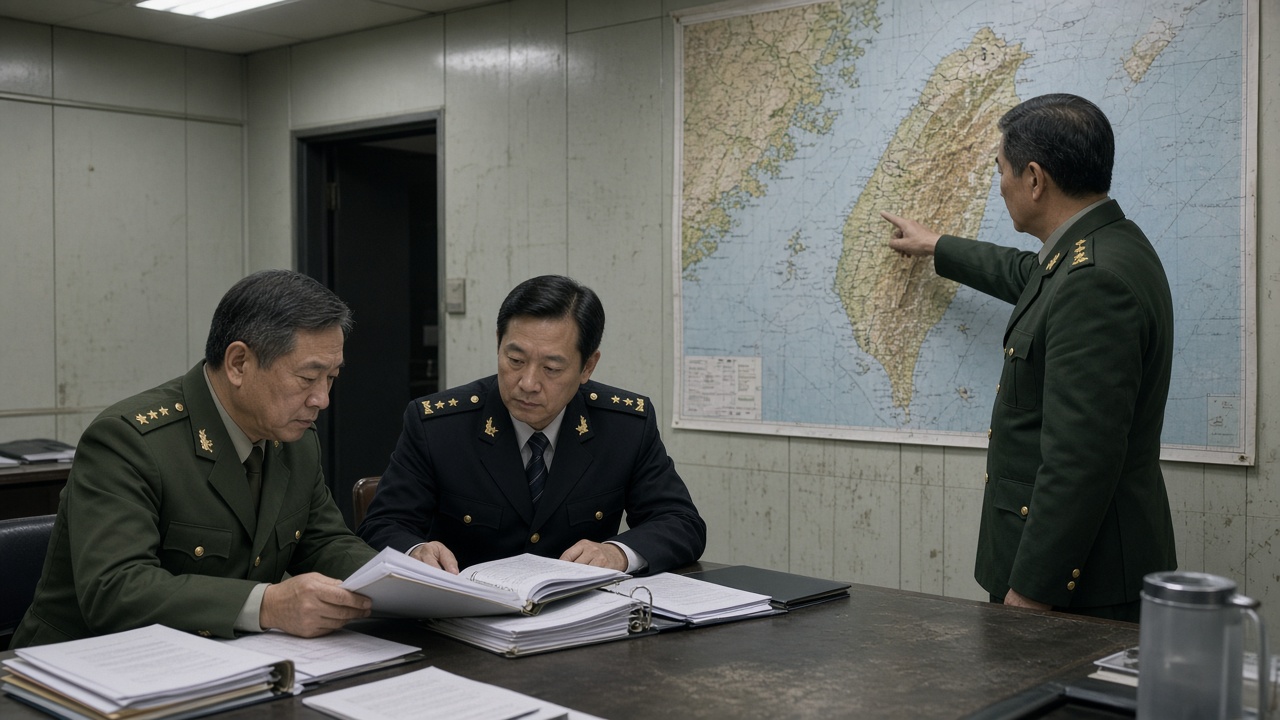
Taiwan and the United States are preparing to station Pentagon personnel inside the Ministry of National Defense in Taipei under a NT$470 million (US$14.77 million) program running through 2028, according to senior officials and sources familiar with the plan. Representatives from the Office of the Under Secretary of Defense for Policy and the Institute for Defense Analyses would work at MND headquarters rather than only through the American Institute in Taiwan, the de facto U.S. embassy.
From training lanes to planning tables
U.S. military instructors have long rotated through Taiwan for operational training, often focused on weapons employment and unit tactics. The proposed arrangement would push collaboration up the chain, placing U.S. analysts alongside Taiwanese planners on procurement evaluations, capability assessments and major exercise design such as the Han Kuang series, the sources said.
One representative from each organization would be assigned to the ministry under the program budget approved for the current fiscal cycle, a senior Taiwanese military official said on condition of anonymity because the posting details have not been announced publicly. The official said the goal is to shorten feedback loops when Taipei evaluates asymmetric systems and backlog-prone platforms.
Why Taipei wants desks inside MND
Taiwan’s defense modernization has accelerated after delays in U.S. deliveries, including F-16 fighters and Harpoon coastal missiles. Embedding U.S. policy staff could help align Taiwanese requirements with U.S. industrial capacity and congressional notification timelines, defense analysts in Taipei said.
The move also reflects legislation in Washington, including the Taiwan Enhanced Resilience Act and successive National Defense Authorization Acts, that encourages institutionalized security cooperation. Sources said working directly with MND, instead of routing every question through AIT, signals a shift from episodic visits to standing coordination on strategy and wargaming.
Sensitivity and oversight
Any U.S. uniformed or civilian presence on Taiwanese military property carries political risk. Beijing routinely protests U.S.-Taiwan security contacts and has not ruled out force to assert its claim over the island. Taipei and Washington typically avoid publicizing troop numbers or office locations.
Sources emphasized that the liaisons would advise on planning and assessments, not command Taiwanese units. MND would retain authority over procurement decisions and rules of engagement. The program’s funding line still requires parliamentary scrutiny in Taipei and reporting to U.S. oversight committees.
Timing amid deliveries and diplomacy
News of the liaison plan coincides with Taiwan’s receipt of its first two F-16V Block 70 fighters at Chihhang Air Base in Taitung after years of schedule slips, and with Foreign Minister Lin Chia-lung’s travel to open a Taiwan office in Phoenix, Arizona. Those events show continued U.S. engagement after President Donald Trump met Chinese President Xi Jinping last month.
Officials have not announced a start date for the Pentagon desks. If implemented, the program would be among the most integrated U.S.-Taiwan defense arrangements short of a formal alliance, and would be watched closely in Beijing and among regional militaries tracking the strait balance.