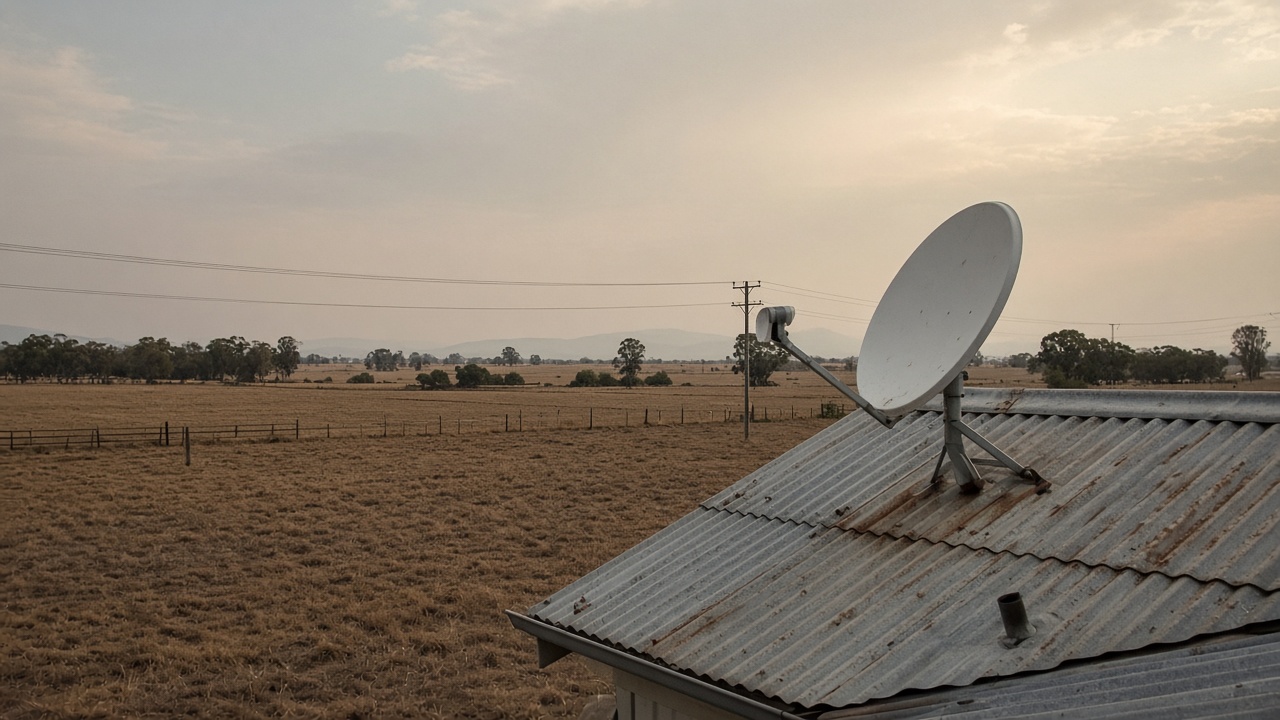
A coalition of rural councils and fixed-wireless advocacy groups has asked the Australian Competition and Consumer Commission to scrutinise Starlink's Australian marketing, alleging it implies peak-hour performance that NBN Co's Sky Muster satellite cannot match even when both services are contended.
The complaint, lodged Thursday, does not seek to ban low-Earth-orbit broadband. Instead it argues Starlink's website compares "typical evening speeds" using overseas sample data that understates congestion on Australian cells covering remote Western Australia and Cape York.
NBN's response
NBN Co said Sky Muster plus upgrades remain the default universal service for premises outside fibre footprints, with wholesale prices capped for retailers. A spokesperson said more than 120,000 premises still depend on the geostationary service, which saw a capacity boost in 2025 but still enforces peak data blocks.
What rural users see
Farmers in the Riverina told the coalition they installed Starlink dishes as backup during harvest when Sky Muster throttled video uploads. Others said dual-service costs were unsustainable and wanted honest comparison tables before switching contracts.
Telecommunications ombudsman complaints about satellite speeds rose 8% in the June quarter, though the office cautioned that sample sizes are small and often involve retail plan mismatches rather than wholesale capacity.
Regulatory path
The ACCC can pursue misleading conduct claims under Australian Consumer Law. Previous cases against telcos have focused on "unlimited" mobile ads rather than satellite throughput. Analysts expect the commission to request internal drive-test data from both NBN and Starlink before deciding whether to open a formal investigation.
Communications Minister Michelle Rowland has encouraged technology-neutral subsidies but told regional forums that public money should not fund duplicate dishes without clear reliability gains. A response is due before the December regional connectivity roundtable in Dubbo.
Retail plans
Major telcos bundle Sky Muster wholesale with voice lines for farms that also need fax-compatible connectivity for livestock sales. Starlink's self-install kit bypasses those bundles, appealing to younger operators who run farm management software in the cloud. The ACCC complaint alleges marketing screenshots show speed tests taken on US cells with fewer users per beam.
University of Sydney telecommunications researchers offered to run blind tests if both parties donate hardware, a proposal neither NBN nor Starlink has accepted publicly. Academic neutrality could give the regulator independent packet-loss traces during evening peaks.
State governments fund regional extension officers to help households choose between technologies; the complaint asks those officers for plain-language disclosure when Starlink cells approach capacity caps advertised in fine print.
Next steps
ACCC staff can issue substantiation notices requiring speed-test methodology from both complainants and respondents. Previous telecom matters took six to nine months before outcomes; rural groups want interim guidance for this summer harvest connectivity.
Retail service providers said they will continue selling whichever wholesale product customers choose, but need clearer truth-in-advertising templates from regulators to avoid being caught between vendors.