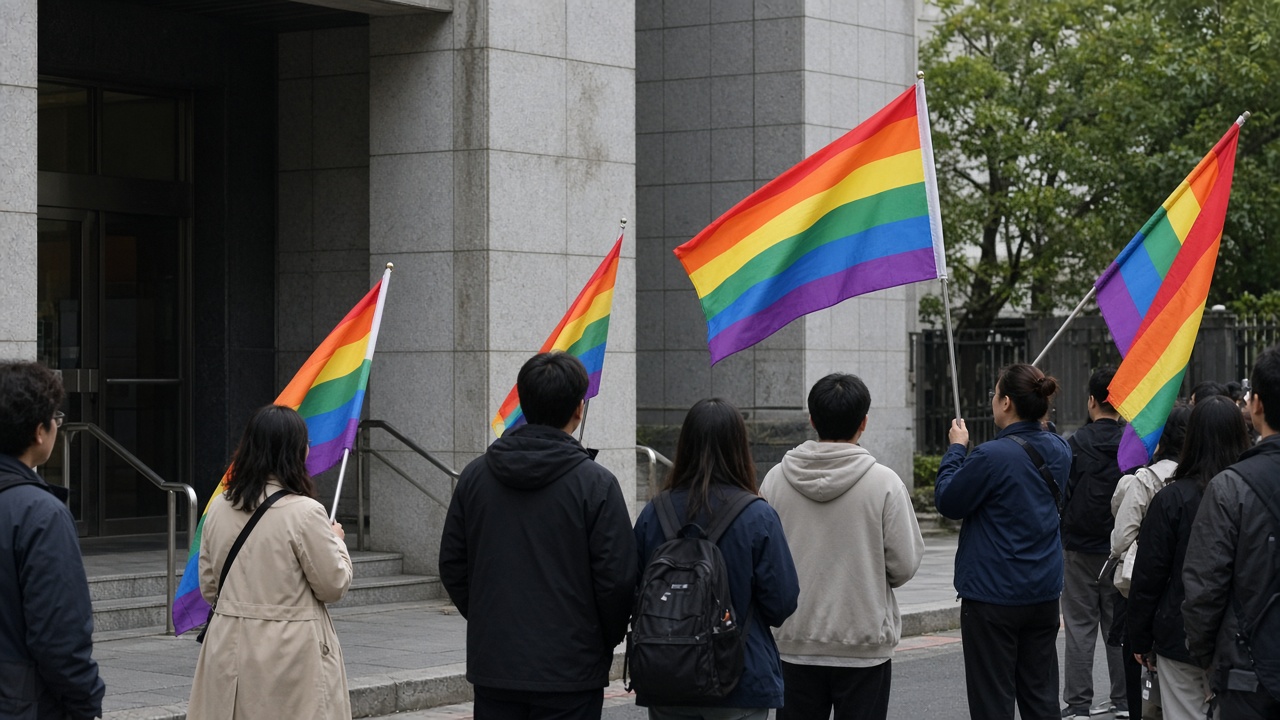
Roughly a hundred members of Taipei’s LGBTQ community marched to a Wanhua district police station on Sunday to protest a Saturday operation at Commander D, a gay bar that has operated in the neighborhood for about 14 years. Organizers said the show of force at the venue shocked patrons and revived debate over how Taiwan enforces decades-old public-decency rules in spaces that serve sexual minorities.
What police and the city said happened
Taipei police said officers acted on a court-approved warrant tied to possible violations of laws against “offences against public morality,” according to precinct spokesman Chen Yu-cheng. Chen told reporters that 51 people were brought to the station for questioning and that the bar’s owner was taken into custody. Police described the case as involving conduct prohibited under rules against wantonly exposing one’s body or presenting a lascivious posture in a public or publicly accessible place.
The Taipei city government, asked about the operation, referred journalists to a separate police statement saying officers had received a complaint that the bar might be breaching public-decency statutes. Local news accounts said the operation began around 4:30 p.m. on October 3. Some people present told Reuters that officers entered forcefully and that the manager was handcuffed; police later characterized the work as questioning rather than a search, a distinction protesters rejected on Sunday.
Sunday’s protest and the crowd’s demands
Demonstrators gathered outside the Wanhua precinct on Sunday afternoon, chanting and demanding an explanation for the scale of the response. One person who was inside Commander D on Saturday told Reuters the scene was frightening and that many customers who had removed clothing in the bar’s private areas were escorted out for interviews. Taiwan legalized same-sex marriage in 2019 and often promotes itself as a progressive hub in East Asia, making the operation a flashpoint for activists who argue that moralistic statutes should not be deployed against gay venues.
Commander D had drawn political attention before the weekend. Local reports said a city councillor had raised concerns about possible underage entry at bars and circulated photographs of the interior. It was not immediately clear whether Saturday’s warrant related to those earlier complaints or to a separate tip about decency violations, and police did not publicly link the case to narcotics enforcement.
Legal context and what comes next
Taiwan’s public-decency provisions date to an earlier era of criminal law and are rarely highlighted in national politics, but they remain on the books and can be invoked when prosecutors or police receive complaints. Legal-aid groups said Sunday they would monitor whether charges are filed and whether any punishment would treat the bar’s LGBTQ clientele differently from heterosexual nightlife districts in Taipei.
As of Sunday evening, police had not released a full list of charges beyond the owner’s custody, and the 51 people questioned had not all been identified publicly. Protest leaders said they would press the city council for a hearing on how Wanhua precinct prioritizes morality complaints, while bar supporters launched crowdfunding to cover legal fees. For Taiwan’s ruling and opposition parties, which spent the same weekend rallying for November 28 local elections, the episode adds a cultural fault line that cuts across the capital’s tourist-friendly image and its promises of equal treatment under law.