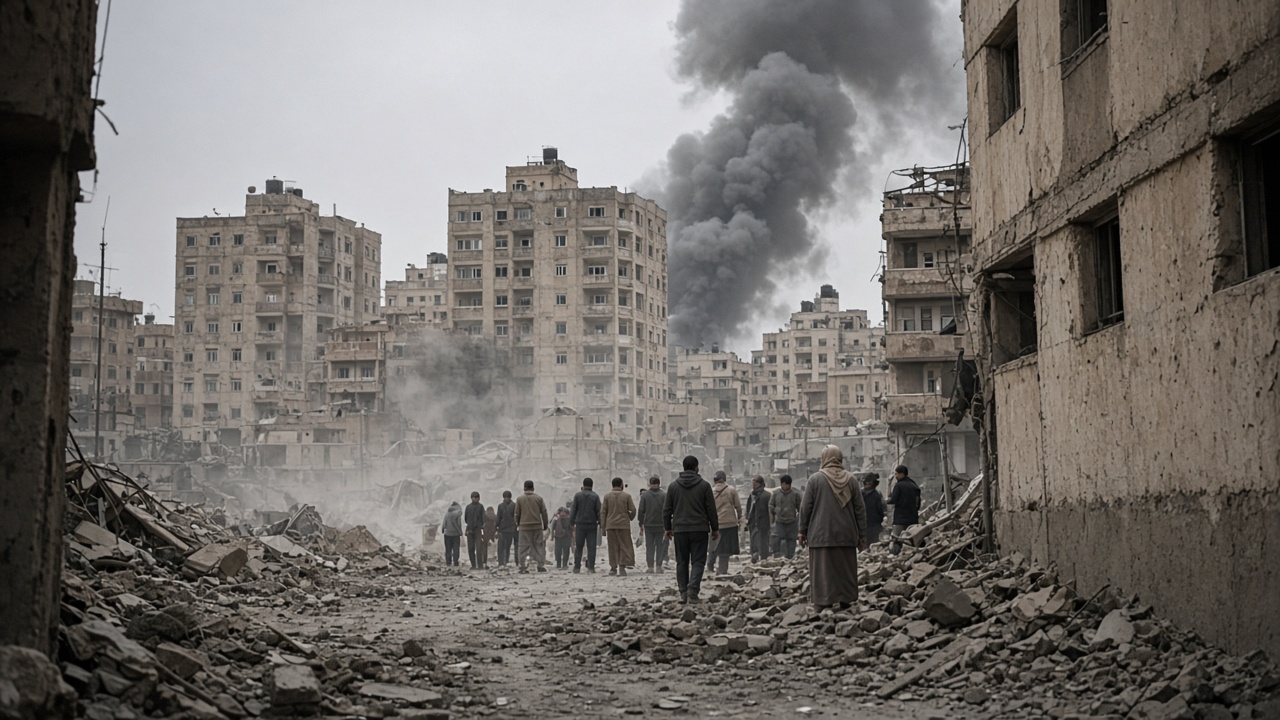
Yemen’s Saudi-backed internationally recognised government carried out air attacks on the Houthi-controlled capital, Sanaa, on Saturday, as ground fighting along the Red Sea coast and southern highlands sent more families into tent camps and schools turned shelters. The strikes landed in the same 24-hour window in which U.S. President Donald Trump told reporters a decision on Iran was imminent, saying “the only question is, it’ll either be the easy way or the hard way.”
Capital under fire as front lines shift
Al Jazeera’s live coverage described government-aligned forces bombing Sanaa while Houthi units traded artillery with anti-Houthi troops on multiple axes. Colonel Majed Abdullah al-Nazili, a spokesman for Yemen’s government forces, said later strikes on reinforcement columns near Tor al-Baha and along the Taiz axis had hit “at least 260 Houthi fighters” and destroyed or disabled 44 vehicles. The Saudi-led coalition supporting the government said its aircraft and drones conducted 97 “precise targeting operations” in that period.
The Houthi movement, which still controls Sanaa and much of the north-west, had earlier claimed a separate operation against energy infrastructure hundreds of kilometres away. Military spokesman Yahya Saree said ballistic missiles and drones targeted an Aramco site in Riyadh, asserting the strike was “precise and direct” and caused fires. Saudi coalition spokesman Turki al-Maliki called the Riyadh claim misleading, but video from the Saudi capital showed smoke rising near an Aramco facility on Saturday. The exchange underscored how Yemen’s internal war and the wider Iran–U.S. confrontation are feeding one another in Gulf airspace and energy markets.
Displacement and a collapsed truce
Humanitarian agencies have warned for weeks that the collapse of a 2022 truce in July, followed by Houthi advances toward Mocha and islands in the Bab al-Mandeb strait in mid-September, has uprooted hundreds of thousands of people. Aid workers in Aden and Marib told reporters that new arrivals are crowding informal sites with limited water and sanitation. Saturday’s strikes on Sanaa added pressure on families who had not fled earlier rounds of urban bombing, according to camp managers interviewed by regional broadcasters.
Fighting over the strait matters beyond Yemen: the channel sits on one of the world’s busiest oil-shipping lanes. When Houthis briefly seized Mocha and nearby islands, insurers raised war-risk premiums for vessels rerouting around the Horn of Africa. Anti-Houthi forces have since stabilised some front lines, but neither side has returned to formal talks.
Washington’s Iran clock
Trump’s remarks on Iran came as his administration weighs responses to Tehran’s role arming the Houthis and to broader security guarantees for Gulf allies. U.S. officials have not published a timeline, but the president’s “easy way or the hard way” framing echoed language he used before earlier rounds of sanctions and military posturing. European diplomats said they were watching whether renewed strikes inside Yemen would complicate any back-channel discussions on Hormuz shipping and nuclear compliance.
For Yemenis on the ground, the diplomatic clock is secondary to shelter and food. Market stalls in Sanaa reported shortages of cooking gas after the weekend raids, and mobile networks in some districts were intermittent. Government ministers in Aden pledged additional relief convoys, but truck drivers said checkpoint delays and fuel prices were slowing deliveries.
What commanders say happens next
Coalition statements on Sunday promised continued air support for government offensives aimed at pushing Houthis back from coastal roads. Houthi leaders, meanwhile, vowed to keep targeting what they call “aggression capitals,” language they have used for Riyadh and Abu Dhabi in past cycles. Without a renewed ceasefire mechanism, analysts in the region expect tit-for-tat strikes rather than a negotiated stand-down.
International aid groups urged all parties to allow safe passage for civilians leaving combat zones and to protect hospitals that are already treating malnutrition cases in Houthi-held territory. The United Nations Security Council has not scheduled a fresh Yemen session, but envoys said they were tracking whether Saturday’s escalation would trigger emergency consultations in New York.