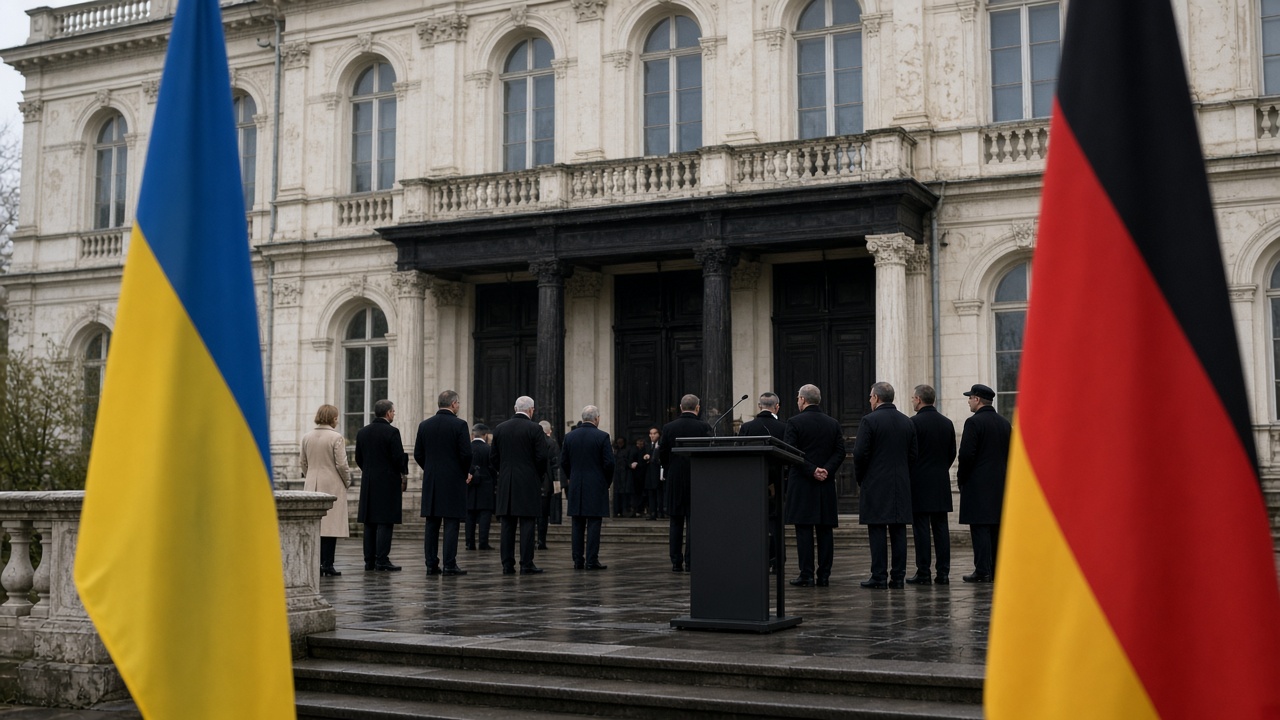
President Volodymyr Zelenskyy said on Sunday that Ukraine is prepared to join United States– and Russia-backed trilateral talks this month, reviving a diplomatic track that stalled when Washington shifted focus to its war with Iran. Speaking at a joint news conference with German Chancellor Friedrich Merz at Mariinskyi Palace in Kyiv, Zelenskyy said he had confirmed to American officials that Kyiv would support a swift return to negotiations aimed at ending more than four and a half years of full-scale fighting.
What Kyiv and Berlin announced
Zelenskyy told reporters that the United States is now pressing for technical-level discussions by the end of October. He said the United Arab Emirates, which has hosted earlier rounds between Ukrainian and Russian delegations, could again serve as the venue, or talks could move to another country proposed by Washington.
“I confirmed to [the US] that our side is ready to support this timeline,” Zelenskyy said, according to remarks carried by Al Jazeera and AFP. He added that U.S. officials had also been in contact with Moscow about the plan. Kremlin spokespeople said last month that Russia did not rule out three-way talks in October, though neither capital has published a fixed calendar.
Merz’s visit underscored European backing for renewed mediation even as Germany continues to supply air-defence systems and artillery to Kyiv. The chancellor did not announce new weapons packages on Sunday, but his appearance alongside Zelenskyy was timed to show continuity after months in which European capitals worried Washington might deprioritise Ukraine while managing Middle East deployments.
Fighting and winter pressure
The diplomatic opening landed against a backdrop of intensifying strikes. Zelenskyy said he was “amazed” by Russia’s “savage desire to escalate the situation every day,” repeating accusations that Moscow is targeting civilian infrastructure, including data centres and mobile-network facilities, as colder weather approaches.
Russian officials have framed recent attacks on Ukraine’s energy system as military operations against facilities supporting the war effort. Last winter, repeated strikes left millions without heat when temperatures plunged far below freezing, and Ukrainian grid operators have warned that repair crews are still racing to harden substations before the next wave.
Both sides have simultaneously signalled openness to talks and readiness to expand long-range campaigns. That contradiction has marked every prior round hosted in the Gulf: ceasefire discussions have often coincided with new missile and drone salvos rather than pauses on the front.
Washington, the Gulf and other mediators
U.S. ceasefire brokerage slowed after American forces opened hostilities against Iran, pulling senior diplomats and intelligence assets toward the Middle East. Zelenskyy’s Sunday comments suggest the White House is trying to reopen a parallel channel before winter strain and election-year politics in multiple capitals further compress the window.
The UAE has marketed itself as a neutral meeting ground, offering logistics and security for delegations that refuse to sit in each other’s capitals. Zelenskyy’s reference to an “another country proposed by the American side” leaves room for a shift if Gulf logistics become politically sensitive.
India also signalled broader involvement on Sunday. Foreign Minister Subrahmanyam Jaishankar, speaking at the Munich Security Conference session held in New Delhi, said New Delhi had stepped up efforts related to Black Sea shipping, mines and attacks on commercial vessels, and was discussing grain and energy exports as well as “non-attack possibilities.” That rhetoric does not replace U.S.-led trilateral talks, but it shows how middle powers are positioning themselves if Gulf negotiations falter again.
What happens next
Near-term milestones are procedural rather than ceremonial: working-level military and energy experts would need agreed agendas, access guarantees and a communications channel that survived the last collapse. Ukrainian officials will watch whether Russia scales back grid strikes in the days before any meeting, a test previous rounds failed.
For Zelenskyy, accepting an October timeline carries domestic risk if talks produce only photo opportunities while territory losses continue. For Washington, restarting trilateral diplomacy offers a way to reassure NATO allies such as Germany that Ukraine remains on the agenda even as bombers and carriers rotate toward the Middle East. Until envoys land in Abu Dhabi or elsewhere, Sunday’s statements remain intent—not yet a ceasefire.