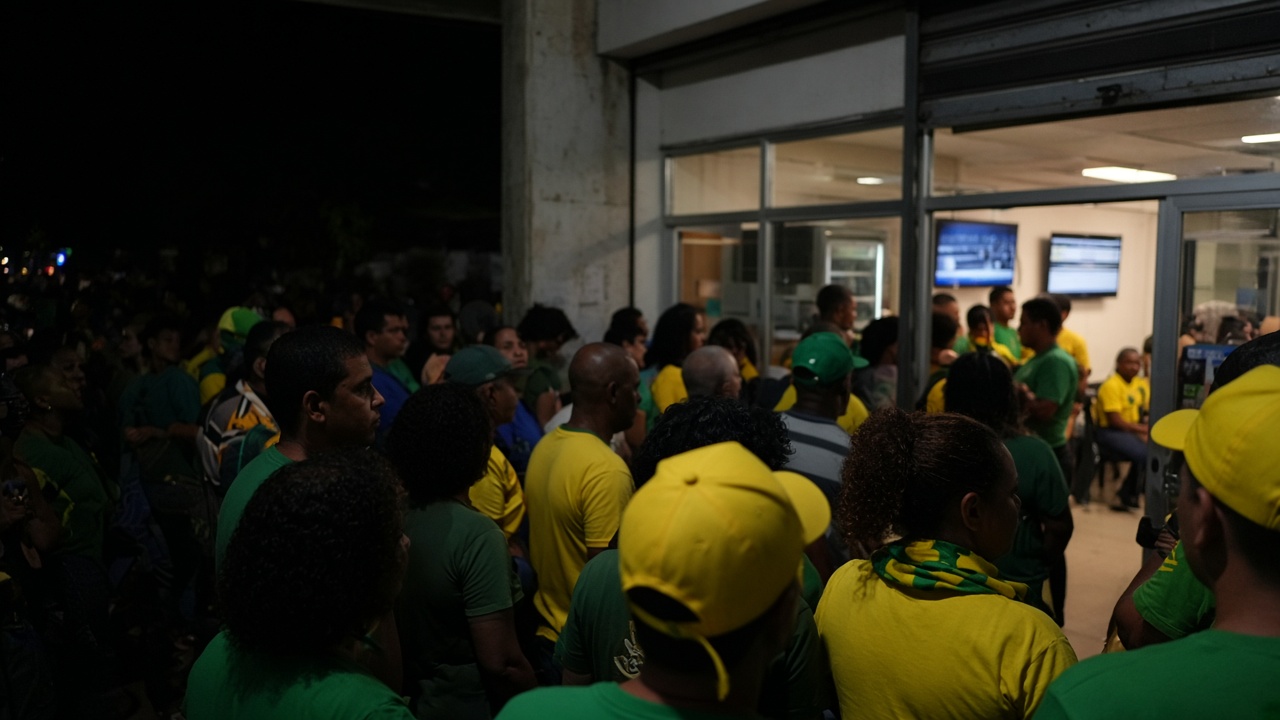
Brazil’s Superior Electoral Court said on Monday that with roughly 99.8 percent of Sunday’s presidential ballots processed, neither Luiz Inácio Lula da Silva nor Senator Flávio Bolsonaro had cleared the majority threshold required to take office on 5 January. The count instead sent the rivals to a runoff on 25 October, compressing three weeks of coalition bargaining into a contest that will decide whether Brasília tilts further toward Washington or deepens its courtship with Beijing.
What the count showed
Figures released in Brasília put Bolsonaro, the 45-year-old son of former President Jair Bolsonaro, at just over 56 million votes. Lula, the 80-year-old incumbent seeking a fourth non-consecutive term, trailed at about 53.7 million. The gap was wide enough for Bolsonaro to claim a first-round lead but far too narrow for either man to avoid a second vote under Brazil’s two-round rules.
Speaking outside his home in the capital early Monday, Flávio Bolsonaro told supporters that “Brazil wants change” and declared “the end of the Workers’ Party era,” framing the runoff as a referendum on Lula’s social programs and his handling of inflation. Lula, who had told allies he hoped to win outright, called the outcome “unexpected” and said he relishes knockout rounds. “Tomorrow we start a new campaign,” he said. “I am very good in the knockout stage.”
Who still holds the balance
The arithmetic now turns on voters who backed eliminated candidates. Writer Augusto Cury, who finished third with about 3.4 million votes, said he would not endorse either finalist. Ronaldo Caiado and Renan Santos, who together drew roughly 5.3 million ballots, had previously ruled out backing Lula or Bolsonaro. Those refusals leave roughly 8.7 million first-round votes—about 7.5 percent of the electorate—that both campaigns must chase without a guaranteed endorsement.
Lula is expected to lean on welfare expansions that still command loyalty among poorer Brazilians, while reminding voters of legal troubles surrounding the Bolsonaro family. Bolsonaro, an ally of U.S. President Donald Trump, will press affordability and corruption narratives, including questions about Supreme Court Justice Alexandre de Moraes and his contacts with Banco Master’s Daniel Vorcaro—a scandal that has complicated Lula’s anti-graft messaging even as Moraes led the case that put Jair Bolsonaro under house arrest.
What happens next
Both campaigns have until 25 October to register alliances, air television time under Brazil’s equal-time rules, and court moderates in the southeast and northeast. Polls before Sunday suggested deep antipathy toward both families—roughly half the country disapproves of the Bolsonaros and half dislikes the Workers’ Party—so turnout and negative messaging could matter as much as policy papers. Four years ago Lula defeated the elder Bolsonaro by about 2.1 million votes; this time his challenger is the former president’s son, carrying a cleaner biography but the same ideological brand.
The winner will govern 214 million people and steward a economy still adjusting to commodity swings and climate pressures in the Amazon. For foreign capitals the stakes are plain: a Flávio Bolsonaro victory would align Brazil more closely with Trump’s agenda, while another Lula term would likely preserve the strategic distance from Washington that marked his recent clashes with U.S. tariff threats.