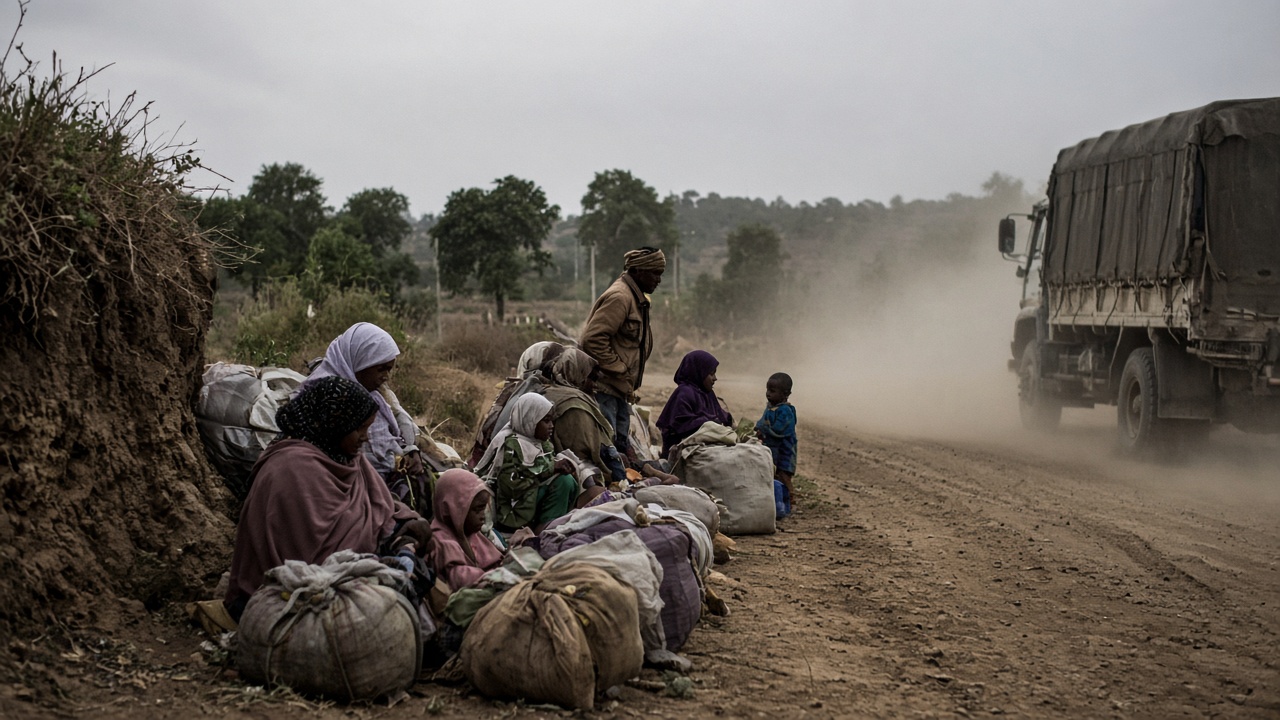
The International Organization for Migration said about 2,800 people fled ten villages in Sudan’s Wad al-Mahi locality in a single day on Sunday, the latest flash of movement in Blue Nile State as army and rebel-allied forces trade ground along the Ethiopian border.
What the U.N. agency recorded
In a statement issued Sunday, IOM field teams estimated that 560 households left Miri, Jabal Nimr, Abu Qudaf, Bashkarkat, Ab Jankour, Makla, Matangiya, Jabal al-Nour, Menza and Manshiling. Most headed toward Al-Roseires locality within Blue Nile rather than crossing an international border, the agency said.
The one-day tally followed another IOM estimate on Thursday of roughly 7,000 people displaced from four villages in the same area within 24 hours. Between Jan. 11 and Aug. 23, IOM had already counted 99,277 people displaced across Blue Nile—up 66 percent from an earlier May update—before this weekend’s accelerations.
Fighting near Damazin
Local reporting tied the weekend displacement to clashes Saturday in Kadalo, Minza and Jabal Nimr, east of Damazin, involving Sudanese army units and a coalition that includes the Rapid Support Forces and the Sudan People’s Liberation Movement-North. The villages sit within about 50 kilometers of Damazin and close to routes toward Ethiopia, making control of the ridge lines tactically significant for both sides.
Neither the army nor the RSF issued detailed casualty figures for the specific engagement by late Monday Pacific time. Aid groups have warned for months that Blue Nile’s mix of informal camps, host families and school shelters leaves displaced households exposed as the rainy season complicates road access.
Humanitarian pressure
IOM’s longer-running Blue Nile tracking shows most displaced people since January sheltering in informal sites or with host families, with smaller shares in schools and public buildings. Roughly half of those counted in the agency’s August snapshot were children, and a majority were women—patterns that raise protection concerns when front lines shift quickly.
The Sudan war, now in its third year, has fragmented territory across Darfur, Kordofan and the east. Blue Nile had seen episodic violence for decades, but the current wave has pushed displacement totals toward six figures inside a single state, stretching a humanitarian system already focused on famine risk in other regions.
What happens next
U.N. migration officials said teams would continue event tracking and publish flash alerts when new movements are verified. Diplomatic efforts to restart ceasefire talks have stalled, and eastern Sudan’s proximity to Ethiopia adds a cross-border dimension if fighting spreads toward border markets.
For civilians in Wad al-Mahi, the immediate question is whether Sunday’s departures become a sustained corridor toward Al-Roseires or a reversible spike if one side consolidates the high ground. IOM’s next update will show whether the 2,800-person figure is an isolated burst or the opening count of another weekly surge.