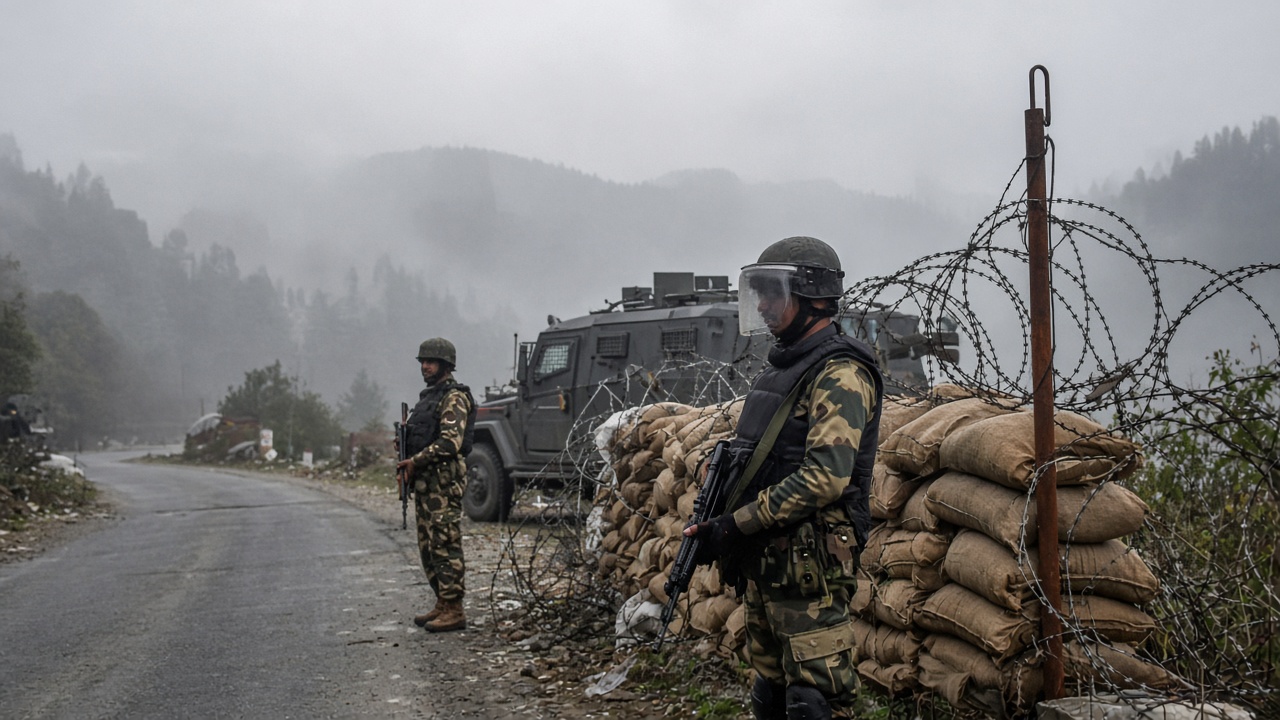
Jammu and Kashmir is on heightened alert after intelligence inputs warned that Pakistan-backed groups could attempt retaliatory attacks following the killing of Lashkar-e-Taiba commander Hashim Musa in Budgam, security officials said on Monday.
Musa, also known as Asif Fauji, was the last surviving member of a four-commander Lashkar cell that Indian agencies say had operated in the union territory since 2022. He was killed in a joint operation involving the Special Operations Group, the Indian Army and the Central Reserve Police Force in the Kavan forest on the night of September 29. The Ministry of Home Affairs described his death as a “serious blow” to the LeT ecosystem in Jammu and Kashmir.
What agencies fear next
Officials told reporters that handlers across the Line of Control appeared unsettled by the loss of Musa, who was linked to several major attacks including strikes in May and December 2024. Inputs received over the weekend suggested groups could target security installations, crowded markets, religious places, very important persons or migrant workers to create fear and reassert presence, according to accounts published by Indian broadcasters citing unnamed officials.
Police and paramilitary units have increased patrols in Srinagar, Jammu and district headquarters, with additional checkpoints on routes to pilgrimage sites and industrial areas that employ out-of-state labour. The Border Security Force and the army have maintained elevated vigilance along the international border and the Line of Control, though no specific plot has been made public.
The module Indian forces say they dismantled
Home Ministry briefings after the Budgam encounter portrayed Musa as the final figure in a quartet of senior Lashkar commanders Indian forces had pursued for nearly four years. With his death, officials said, the entire group had been “neutralised,” a term New Delhi uses when it believes operational leadership in a cell has been removed.
Security analysts caution that Lashkar and Jaish-e-Mohammed networks have historically regenerated mid-level commanders within months, often by infiltrating fresh operatives during the spring and summer infiltration season. Musa’s elimination nonetheless removes a commander with local knowledge of Budgam’s forests and urban hideouts, which Indian planners say had made him difficult to track.
Political and public response
Bharatiya Janata Party leaders in Jammu hailed the operation as evidence of the centre’s “zero tolerance” policy, while opposition figures in the Kashmir valley asked whether civilian safeguards would be tightened alongside security deployments. Lieutenant Governor Manoj Sinha’s office has not issued a fresh curfew order, but district magistrates were told to keep emergency medical teams on standby after prior attacks on non-local workers in shop floors and construction sites.
Tourist operators in Gulmarg and Pahalgam reported normal bookings for the autumn season, though foreign travel advisories continue to flag Kashmir as a high-risk region. Schools remained open on Monday, with administrators checking identification at gates in several Srinagar neighbourhoods.
What officials say they are doing
A senior police official, speaking on condition of anonymity because he was not authorised to brief reporters, said counter-intelligence teams were mapping communication bursts from across the border since the Budgam gunfight. “The assessment is that handlers will try something symbolic within weeks if they can,” the official said. “That is why the grid is up, not because we have a date or a target name.”
The National Investigation Agency has not announced a fresh case tied to Musa’s network, but officials said evidence recovered from the encounter site was being forensically examined for links to financing channels and over-ground workers in the valley. Until those inquiries conclude, the union territory will remain on the elevated posture described on Monday, with leave for field units restricted and quick-reaction teams pre-positioned near sensitive corridors.