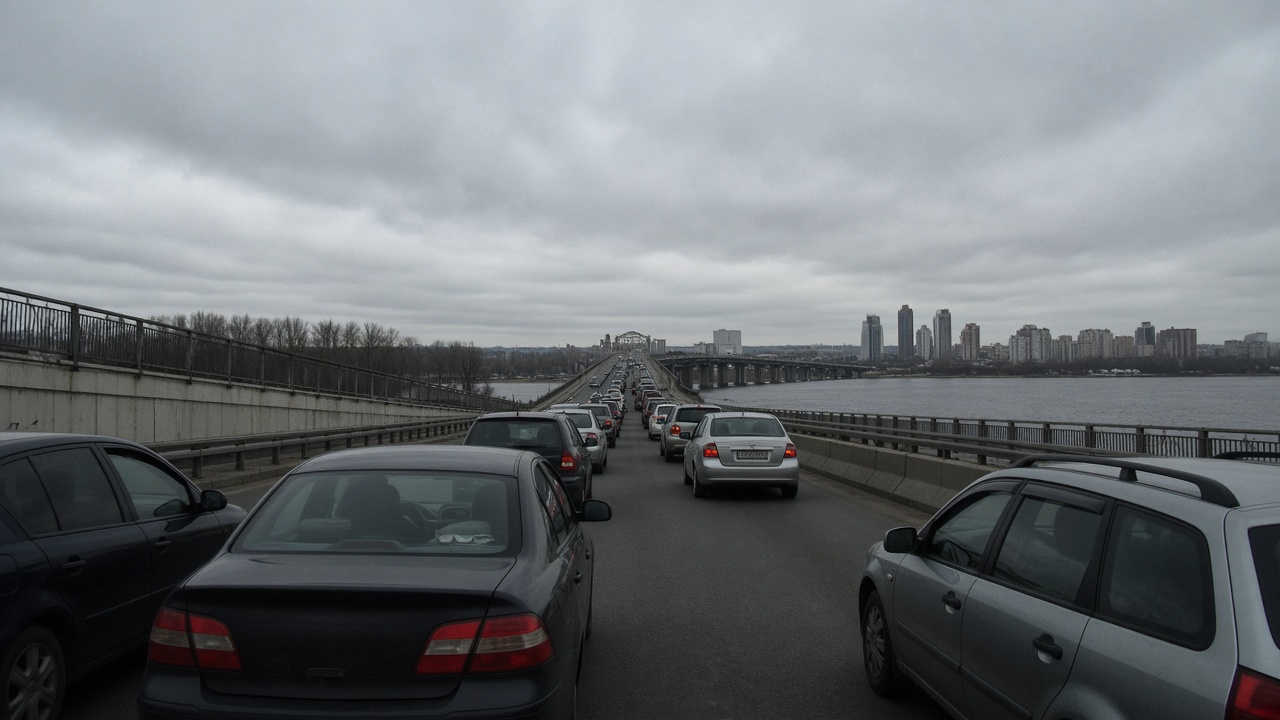
Russia has shifted part of its campaign against Kyiv toward the bridges that span the Dnipro River, using jet-powered drones that move too quickly for many air-defense batteries to intercept reliably. Ukrainian crews have so far kept at least two major crossings open after repeated hits, but closures for repairs have snarled buses, trucks and trolley traffic across a city that already hears air-raid sirens and explosions on a cycle measured in hours rather than days.
Why the river crossings matter
Kyiv is split by the Dnipro, and at least six large bridges carry cars, freight, public transit and even metro lines between the banks. When a strike forces a closure, there are few practical alternatives for moving people and goods at scale. NPR correspondent Joanna Kakissis, reporting from the capital on Monday, said Russian forces had repeatedly damaged two of those bridges in recent days while continuing to hit warehouses, data centers and research facilities elsewhere in the city.
Residents and officials describe the new emphasis on crossings as an attempt to raise the daily cost of life in Kyiv rather than to seize ground. A trolleybus driver Kakissis interviewed near a damaged span said people had grown accustomed to alerts but could not simply stop moving across the river; if closures lengthen, planners worry commutes and supply runs will grind down even when the bridges themselves remain structurally repairable.
Allies respond as Merz visits
The escalation did not pause for diplomacy. German Chancellor Friedrich Merz traveled to Kyiv on Sunday while strikes continued, and he pledged more than $1 billion in additional military support to Ukraine, including interceptors meant to improve air defenses against fast-moving drones. Executives from German defense firms traveling with Merz signed commercial agreements worth several billion dollars alongside the government package, according to reporting from the visit.
President Volodymyr Zelenskyy used the occasion to press again for more air-defense help ahead of an expected difficult winter. He also told reporters he believes Russia may be sharing jet-drone technology with North Korea, repeating a warning that Ukraine’s fight is producing weapons and tactics that could spread beyond the battlefield. European leaders routinely condemn Russian strikes on civilian infrastructure; those statements have not prevented the attacks, but they underpin the aid packages Kyiv is still assembling piecemeal.
What Kyiv faces next
For now, repair teams have managed to reopen damaged spans after each hit, often with traffic backed up for hours. The risk is cumulative: each closure narrows options for emergency routes, and sustained targeting could force longer shutdowns for safety inspections even when explosions do not destroy a bridge outright. Kakissis described weekend life in Kyiv as a sequence of sirens, detonations and hurried decisions about whether to continue a commute or shelter in place.
Ukrainian officials have not publicly detailed which interceptors will arrive first from the latest German commitment, but the bridge strikes make the timing urgent. If jet-powered drones remain difficult to shoot down, the capital’s connectivity—not just its power grid or housing stock—becomes another pressure point for Moscow into the colder months.