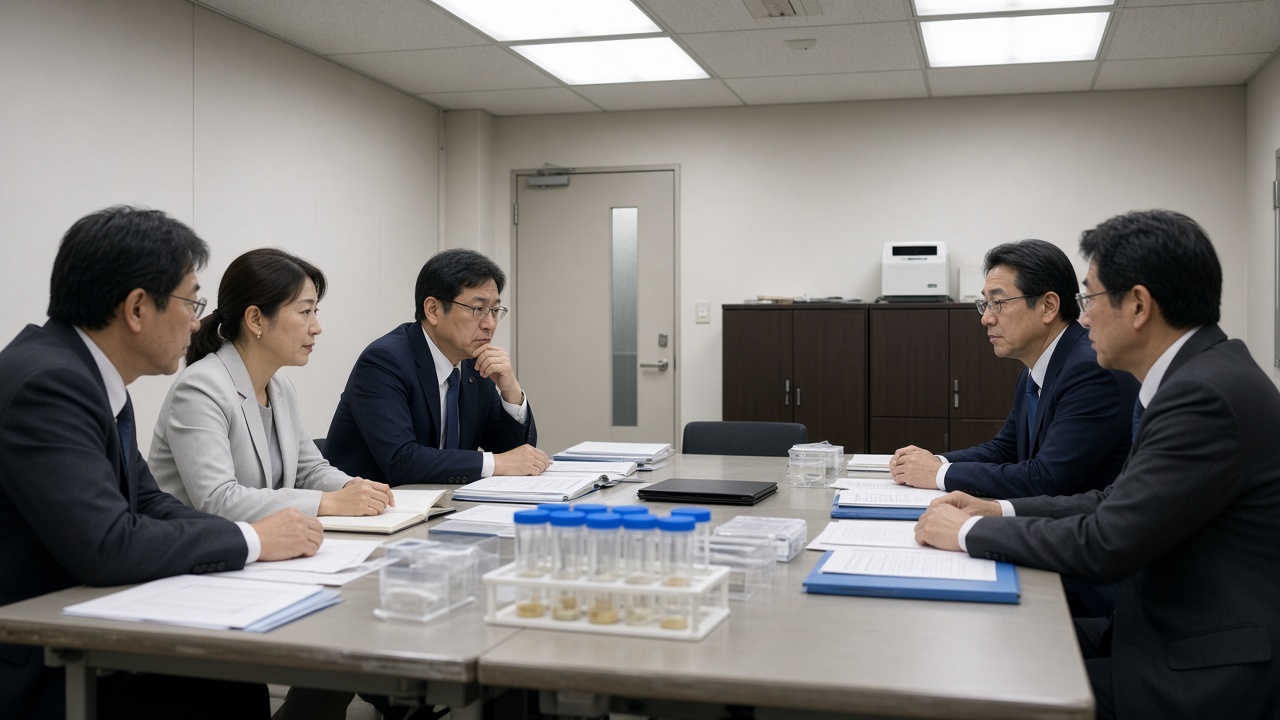
Taiwan will not roll back new documentation requirements on Japanese food imports, senior health officials said after a closed-door meeting with three Japanese agriculture ministry envoys who asked Taipei to withdraw origin and radiation certificates due to take effect on 15 May.
Deputy Health Minister Hsu Ming-tsai told reporters on Sunday evening that Japan considered the dual paperwork "overly strict" and pressed for scientific evidence to justify it. His answer was blunt: "Impossible — we will maintain the announcement as published." The Food and Drug Administration posted the rules after years of debate over Fukushima-area products, and Sunday's session marked Tokyo's latest attempt to soften the border before the compliance deadline.
What the rules require
Under the TFDA notices, importers must submit certificates of origin and radiation inspection results for Japanese products entering Taiwan. The measures build on partial restrictions that kept five prefectures — Fukushima, Gunma, Tochigi, Ibaraki and Chiba — off the market for more than a decade after the 2011 nuclear disaster, even as Tokyo argued its testing regime had restored safety.
Hsu said Japan again asked Taiwan to produce a formal risk assessment. He countered that TFDA border checks over the past four years had tested between 60,000 and 70,000 Japanese shipments, finding radiation in 207 samples — none above legal limits. Officials will compile that dataset for Japanese counterparts in the coming days, he said, but the paperwork requirement itself is not negotiable.
Trade and diplomatic fallout
Hsu declined to name the Japanese officials who attended the two-hour meeting at TFDA headquarters, describing them only as representatives of Japan's agriculture ministry. He said the five-prefecture ban was not on the agenda, leaving that separate track untouched for now.
When the certificates take effect next month, exporters and Taiwanese distributors will face new logistics costs and potential delays at ports of entry. Hsu acknowledged that "trade negotiation issues" may follow, but said those talks belong to the Ministry of Economic Affairs and the Ministry of Foreign Affairs — not the health ministry's food safety mandate.
Japan is one of Taiwan's largest trading partners, and both sides have invested heavily in semiconductor supply chains even as political disputes over Fukushima fish and agricultural imports linger. Sunday's failed lobby visit suggests Tokyo will keep pushing for equivalence with other markets that lifted blanket bans, while Taipei bets that transparent inspection data can justify stricter forms without provoking a wider trade rupture.
What consumers should expect
For shoppers, the immediate change is administrative rather than visible on shelves: products already cleared under old rules can remain in stores, while new arrivals after 15 May must carry the certified paperwork. TFDA has not announced additional spot checks beyond its routine border sampling, but Hsu's emphasis on 207 detections — all within limits — signals that regulators will cite their track record if Japan escalates the dispute at the World Trade Organization or in bilateral talks.
Opposition lawmakers in Taipei have occasionally argued that Taiwan's caution plays well politically but hurts restaurants and importers who rely on Japanese ingredients. The health ministry's firm line on Sunday indicates the government is willing to absorb that criticism rather than reopen a science fight it believes it has already won at the border.