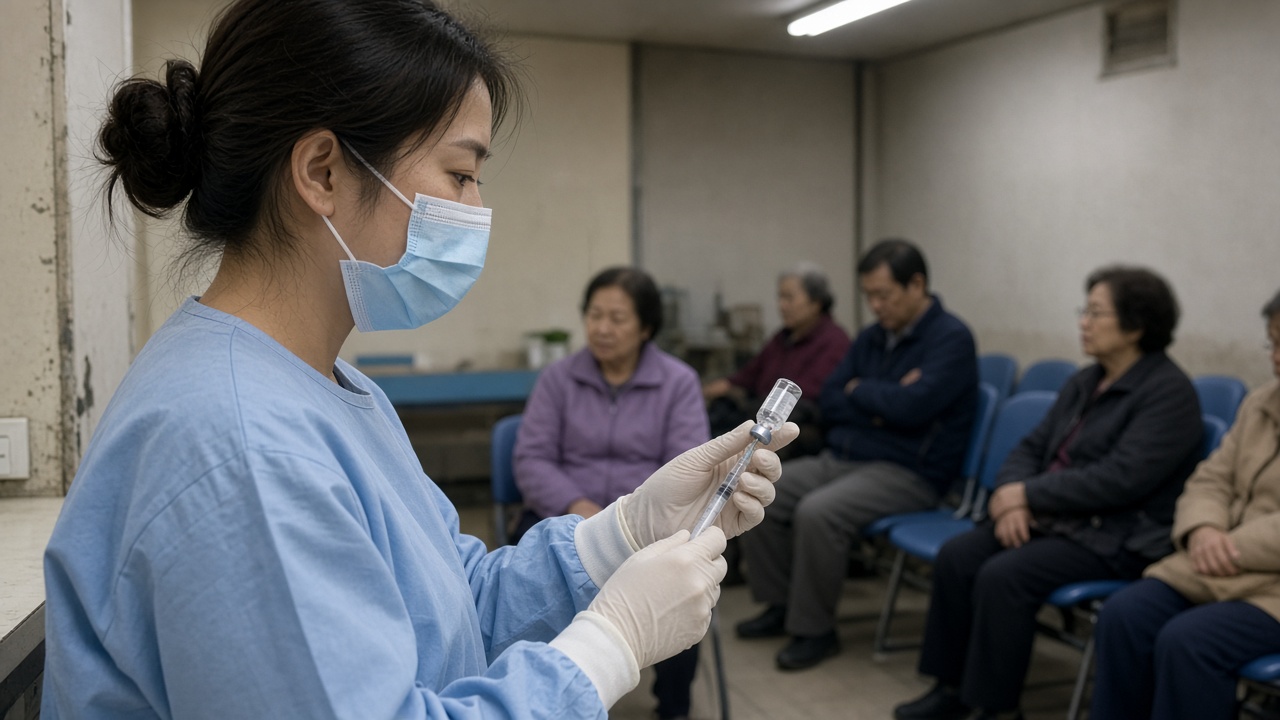
Taiwan’s public flu program logged more than 601,000 vaccinations in its first two days, outpacing last year’s opening pace as Centers for Disease Control officials said influenza-like illness visits could top 140,000 to 150,000 in the week ending Oct. 5.
Employers in Hsinchu Science Park said they are coordinating on-site vaccination buses so shift workers can receive doses without using sick leave, a pattern the CDC encourages for high-density campuses.
Opening weekend numbers
Taipei Times cited Deputy Director-General Lin Ming-cheng saying Friday alone saw more than 335,000 flu shots, the highest single-day total since Taiwan moved to a two-phase schedule in 2021. COVID-19 shots administered alongside flu doses exceeded 209,000 in the same 48-hour window.
The 2026–27 campaign procured more than 7.05 million flu doses, the largest seasonal purchase on record, and pairs them with updated monovalent COVID-19 vaccines for eligible groups. Phase one covers seniors, Indigenous adults 55 and older, young children, pregnant people, high-risk patients, and front-line workers; phase two opens Nov. 2 to adults 50–64 without major comorbidities.
Epidemic curve
CDC Director-General Lo Yi-chun told CNA that the Mid-Autumn Festival travel wave pushed clinic visits higher, with the current week likely landing near 150,000 influenza-like encounters. Models project a decline after mid-October if uptake stays strong, though officials noted rising flu activity in Japan — a major holiday destination for Taiwanese travelers.
Genomic surveillance shows influenza A(H1N1) remains dominant, matching the strain targeted by this season’s northern-hemisphere vaccine. CDC briefers urged travelers to vaccinate before flying and to wear masks in crowded airports if symptomatic.
Health-coin incentives
The Ministry of Health and Welfare added “health coins” for adults who complete flu, COVID-19, or pneumococcal shots starting Oct. 1, redeemable for goods beginning Dec. 1. Clinics said the gamification nudged working-age caregivers accompanying parents to roll up their own sleeves while waiting.
Nearly 4,000 contracted clinics participate nationwide; the 1922 hotline and CDC maps list sites with stock updates. Providers asked patients to phone ahead because several Taipei districts exhausted morning slots within hours on Oct. 2.
What hospitals watch
Emergency departments reported stable pediatric volumes but rising elderly pneumonia admissions tied to flu co-infections. Hospitals in Kaohsiung and Taichung expanded evening vaccination shifts to absorb demand without crowding fever clinics.
With dengue clusters still active in southern counties, health bureaus are separating fever triage lines so mosquito-borne cases do not share waiting areas with vaccine recipients — a logistics challenge that will persist until rainfall patterns ease.