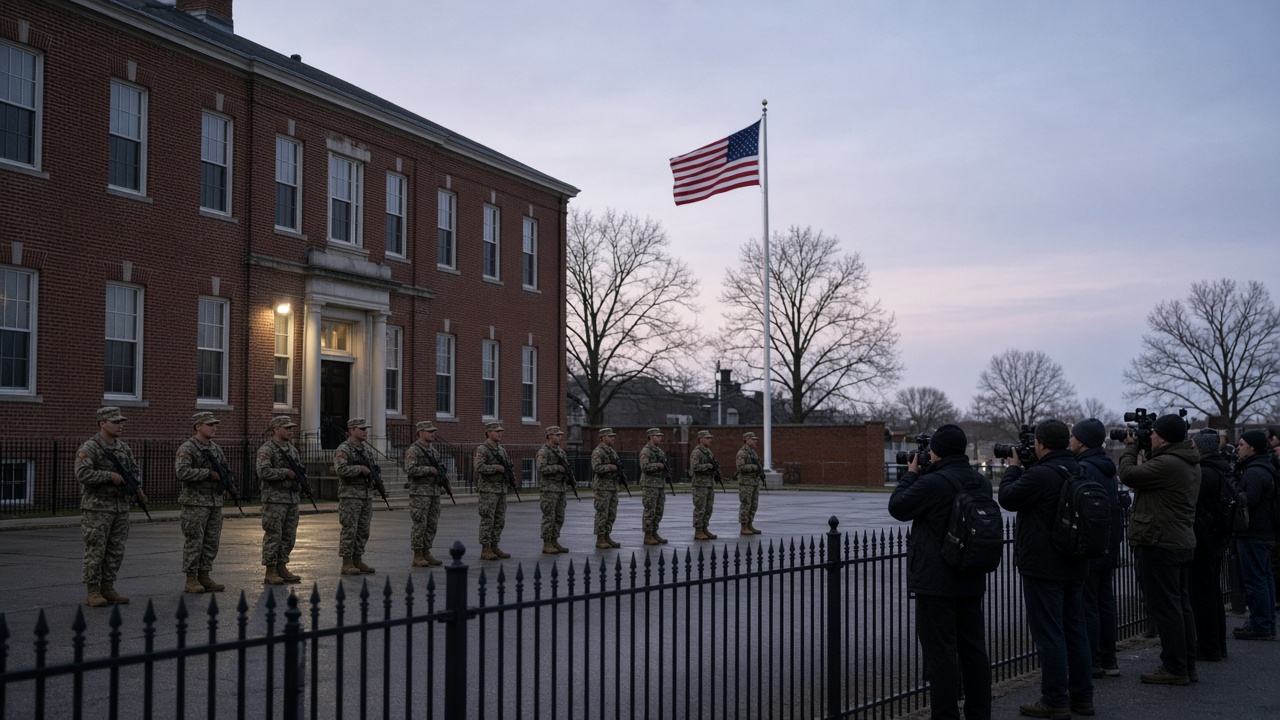
The Pentagon said Monday that President Donald Trump approved Defense Secretary Pete Hegseth’s recommendation to execute convicted Fort Hood mass shooter Nidal Malik Hasan by U.S. Army firing squad, setting in motion the first military execution since 1961.
Pentagon spokesman Sean Parnell announced the decision in a post on X, saying Army Secretary Adam Telle will choose the time and place. Hasan, 56, was sentenced to death in 2013 after a court-martial found him guilty of killing 13 people and wounding 32 others during a shooting rampage at the Soldier Readiness Processing Center on the Texas post in November 2009.
What the military announced
Parnell described Hasan as a “convicted terrorist” who opened fire on unarmed soldiers while shouting “Allahu Akbar.” He wrote that “judgement day for Hasan has finally come” after years of appeals and administrative review.
Hegseth had publicly urged Trump to approve the execution as early as September 2025. Monday’s statement did not give a schedule. Under Army regulations cited by U.S. outlets, an execution must occur no sooner than 60 days and no later than 150 days after presidential approval, though legal challenges could still delay the date.
Hasan, a psychiatrist and major at the time of the attack, largely represented himself at trial. He told the panel he was the shooter and framed the killings within his interpretation of jihad. Victims’ families and survivors have pressed for years to see the sentence carried out.
A rare military death sentence
If the firing squad proceeds, it would end a long drought in American military executions. Army Pvt. John Bennett was hanged at Fort Leavenworth, Kansas, in 1961 for rape and attempted murder; no service member has been put to death since.
Capital punishment in the federal system returned to the foreground after Trump reinstated federal executions through executive action in January 2025. Civilian death sentences by firing squad remain rare but not unprecedented: South Carolina executed Brad Sigmon by shooting in 2025 after he chose that method over lethal injection or the electric chair.
Hasan has been held at the U.S. Disciplinary Barracks at Fort Leavenworth while appeals wound through military courts. Defense attorneys have previously challenged the fairness of the proceedings and the sentence, though the core conviction has stood for more than a decade.
What happens next
Telle’s office will now set logistics for the execution, including security, witness lists and coordination with federal and state authorities in Kansas. Advocacy groups and Hasan’s legal team may file further motions; military justice experts note that even with presidential approval, last-minute litigation is common in death-penalty cases.
For Fort Hood, renamed Fort Cavazos in 2023, the announcement revives painful memories of the deadliest attack on a U.S. military installation in recent history. Lawmakers from Texas and veterans’ organizations issued statements welcoming the decision, while civil liberties groups questioned whether expediting execution after so many years serves due process.
The Pentagon did not take questions after Parnell’s social media posts. A formal written order or court scheduling notice is expected in the coming days, which will clarify whether the Army intends to proceed on the accelerated timeline Hegseth has advocated.