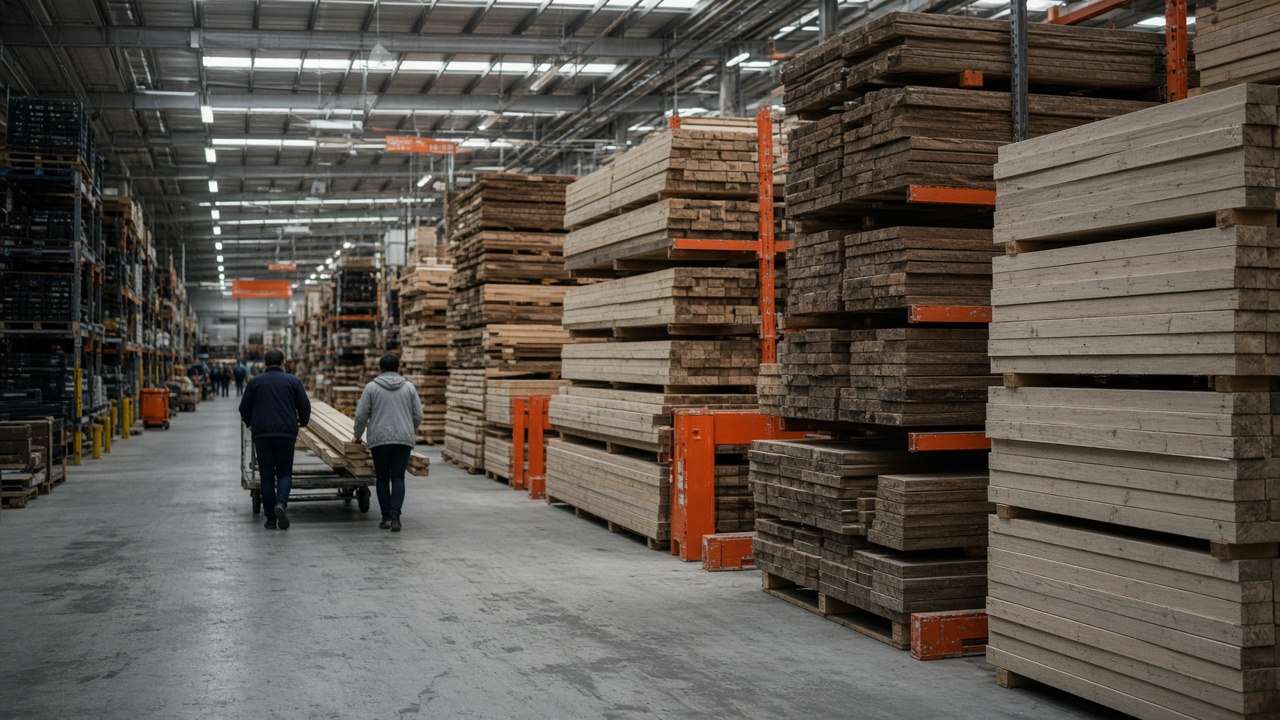
Wesfarmers told the ASX on Tuesday that Bunnings lifted comparable store sales 4.2 percent in the September quarter, as a string of wet weekends across the eastern states kept DIY shoppers indoors and spending on paint, flooring and storage rather than outdoor entertaining gear.
Weather as a trading tailwind
Chief executive Rob Scott said trade patterns tracked closely with Bureau of Meteorology rainfall maps, particularly around Sydney, Melbourne and Brisbane where Saturday deluges coincided with promotional events the chain had already booked. “When the barbecue aisle is quiet, the interior project aisle is not,” Scott said on a brief investor call.
The update lands as grocery rivals Coles and Woolworths face renewed political scrutiny over shelf pricing. Bunnings has largely avoided that spotlight, but Wesfarmers noted input costs for timber and steel fixtures remain elevated even as freight from Asia has eased.
What shoppers bought
Management said indoor categories led: interior paint, laminate benchtops, modular shelving and dehumidifiers. Garden soil and outdoor furniture underperformed against the prior year, when a dry spring pulled forward landscaping spend. Commercial trade sales to builders grew more slowly than consumer DIY, reflecting apartment approvals that remain patchy in Victoria and New South Wales.
Analysts at Jarden said the 4.2 percent comp read was ahead of their 2.8 percent forecast and implied Bunnings earnings before interest and tax could grow high single digits for the half if gross margins hold. Wesfarmers shares rose 1.1 percent in early trade before giving up part of the gain as the broader market slipped.
Cost side still tight
Wesfarmers finance chief Anthony Gianotti said wage inflation in warehouse and checkout roles ran above CPI, and the group continued to invest in supply-chain automation at its Truganina distribution campus. He declined to quantify how much of the quarter’s growth came from price versus volume, citing competitive sensitivity ahead of the ACCC’s supermarkets report.
Labour hire firms supplying weekend casuals reported strong demand from hardware chains, a contrast with discretionary apparel retailers that blamed warm-weather uncertainty for softer foot traffic in September.
Outlook into summer
Scott said October trading had started “in line with plan,” with storm-season preparedness kits selling well along the Queensland coast. He warned that an abrupt return to dry heat could shift mix back toward outdoor categories quickly, making the December quarter harder to forecast than the rain-assisted September result.
Wesfarmers will report half-year results in February alongside Kmart and Officeworks, where management flagged steadier but less spectacular momentum. For now, Bunnings remains the conglomerate’s clearest weather hedge in a consumer economy still debating whether the Reserve Bank has finished cutting rates.
Investors will watch November’s Westpac-Melbourne Institute sentiment survey for signs that households are willing to fund larger renovation projects, or whether grocery inflation fears pull spending back toward essentials only.
Store network and staffing
Bunnings operates more than 300 warehouse stores across Australia and New Zealand, and the September quarter included five new openings in growth corridors west of Sydney. Scott said new sites cannibalised little from existing boxes because they targeted underserviced suburbs where competitors lacked large-format hardware.
Staff retention improved modestly after the chain expanded weekend penalty rates in line with enterprise agreements negotiated last year. Union officials said overtime rosters still ran hot during storm weekends, but absenteeism fell compared with the same period in 2025 when floods disrupted supply routes from Queensland mills.
Marketing spend tilted toward digital how-to clips rather than catalogue drops, reflecting younger renters doing bathroom refreshes without tradies. Wesfarmers did not disclose click-and-collect penetration, but analysts estimate it now exceeds a third of transactions in capital cities.
What happens next
Officials and executives contacted by InfoHandle said they would publish further detail when audits complete, stressing that early figures can shift as more data arrives from registries, hospitals or trading desks. Analysts cautioned against treating a single day’s price move or one regulatory letter as proof of a lasting trend.
Consumer groups urged households to read updated product disclosures and to lodge complaints with regulators when timelines slip. For investors, the episode fits a broader pattern of tighter oversight across Australian finance, energy and health markets as Parliament returns for spring sittings.
State and federal agencies promised coordinated messaging so businesses do not face conflicting guidance. Whether that cooperation holds through the election cycle will determine how quickly confidence recovers in the sectors affected.
Local media will track implementation milestones weekly; our desk will update readers if material corrections or retractions are issued by primary sources.