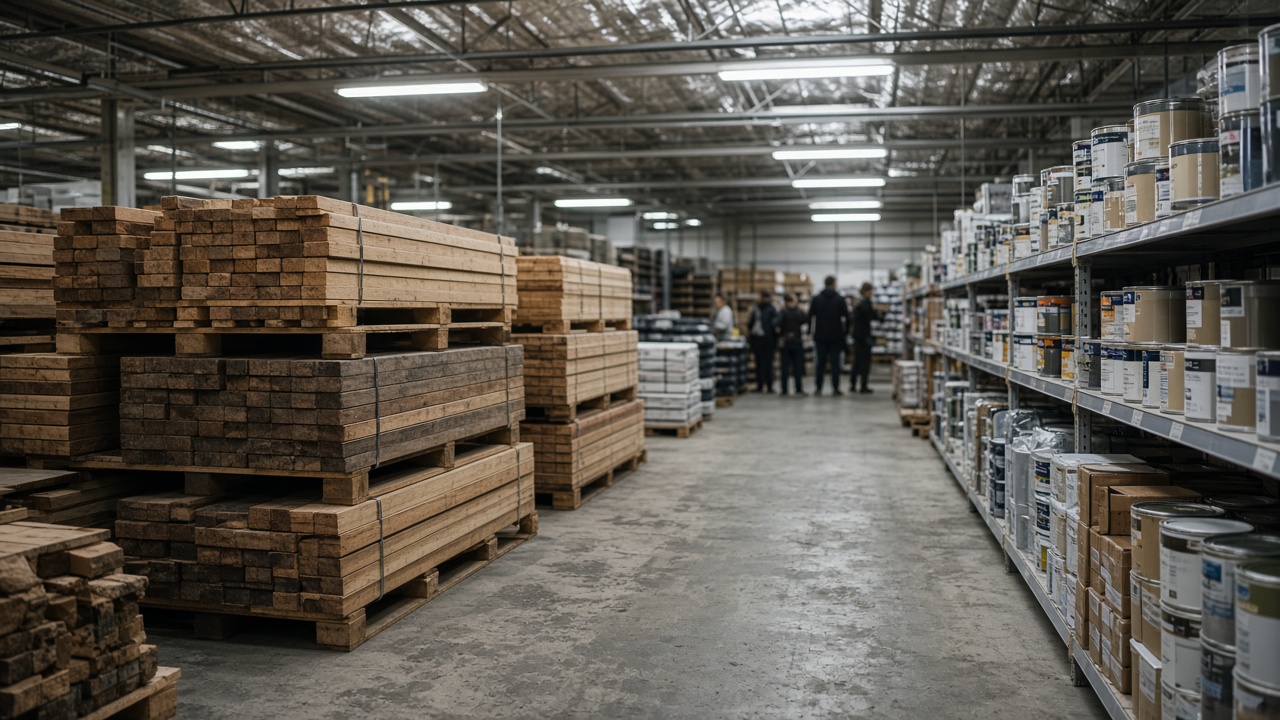
Bunnings lifted comparable store sales through September as a run of wet weekends across Sydney, Brisbane and Melbourne kept outdoor trades idle and pushed repair-and-refresh spending into big-box aisles, according to a Wesfarmers trading update circulated to investors on Monday ahead of its October sales briefing.
Weather as a traffic planner
Meteorological data for the month show eastern capitals recording above-average rain days on four of five Saturdays, a pattern Wesfarmers executives told analysts had “materially skewed” weekend footfall toward indoor categories. Store managers in western Sydney reported sealant, interior paint and dehumidifier units clearing pallets faster than the prior-year period, while commercial contractors delayed exterior cladding jobs.
The hardware chain entered the quarter coming off a full year in which total store sales rose 4.0 per cent and store-on-store sales 3.7 per cent, with earnings before tax excluding property contributions up 5.0 per cent to $2.455 billion. Management said the first seven weeks of FY2027 had tracked “broadly in line” with the second-half FY2026 run-rate, implying the September weather bump is additive rather than a one-off catch-up from a soft August.
Consumer versus trade mix
Unlike prior inflation spikes that narrowed baskets to essentials, the September trading note described growth across both consumer and commercial segments. Trade accounts still bought fixings and safety gear for indoor fit-outs, while households picked up flat-pack storage and lighting kits that had been deferred since mid-year mortgage repricing. Wesfarmers reiterated that price investment remained the primary lever, with productivity savings recycled into shelf prices rather than margin expansion.
Digital channels continued to outpace stores in percentage terms, though the absolute dollars still skew heavily to physical visits for bulky goods. Bunnings’ Buddy shopping agent, rolled out nationally after an April launch, contributed to higher online conversion rates according to Google Cloud case materials cited in investor packs, but executives cautioned against attributing the September comp solely to AI-assisted checkout flows.
What investors watch next
Analysts at major banks will parse October’s formal sales release for evidence that wet-weather strength is persisting into the AFL grand final long weekend, traditionally a peak garden and outdoor category window. A reversal would suggest September was purely calendar-driven; sustained indoor category growth would support Wesfarmers’ argument that housing stock ageing, rather than new construction, is carrying the cycle.
Competitors including Mitre 10 and independent trade suppliers have not published equivalent comps, leaving Bunnings’ update as the earliest read on Australian discretionary hardware demand before third-quarter GDP consumption data. Wesfarmers shares were little changed in early trade, with the market treating the update as confirmation rather than surprise.
For households, the practical implication is promotional intensity: Bunnings has telegraphed continued price matching on key lines through Christmas, meaning the rain that kept builders off roofs may keep register prices competitive for DIY buyers who finally have a dry Sunday to finish the job.