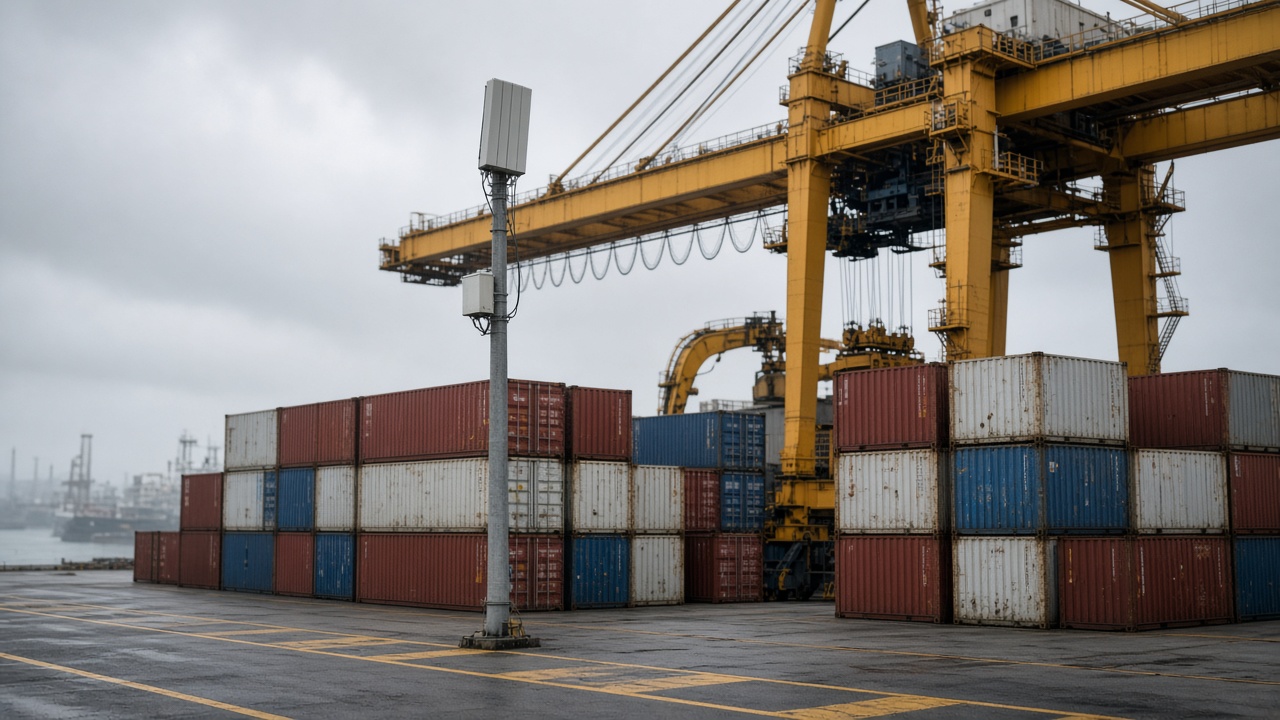
Far EasTone Telecommunications switched on a private 5G network slice for Kaohsiung Port’s container terminal, giving crane operators a dedicated radio lane for camera feeds and load sensors that previously contended with public macro traffic. The carrier and Taiwan International Ports Corporation said the slice went live Oct. 2 after a six-month pilot on two ship-to-shore cranes along pier 108.
What the slice does
Stevedores use ruggedized tablets to view real-time sway and spreader alignment video with latency under 20 milliseconds, according to Far EasTone engineers. Telemetry packets reporting hoist stress now bypass consumer data networks, reducing dropped packets during peak vessel calls. The setup uses 4.9 GHz enterprise spectrum the National Communications Commission cleared for port trials last year.
Safety and downtime
Port safety officers said the dedicated network supports automatic braking alerts when wind gusts exceed thresholds stored in the port authority’s weather API. Maintenance teams can push firmware to crane controllers during scheduled lunch breaks without competing for bandwidth with truck drivers streaming video on public 5G. Downtime from radio handoffs fell 37 percent in the pilot month compared with macro-only operations.
Deployment path
Far EasTone installed edge compute cabinets in a pier substation, keeping video analytics on-site for cybersecurity reasons demanded by customs officials. Twelve additional cranes are scheduled for connection by December, followed by automated guided vehicles moving containers to bonded warehouses. Chunghwa Telecom and Taiwan Mobile bid on adjacent slices; Far EasTone won the first pier based on existing fiber backhaul it laid for the port’s Wi-Fi refresh.
Cost and contracts
The three-year contract charges the port authority a flat monthly fee plus per-gigabyte overage only for archival video stored longer than 30 days. Far EasTone declined to disclose totals, but port executives told city council members the spend fits within an existing digitization budget line. Labor unions asked for training stipends before tablets replace paper checklists entirely.
Policy context
Kaohsiung Mayor Chen Chi-mai’s office framed the network as part of a smart-port roadmap competing with Busan and Singapore for transshipment efficiency. Environmental groups want energy-use reports on edge cabinets powered continuously; Far EasTone promised quarterly power disclosures. National security reviewers required air-gapped logging for any firmware pushed to cranes handling dual-use container scans.
What comes next
If pier 108 hits uptime targets through typhoon season, the port will tender slices for bulk cargo terminals handling semiconductor equipment imports. Exporters watching Kaohsiung congestion metrics hope faster crane cycles trim vessel waiting fees that spiked in early 2026. For now, the private 5G slice is a narrow but concrete upgrade on the waterfront, not a press-release pilot.