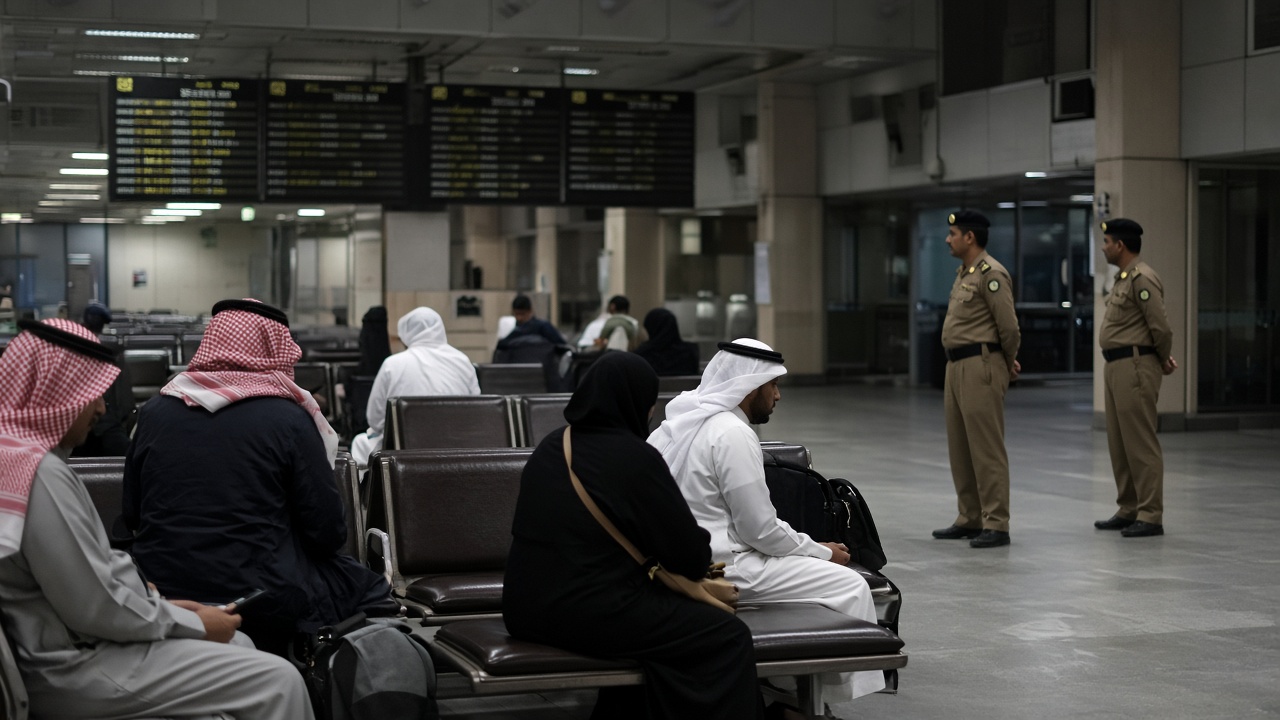
Saudi Arabia’s General Authority of Civil Aviation (GACA) confirmed on Tuesday that drone or missile strikes had targeted two southern airports, wounding three people and damaging facilities, as Yemen’s war spilled back across the kingdom’s border and commercial aviation in Riyadh faced mounting disruption.
In a statement carried on social media, GACA said King Abdullah bin Abdulaziz International Airport in Jazan and Najran International Airport were attacked on Monday evening. Emergency teams responded under existing contingency plans, the authority said, and the three injured were taken to hospital for treatment. GACA added that it was assessing damage, verifying the safety of airport infrastructure and coordinating with security agencies to keep passenger operations secure.
What Riyadh passengers saw
The confirmed southern strikes landed on the same night the Iran-backed Houthis said they had hit King Khalid International Airport in Riyadh, an Aramco refinery in Rabigh and several military sites. Loud blasts were reported in the capital, but Saudi officials did not publicly confirm strikes on the Riyadh airport itself.
Aviation trackers nonetheless showed growing friction for travelers. Flightradar24 data cited by multiple news outlets indicated repeated ground stops and airspace holds affecting Riyadh’s main airport on Tuesday, and the airport’s public website was intermittently unreachable. Saudi authorities have not linked those operational pauses to a specific attack, leaving airlines and insurers to weigh risk as the Houthis escalate cross-border fire while Yemeni government forces push along the Red Sea coast.
Fighting at the strait
The airport alert coincided with heavy fighting around the Bab el-Mandeb strait, the narrow waterway that connects the Red Sea to the Gulf of Aden. Yemeni officials allied with the internationally recognized government said coalition aircraft supported a ground offensive to retake coastal towns north of the strait, while Houthi spokesmen claimed successful long-range strikes inside Saudi Arabia.
Representatives of Saudi Arabia, Pakistan and Turkey met in Riyadh on Monday under a mutual defence pact signed in August. In a joint statement, the three governments condemned attacks on Saudi cities and economic sites and agreed to accelerate the deployment of military forces to the kingdom, though they did not specify numbers or timelines.
Energy markets on watch
Traders have treated every verified hit on Saudi infrastructure as a test of export routes already under pressure from the wider Middle East conflict. Brent crude futures were trading near $100 a barrel on Tuesday, reflecting concern that airport and refinery attacks could compound shipping risks in the Red Sea even when Gulf of Hormuz flows dominate headlines.
United Nations officials have warned that the renewed Yemen fighting has displaced more than 170,000 people inside the country and sent thousands more toward Djibouti. For airlines, the immediate question is how long GACA’s southern airports need for repairs—and whether Riyadh’s holds become a sustained pattern as the Houthis promise more strikes on Saudi aviation and energy targets.