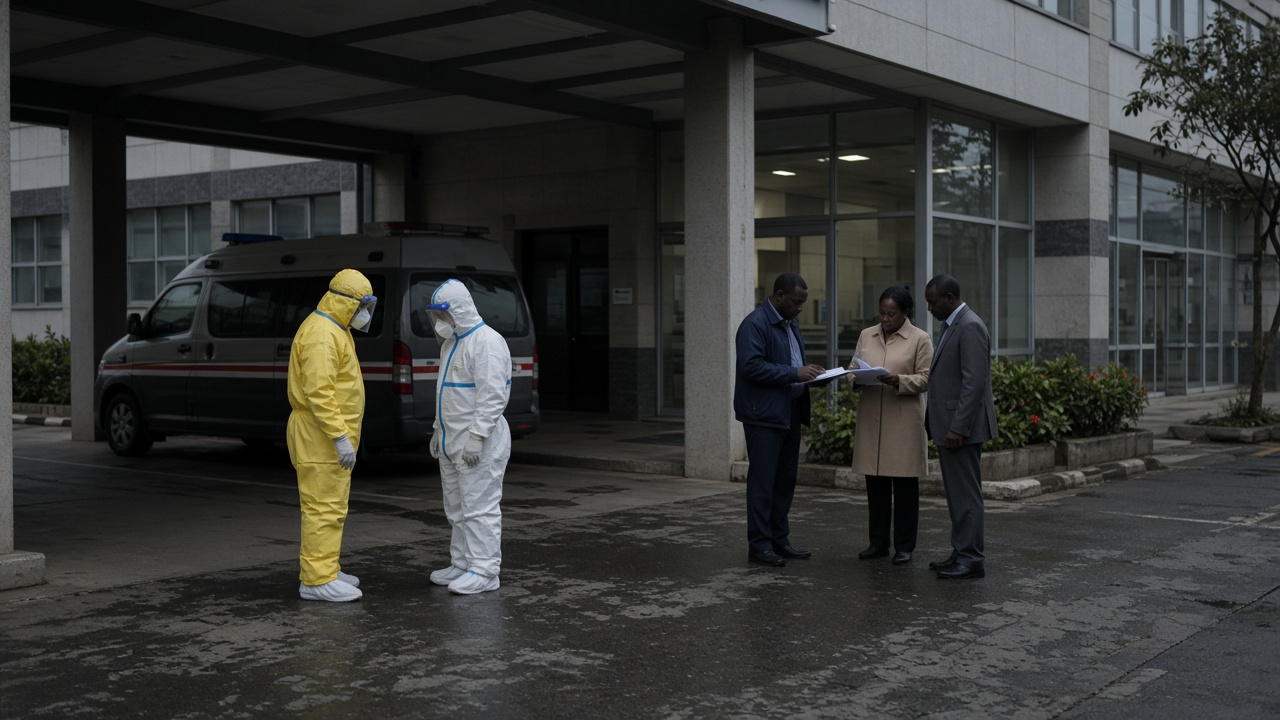
Kenya recorded its first imported case of Bundibugyo virus disease on Tuesday after a Kenyan citizen who had lived in the Democratic Republic of the Congo for seven years died in a Nairobi hospital, ending a month-long illness that spanned three countries before samples turned positive at two national laboratories.
Health Cabinet Secretary Aden Duale told reporters the ministry had activated containment steps and was tracing anyone who may have shared a ward, a vehicle or a flight with the patient. The World Health Organization said it was working with Nairobi to tighten screening and burial protocols under the International Health Regulations.
What authorities say happened
Duale said the patient fell ill in Congo and received care at several facilities there before traveling by road to Kampala on 2 October and boarding a flight to Nairobi, arriving on 3 October. A relative drove the patient to a hospital, where staff isolated him quickly. Specimens tested positive for Bundibugyo virus at Kenya's National Virology Reference Laboratory and at the Kenya Medical Research Institute, Duale said.
Despite supportive treatment, the patient died late on 5 October. Duale said burial followed Kenya's safe and dignified protocol for viral hemorrhagic fevers on 6 October. WHO's regional office said Kenya notified the agency the same day.
Bundibugyo is an Ebola-family virus first identified in Uganda in 2007. Kenya becomes the fourth country to confirm the disease. Congo is battling a large ongoing outbreak; Uganda ended its latest cluster in August after mostly imported cases linked to Congo. France reported a travel-related Bundibugyo infection in June.
Contact tracing and travel exposure
Duale said officials had listed 28 contacts, including family members and health workers who treated the patient. Authorities are also trying to reach 23 passengers and four crew members who were on the Uganda-to-Nairobi flight, he said.
WHO said the patient passed through normal public screening at Nairobi's main airport before transfer to hospital. That detail matters for outbreak detectives: Bundibugyo can spread through close contact with bodily fluids, not through casual airport proximity, but any symptomatic traveler who cleared a screen raises questions about what questions screeners asked and when symptoms began.
Kenya has been on alert since May, when Congo and Uganda declared outbreaks. Duale said more than 652,000 travelers had been screened entering Kenya as of 6 October, with 267 samples tested after screening referrals and about 5,000 health workers trained on prevention and management, according to WHO's tally.
What changes for neighbors and travelers
Uganda's health ministry had already tightened vigilance along the western border. Congo continues to report the deadliest Ebola crisis on record in that country this year, with thousands of deaths in the current wave, though Bundibugyo is a distinct viral species with its own case fatality history.
For travelers, the practical guidance remains unchanged but sharper: anyone with fever, bleeding or severe weakness after travel from eastern Congo or western Uganda should seek care immediately and disclose travel history before sitting in a general waiting room. Hospitals in Nairobi said they were holding additional isolation capacity while contact interviews continue.
WHO emphasized that Kenya's notification and burial steps met international rules. The open question is whether any secondary case appears among the 28 named contacts or among fellow passengers. Absence of further positives in the next two incubation cycles would suggest the import was contained, but health officials said they are not lowering screening at points of entry.