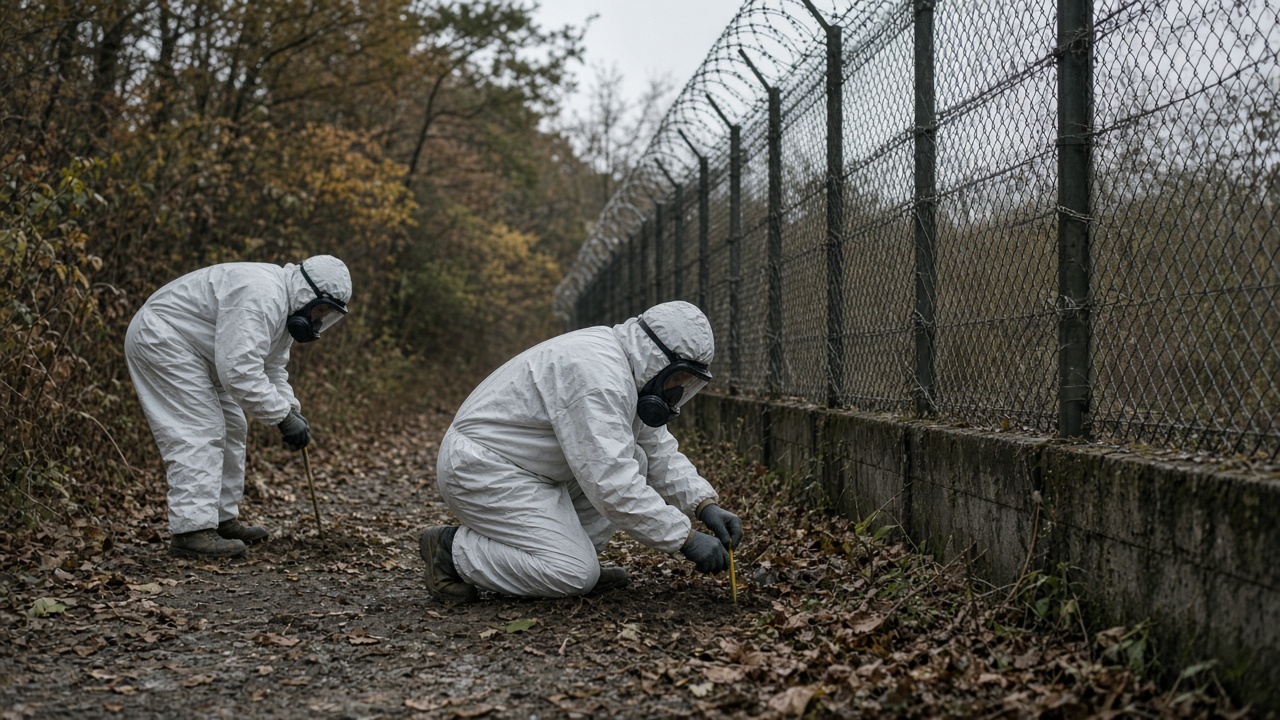
South Korea’s Joint Chiefs of Staff said Monday that a landmine explosion on 21 September that badly wounded three soldiers in the western Demilitarized Zone was caused by a North Korean plastic anti-personnel device planted south of the Military Demarcation Line. Within hours of releasing that final finding, the military started a demining operation at the blast site under coordination with the United Nations Command.
What the investigation concluded
Vice Chairman Lt. Gen. Kwon Dae-won told reporters at the defense ministry in Yongsan that GPS analysis placed the first and second explosion craters and a mine recovered on 29 September about ten meters south of the MDL, a location the UNC agreed violated the 1953 armistice. The National Forensic Service detected TNT, thermosetting resin and other trace material on gear worn by the injured troops, and fragment comparisons matched North Korean plastic mines previously recovered near the Imjin River.
Investigators rejected the idea that floods had washed mines downhill. Soldiers at the scene reported devices buried five to ten centimeters deep, and the mine found at the site sat about three centimeters below the surface. The UNC assessed the emplacement as deliberate and more than a year old, Kwon said, citing spacing between craters and the recovered device as typical of planted North Korean fields rather than drift.
Demining begins at 12:51 p.m.
Joint Chiefs operations director Yang Jin-hyeok said the afternoon clearance mission targeted mines the UNC confirmed south of the line, calling it an effective response to casualties during routine DMZ work. The operation began at 12:51 p.m., according to SBS reporting from the briefing, with planners emphasizing armistice compliance and measures to avoid accidental clashes with North Korean forces across the fence.
Two of the three wounded service members remain hospitalized with serious injuries; the third is treated for lighter wounds. Seoul had spent two weeks moving from preliminary assessments to this final attribution, a timeline that kept parliamentary and public scrutiny focused on whether Pyongyang’s so-called border fortification work had crossed the line literally as well as rhetorically.
Pressure on Pyongyang
Kwon urged North Korea to apologize to the wounded troops and remove remaining mines south of the MDL. He warned that South Korean units would continue clearing operations if the North does not withdraw the fields itself. North Korea has not publicly accepted responsibility; its state media have framed southern border work as defensive while accusing Seoul and Washington of escalation.
The blast is the most serious armistice dispute on the western DMZ in recent months, coming as President Lee Jae Myung’s government balances outreach rhetoric with firmer military responses to provocations. Monday’s one-two punch—a legal conclusion and immediate demining—signals that Seoul intends to pair diplomacy with visible removal of the devices that injured its soldiers.