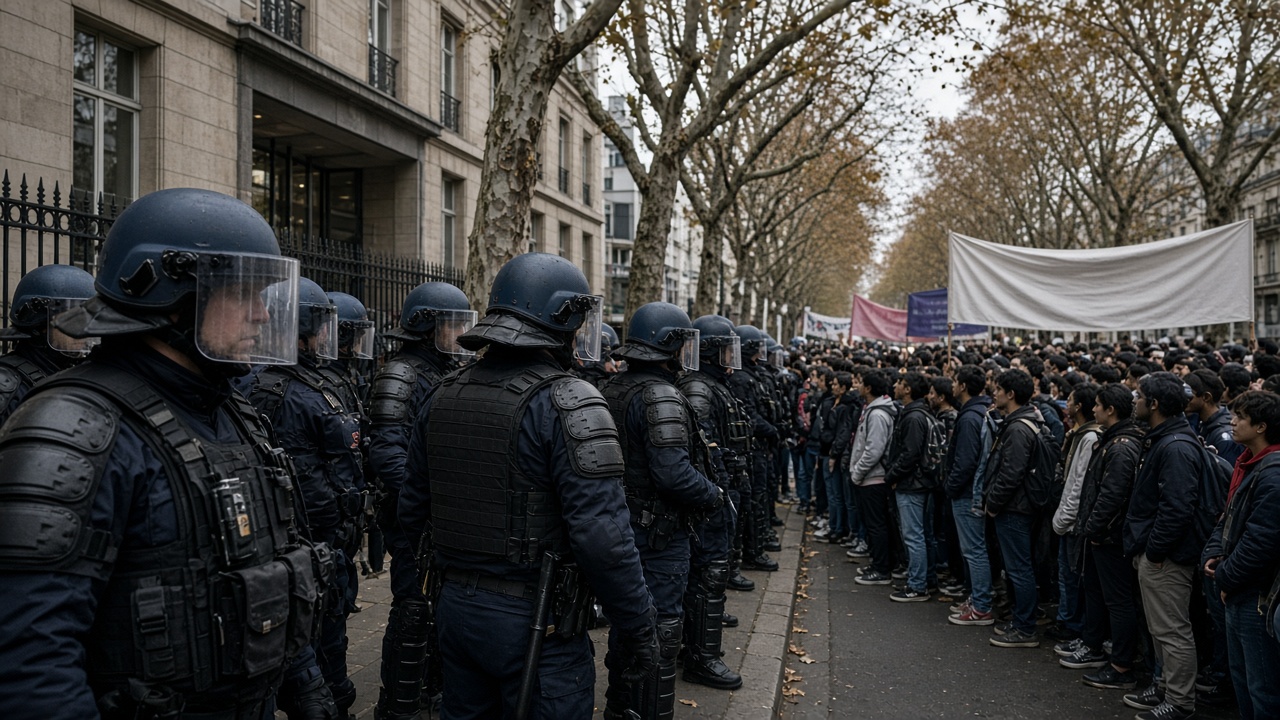
PARIS — Prime Minister Sébastien Lecornu ordered French high schools to suspend classes for half a day sometime between Wednesday and Friday, telling the National Assembly that principals need room to run what he called an “internal democracy” session with students after a third wave of nationwide walkouts.
The move came as riot police fired tear gas at protesters blockading campuses and as unions and student groups staged marches in Paris and regional cities. The interior ministry counted roughly 250,000 demonstrators nationwide on Tuesday, while organizers put the crowd closer to half a million. The High School Students Union said nearly 2,000 lycées were blockaded or closed for the day.
What the government announced
Speaking during questions to the government, Lecornu said Education Minister Édouard Geffray would “free up time” by clearing schedules on Wednesday, Thursday or Friday so each head teacher could convene students and staff. The prime minister framed the pause as a way to air grievances without condoning violence, insisting that “burning a high school does not improve the state of high school buildings.”
Geffray had already opened an online consultation for students that runs until 23 October. Lecornu also told ministers to respond to the movement’s demands by the end of October, including repairs to aging buildings. Unions, however, called the half-day plan “out of touch,” saying principals cannot reorganize timetables on a few hours’ notice.
How the protests escalated
The demonstrations began two weeks ago in Paris’s poorest suburbs over teacher shortages, lunch breaks and the length of the school day. They have since spread across metropolitan France, with the government describing some actions as urban violence. Lecornu said 215 teenagers and 715 police officers have been injured since the movement started, and the interior ministry said more than 6,100 people have been arrested, most of them minors.
On Monday, a 15-year-old student lost a hand during clashes in Lens, according to officials, intensifying debate over policing tactics. Lecornu rejected claims of “police repression” while condemning what he called “ultra-violence” at school gates. Two major student unions have called another day of action for Thursday.
What happens next
Parliament remains deadlocked on broader budget questions, and Lecornu urged lawmakers to “stand with” teachers and other public workers facing harassment. For students, the immediate question is whether the scheduled half-day forums defuse blockades or become another rallying point. Organizers say they will keep pressure on until the government commits concrete funding for substitutes, cafeterias and building repairs—not just consultation windows.