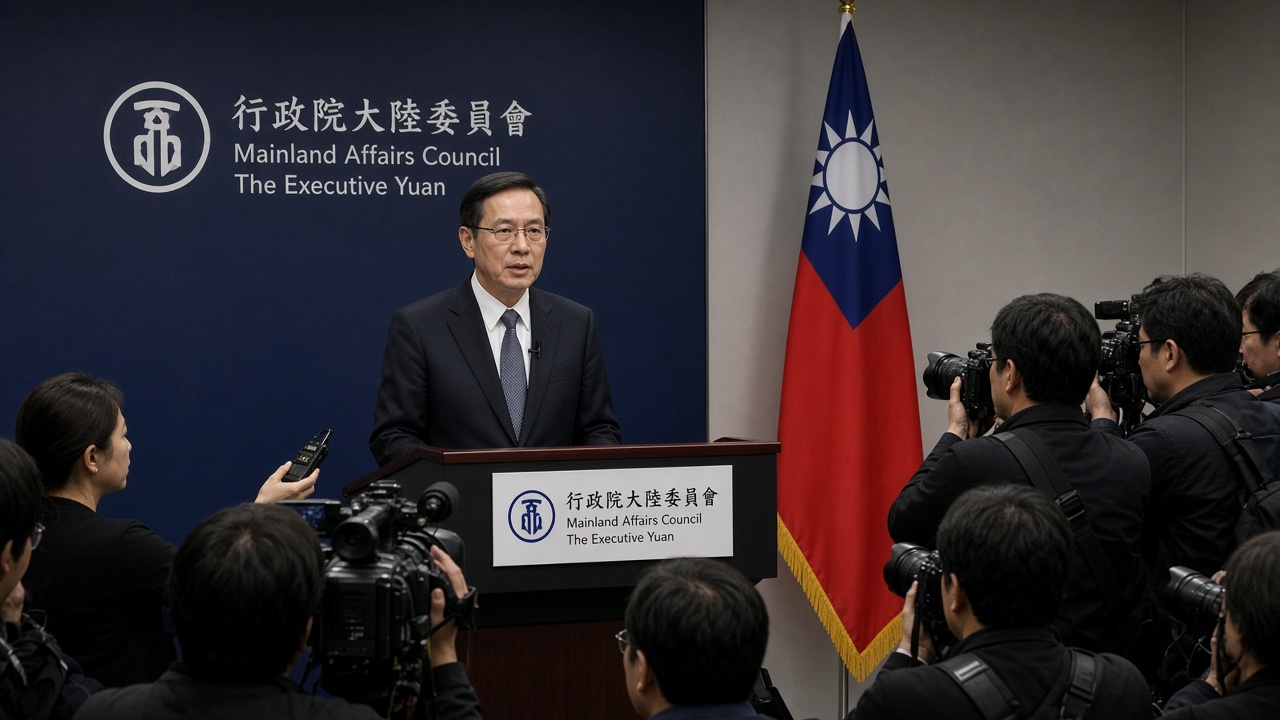
Taiwan’s Mainland Affairs Council said Monday that it has logged at least 140 instances of Chinese transnational repression and that at least 126 Taiwanese have been directly targeted, as Taipei responded to fresh U.S. enforcement activity involving President Lai Ching-te’s son and his family in California.
What the council disclosed
In a press release, the MAC said Beijing’s tactics aim at “the entire Taiwanese population,” not only officials, in an effort to create a chilling effect abroad and at home. Deputy Minister Liang Wen-chieh told reporters the tally includes harassment, surveillance and intimidation traced to Chinese state actors or their proxies.
The council’s update landed the same day the Presidential Office praised U.S. federal action in Los Angeles that it called “a typical example of transnational repression.” Spokesperson Karen Kuo said such conduct “should not be tolerated in the civilized world” and urged democracies to share intelligence on cross-border intimidation.
Legal gap in Taipei
The MAC said it will propose amendments to the Anti-infiltration Act to explicitly criminalize transnational repression inside Taiwan’s jurisdiction. The council noted that serving as an unregistered agent for a foreign government is already a felony under U.S. law, but that Taiwan lacks a parallel statute tailored to coercion campaigns that unfold partly overseas.
Legislators have not yet published draft language. Opposition lawmakers said they would scrutinize any expansion of security powers for due-process safeguards, while administration allies argued the reform is overdue after Czech intelligence confirmed a 2024 plot to stage a vehicle collision against Vice President Hsiao Bi-khim during a visit to Prague.
Broader pattern
Hung Pu-chao, deputy executive director of Tunghai University’s Cross-Strait Research Center, told the Liberty Times that Washington’s decision to pursue a case on U.S. soil shows surveillance against Taiwanese families has crossed a line for allied prosecutors. The MAC linked Monday’s numbers to earlier warnings about “new methods” of pressure, including online harassment and pressure on relatives who remain in Taiwan while targets study or work abroad.
Taiwan’s National Security Bureau has not released a separate public count. The MAC figures are based on complaints routed through the council, police referrals and diplomatic cables from partner agencies, and officials said they would publish anonymized case studies once prosecutors abroad unseal filings.
What happens next
Cabinet officials said the Executive Yuan will coordinate with the Ministry of Justice on bill text before the next legislative session. Diplomats in Washington and Brussels are expected to brief counterparts on the MAC database in hopes of harmonizing travel warnings and witness-protection tools for Taiwanese citizens abroad. For households already in the council’s files, the immediate question is whether amended law would allow restraining orders or asset freezes against intermediaries identified through foreign court records.