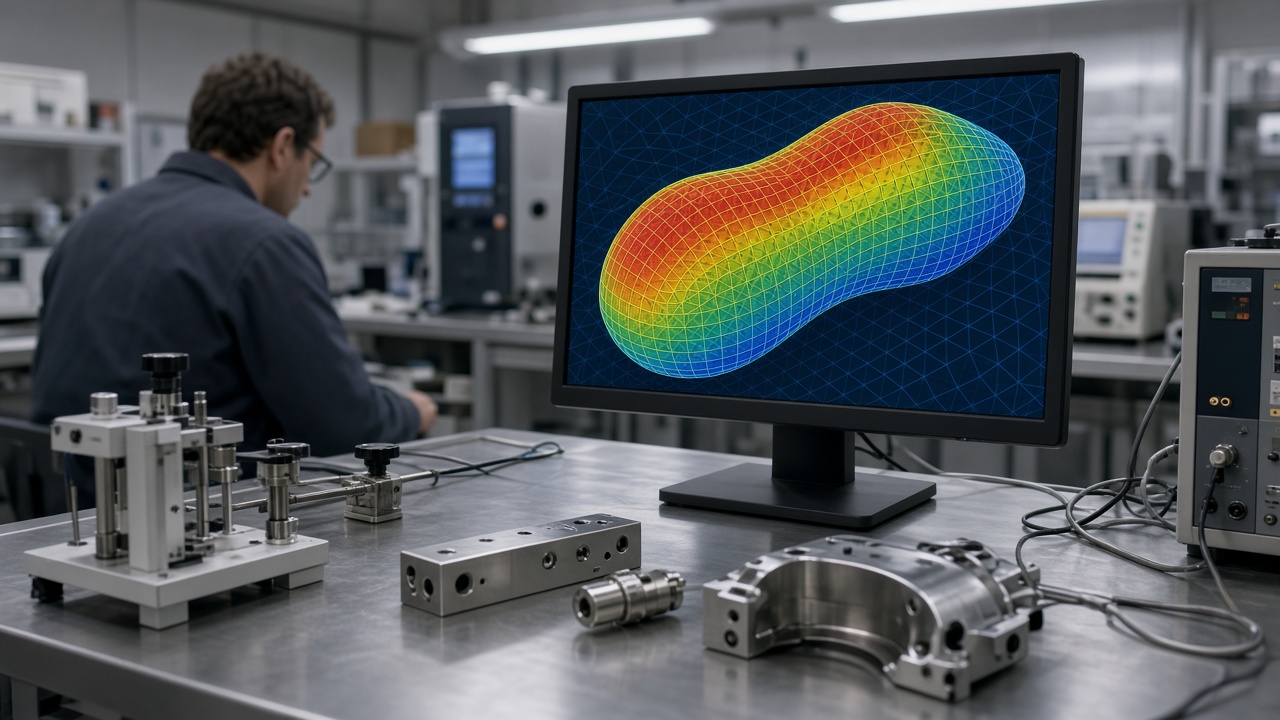
Researchers led by the University of Manchester have published a roadmap for when computer-generated evidence should count in UK medical-device regulation, working with the Medicines and Healthcare products Regulatory Agency and industry partners through the UK Centre of Excellence on In Silico Regulatory Science and Innovation.
From models to decisions
The framework, detailed in the journal Device, asks three filtering questions before a simulation can inform safety: Is the harm relevant to the regulatory decision? Is there a plausible causal link between a design change and that harm? Can modelling add evidence that bench tests or clinical studies cannot supply quickly?
It then scales scrutiny to how much the decision relies on the model and how severe a wrong call would be. High-stakes predictions require stronger verification that the code matches real-world measurements and that uncertainty bounds are reported.
Why regulators care now
Device makers increasingly use digital twins to test design tweaks on implants, pumps, and diagnostic hardware. MHRA funding through Innovate UK and the Medical Research Council reflects pressure to shorten approval timelines without weakening post-market surveillance.
Limits the authors acknowledge
In silico evidence cannot replace human trials for novel mechanisms of action. The authors stress transparency on assumptions — particularly patient variability — so assessors can see when a model is explanatory versus predictive.
For NHS procurement teams, the near-term impact is indirect: faster clearances for software-heavy devices used in theatres and imaging suites. For startups, the payoff is a clearer checklist before they book costly clinical studies.
What happens next
MHRA will map the framework onto existing guidance for software as a medical device. Manufacturers should expect questions on validation datasets in pre-submission meetings. If the approach sticks, simulation vendors could see more demand from UK contract manufacturers serving EU markets still harmonising with the EU Medical Device Regulation.
Industry adoption
Large medtech firms already maintain simulation teams in Cambridge and Leeds. The framework gives their regulatory affairs staff a shared vocabulary when meeting MHRA assessors, reducing back-and-forth on mesh quality and boundary conditions.
Smaller startups may need third-party auditors to certify models, adding cost but potentially still cheaper than a full clinical trial for incremental design changes such as catheter stiffness tweaks.
Patient safety emphasis
Patient groups consulted on the paper asked for plain-language summaries when simulations influence labelling changes. MHRA said it will pilot such summaries in 2027 for selected Class IIb devices.