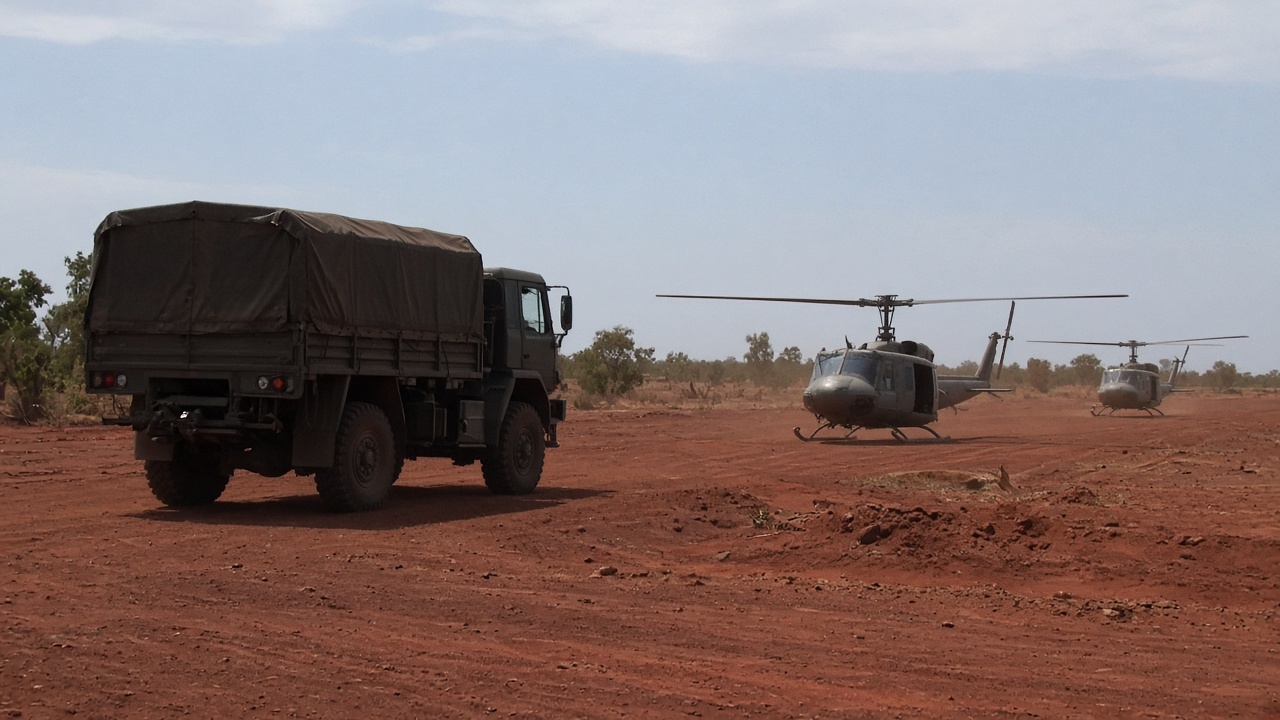
An Australian Army soldier died and five others were injured during a training exercise at the Mount Bundey live-fire area southeast of Darwin, the Defence Department said Monday, opening another safety review at one of the country’s busiest joint training grounds.
What Defence disclosed
In a brief statement, Defence said the incident occurred on Sunday at Mount Bundey, roughly 100 kilometers from Darwin, but did not identify the soldier or describe the mechanism of injury. The department said it was notifying the family and would not release further details while an investigation proceeds.
Northern Territory Chief Minister Lia Finocchiaro told local media that each of the five injured personnel was flown to Royal Darwin Hospital. Their conditions were not made public Monday morning Sydney time.
Police and coronial paths
NT Police Commissioner Martin Dole said officers were sent to the range to support Defence’s inquiry. Fatal training accidents on Commonwealth land typically trigger parallel military safety boards and, where required, coronial processes in the Northern Territory.
Mount Bundey hosts Australian and allied live-fire drills year-round. The range was the site of a 2017 fatality when Private Jason Challis was killed during a live-fire exercise; a coroner later criticized rehearsal standards and described the event as “shambolic.” Monday’s death is the second Army fatality in training this calendar year after Warrant Officer Class Two Lachlan Muddle died during an exercise at Jervis Bay in May.
Political and family context
Defence Minister Richard Marles had not issued a separate statement by mid-morning Tuesday beyond the department’s release. Opposition defence spokespeople often press for timetables when training deaths cluster, and the Challis inquest remains a reference point for how long families wait for public findings.
The Australian Defence Force has expanded joint exercises with U.S. and regional partners as strategic competition in the Indo-Pacific intensifies. Incidents at high-tempo ranges draw scrutiny over risk controls even when combat casualties are not involved.
What investigators will examine
Military safety teams will reconstruct the sequence of fire, communications and medical response on Sunday. Questions routinely include whether live and blank ammunition phases were separated, whether range control had clear line-of-sight, and how quickly medevac assets were scrambled from Darwin.
Until those reports land, Canberra’s immediate obligation is to the deceased soldier’s family and to the five injured members still under hospital care. Defence said it would provide updates when operational security and family privacy allow, and that the range would stay closed to unrelated units while investigators work.