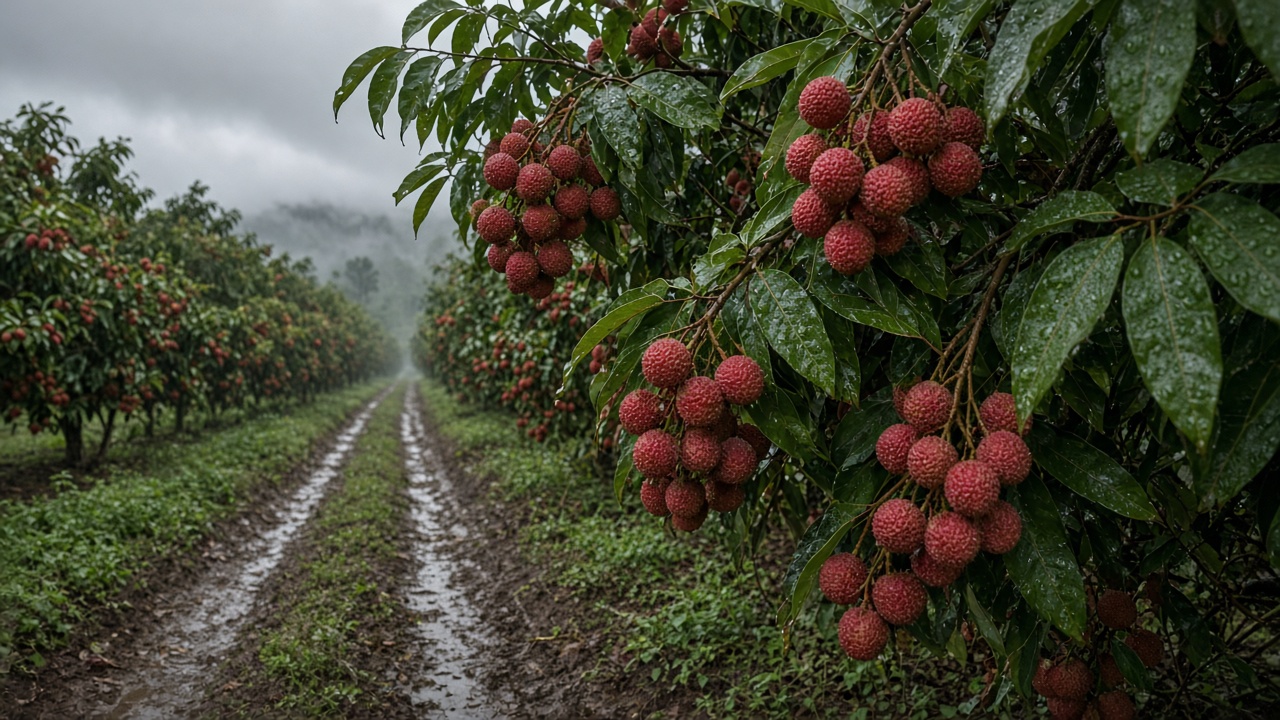
A National Taiwan University field team documented a 12 percent drop in litchi yields across 42 Pingtung orchards after September rains disrupted pollination and encouraged fungal spotting on late-season fruit, according to a preliminary survey released Monday. Researchers cautioned that final numbers may shift once farmers finish harvesting the tail end of the cultivar “Rose Red.”
Weather mechanics
Central Weather Administration data show Pingtung received 28 percent more rainfall than the 10-year September average, concentrated in two weekend systems that coincided with peak bloom on hillside plots. NTU graduate students recorded lower bee activity during those windows, reducing fruit set on upper canopy branches. Farmers who delayed thinning saw higher humidity inside dense crowns, worsening anthracnose lesions.
Farm economics
Wholesale prices at Kaohsiung fruit markets rose 8 percent week over week as buyers competed for export-grade cartons bound for Hong Kong and Singapore. Smaller fruit that failed size grading is moving to domestic juice processors at steep discounts. Co-op leaders asked the Council of Agriculture to activate crop disaster relief if county losses exceed 20 percent, a threshold not yet met in the NTU sample.
Research follow-up
NTU plans drone multispectral flights in October to map canopy stress, sharing open data with Taiwan Agricultural Research Institute breeders selecting rain-tolerant lines. Extension agents are distributing ventilation pruning guides in Mandarin and Taiwanese, emphasizing airflow over chemical sprays when harvest is within three weeks.
Climate context
Pingtung litchi growers already shifted harvest calendars earlier in the decade to dodge typhoons; now off-season rains pose a new risk. Insurance products covering pollination failure remain rare, pushing farmers toward overhead nets that survived September winds better than expected. Municipal officials want net subsidies folded into next year’s farm resilience budget debated in Taipei.
Consumer impact
Supermarkets in Taipei maintained litchi promotions through Mid-Autumn, but buyers may see fewer large-grade gift boxes by late October. Export inspectors tightened cold-chain checks after fungal spots appeared on a rejected shipment last week, a reminder that quality losses can outpace quantity losses in revenue terms.
What farmers should watch
Orchard managers should log daily bee counts and moisture readings through the remaining harvest, uploading them to the county agriculture bureau portal that NTU uses to validate disaster claims. If October stays wet, secondary fungal flushes could widen the 12 percent yield gap before final county statistics publish in November.