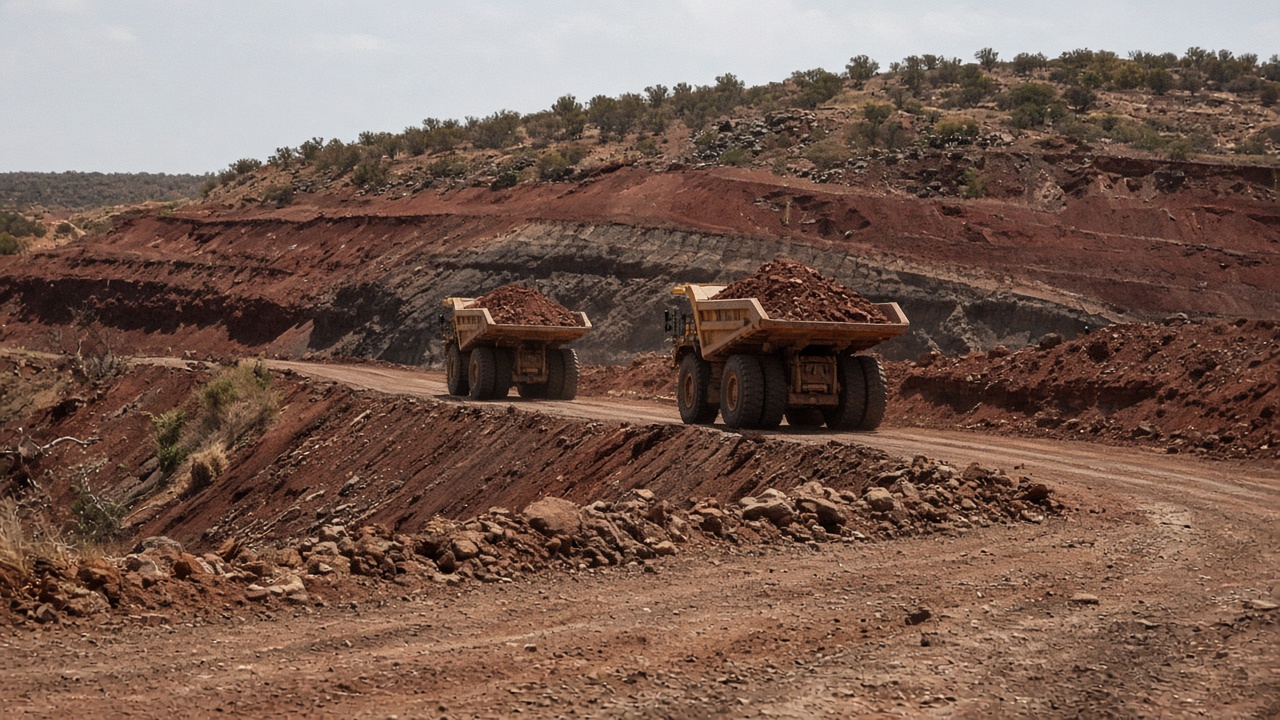
Pilbara Minerals jumped as much as 7.4 percent on Tuesday after the company said its latest battery-grade spodumene concentrate auction cleared near US$4,000 a dry metric tonne, a price that reassured investors lithium spot weakness earlier in the year may be stabilising.
Auction mechanics
The Perth-based miner runs a digital auction platform for cargoes from its Pilgangoora operation, giving downstream converters a transparent price discovery tool. Tuesday’s lot attracted multiple bids from Chinese and Korean customers, according to people familiar with the process, with the winning bid landing just above the prior week’s midpoint.
Chief executive Dale Henderson said the result reflected “tighter chemical-grade supply” as Chinese converters brought idled lines back online ahead of fourth-quarter electric vehicle production targets. He cautioned that auction prices can move sharply week to week and should not be read as a long-term contract reset.
Peer reaction
Shares in Mineral Resources and Liontown Resources also rose, though both lagged Pilbara’s move as investors weighed project execution risk. The S&P/ASX 200 Materials index outperformed financials, helping the broader benchmark hold flat despite selling in the major banks.
Macquarie analysts said a sustained US$3,800–4,200 band would place most Australian spodumene producers above breakeven on a cash basis, excluding corporate overheads. They kept “neutral” ratings on several names, arguing Chinese inventory rebuilds could fade once October export data prints.
Demand and policy context
Lithium pricing collapsed in 2024–25 as Chinese cathode makers worked through stockpiles built during the pandemic-era EV boom. Canberra’s critical minerals production tax credit, passed earlier this year, has not yet flowed to Pilbara’s accounts but underpins expansion studies at Pilgangoora’s mid-stream chemical plant joint venture with POSCO.
Henderson said Tuesday’s auction did not change the company’s capital allocation timetable for that downstream project, which remains subject to Korean partner approvals and Western Australian environmental permits.
Risks on the horizon
Traders noted iron ore and copper also firmed overnight, suggesting a broader China-linked commodity bid after softer United States payrolls data. If Beijing tightens credit to property developers again, lithium demand could soften regardless of auction prints.
Pilbara will report September-quarter production volumes next week. Investors want evidence that mining rates recovered after maintenance in August without blowing out unit costs. For now, the auction screen is doing the talking—and it is speaking loudly enough to move the ASX lithium pocket higher on a quiet Tuesday session.
Shipping and port capacity
Pilbara Minerals loads concentrate through Port Hedland, where berth queues lengthened in August after a maintenance outage at a neighbouring iron ore terminal. Henderson said Tuesday’s cargo would sail on schedule, avoiding demurrage penalties that squeezed margins in the June quarter.
Chinese import customs data due later this month will show whether converters are rebuilding inventories or merely covering hand-to-mouth chemical plant runs. Traders in Singapore watch the Pilbara auction screen as a leading indicator alongside Fastmarkets assessments published weekly.
Retail shareholders on hotcopper forums debated whether to take profits after the seven percent spike; institutional holders contacted by InfoHandle were more focused on dividend policy at the November annual meeting.
What happens next
Officials and executives contacted by InfoHandle said they would publish further detail when audits complete, stressing that early figures can shift as more data arrives from registries, hospitals or trading desks. Analysts cautioned against treating a single day’s price move or one regulatory letter as proof of a lasting trend.
Consumer groups urged households to read updated product disclosures and to lodge complaints with regulators when timelines slip. For investors, the episode fits a broader pattern of tighter oversight across Australian finance, energy and health markets as Parliament returns for spring sittings.
State and federal agencies promised coordinated messaging so businesses do not face conflicting guidance. Whether that cooperation holds through the election cycle will determine how quickly confidence recovers in the sectors affected.
Local media will track implementation milestones weekly; our desk will update readers if material corrections or retractions are issued by primary sources.