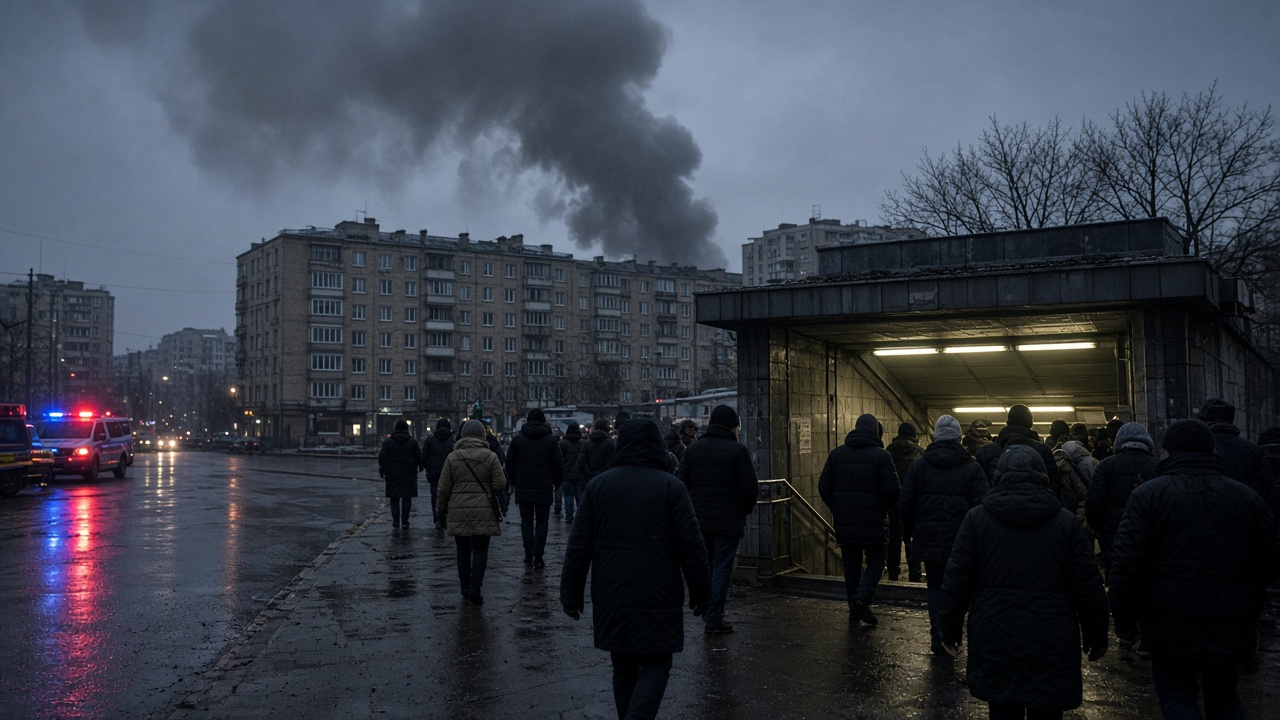
Multiple explosions shook Kyiv in the early hours of Tuesday, local time, as Russia combined cruise missiles and drones in another large strike on the capital. The barrage landed on Oct. 7, the 74th birthday of Russian President Vladimir Putin, and followed a day in which President Volodymyr Zelensky had publicly urged Ukrainians not to ignore air-raid alerts ahead of what he said was likely to be a heavy attack.
What residents reported overnight
Journalists in Kyiv described blasts around 3:15 a.m., with smoke visible from several districts including areas near the Podil neighborhood. Ukraine’s Air Force had earlier warned that several Tu-95 strategic bombers were operating toward the border, a pattern that often precedes long-range missile salvos.
The night was not a single wave. Drones approached the capital around 9 p.m. on Monday, triggering an alert that lasted until shortly before 10 p.m., according to Air Force postings. After a brief lull, the heavier mix of weapons returned in the hours before dawn.
Zelensky’s warning and Moscow’s tempo
Zelensky said on Monday that intelligence pointed to preparations for a large-scale strike and asked civilians to go to shelters when alarms sounded. His message came as Russian forces have repeatedly targeted Kyiv’s bridges and infrastructure in recent days, and after a prior night of attacks that damaged vehicles in the city.
Russia’s Defense Ministry, which typically publishes aggregate intercept figures after major Ukrainian drone operations, had reported downing hundreds of Ukrainian unmanned aircraft over the preceding 24 hours across several regions, including occupied Crimea and the Sea of Azov. Ukrainian officials, meanwhile, have been bracing for retaliatory air campaigns whenever their own long-range drone sorties spike.
Regional fallout beyond Kyiv
The strike on the capital unfolded as European governments continued to harden air defenses along NATO’s eastern flank. Sweden’s government said it would send Patriot batteries to eastern Poland to help protect a logistics hub that funnels weapons to Ukraine, and Polish leaders have cited intelligence warnings about hybrid drone and missile pressure on countries supporting Kyiv.
Black Sea shipping also remained under strain. Bulgarian authorities were still searching for crew members missing after drone attacks on merchant vessels off the country’s coast, while Ukraine’s leadership has tied maritime security to any future diplomatic openings.
What happens next
Ukrainian emergency services were assessing damage and any casualties from the latest wave, details that often emerge hours after strikes in dense urban areas. Air Force channels continued to post updates on remaining threats and debris fields.
For residents of Kyiv, the practical instruction remained the one Zelensky emphasized before the attack: treat every alert as live until officials stand down the warning. With bomber sorties and combined missile-drone packages still part of Russia’s playbook, Ukrainian commanders expect the capital to stay on short notice through the week.