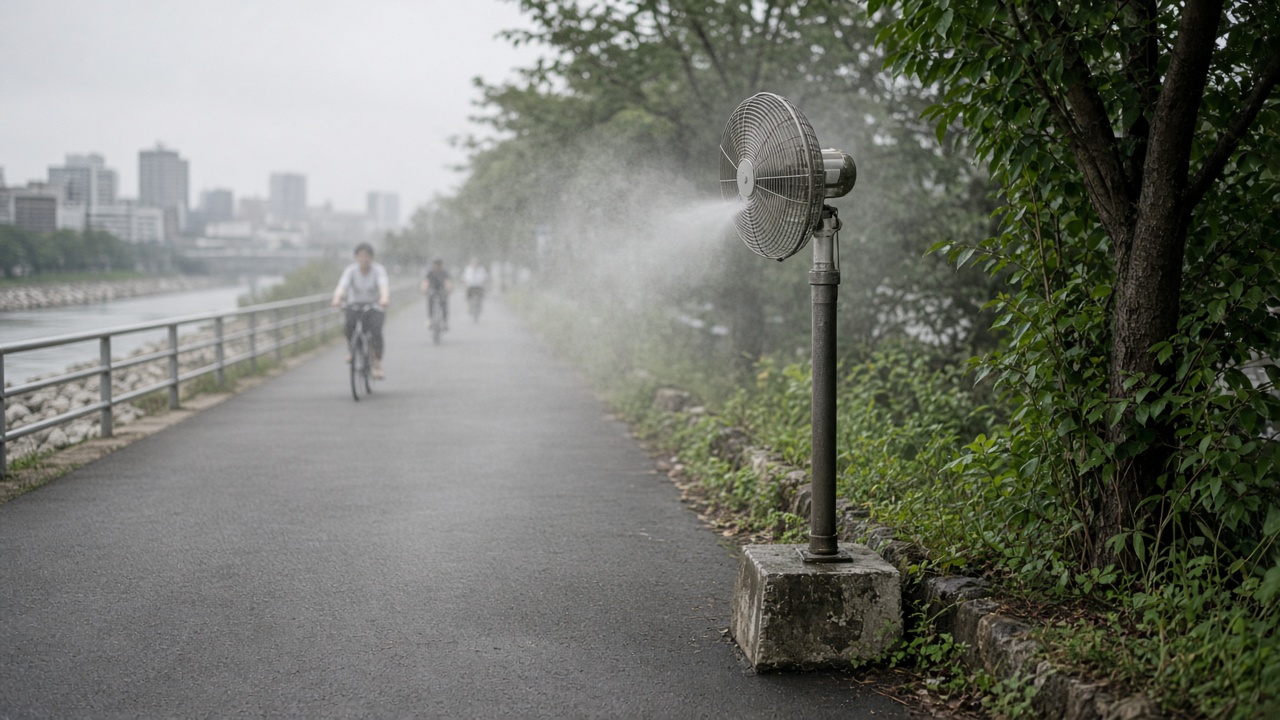
Saitama Prefecture opened misting cool-down stations along three Arakawa and Ayase river bike paths Tuesday after hospital data showed September heatstroke admissions among weekend cyclists rose 18 percent from a year earlier.
Where riders can stop
Units near Ageo, Kawaguchi, and Soka spray potable mist for 30-second intervals when users press a foot pedal, reducing skin temperature without soaking clothing. Signs in Japanese and English list emergency numbers and advise drinking before thirst sets in. The prefecture timed the rollout ahead of October fun runs that draw commuter cyclists who keep training after work hours.
Why cyclists show up in heat data
Emergency physicians said many patients arrived with core temperatures above 40 degrees Celsius after midday rides when river breezes masked humidity. Unlike motorists, cyclists cannot run air conditioning; helmet ventilation traps heat. Saitama’s stations complement convenience-store rest areas that saw bottled-water sales spike during late-September heat advisories.
Funding and limits
The 42 million yen pilot uses disaster preparedness funds normally reserved for typhoon shelters. Maintenance crews drain nozzles nightly to prevent legionella growth. If usage stays high through the Saitama International Marathon in November, the prefecture will add solar-powered fans at two additional points.
How JMA advisories shaped the timing
The Japan Meteorological Agency issued repeated heat-stress advisories across the Kanto plain in late September, with Saitama recording several days when wet-bulb globe temperature indices exceeded ministry thresholds for outdoor labor. Prefectural officials said they cross-checked hospital admission timestamps with those advisories and found weekend spikes clustered on Saturdays when recreational clubs stage century rides along the Arakawa cycling road. The health bureau briefed municipal fire departments Tuesday so ambulance crews know misting coordinates when dispatchers receive heatstroke calls from GPS-tagged mobile phones along the river levees.
Lessons from Tokyo waterfront parks
Tokyo Metropolitan Government has operated misting equipment in bayside parks since the 2020 Olympics legacy upgrades, and Saitama planners toured those sites before specifying foot-pedal triggers rather than always-on spray that wastes treated water. Ageo’s unit sits near a prefectural cycling rest hub that already logs thousands of weekend passes; Kawaguchi’s placement targets riders who connect from the Musashino line after work. Community sports associations in Soka received laminated maps showing station locations in both Japanese and English, mirroring signage standards the prefecture uses for disaster evacuation routes. Officials from Chiba and Ibaraki prefectures attended Tuesday’s walkthrough, asking whether strain on emergency rooms might justify similar pilots on Edogawa river paths that draw riders from across the capital region.
Marathon season and volunteer coordination
The Saitama International Marathon in November draws recreational cyclists who taper on river paths the week before race day, and prefectural health staff said they would station volunteers at misting points during peak arrival weekends. Hospital liaison officers plan to share anonymized admission timestamps with sports federations so club coaches can adjust training schedules when heat advisories overlap with long rides. The 42 million yen pilot’s disaster-preparedness funding line also covers nightly nozzle drainage crews, a maintenance regime public-health officials said is non-negotiable after legionella outbreaks elsewhere prompted stricter misting standards. If October fun runs and November marathon traffic keep pedal counts high, solar-powered fans at two additional river points could be approved before winter training blocks begin. Prefectural health bureau staff said they would publish weekly usage counts through November so neighboring municipalities can compare admission data with their own emergency-room heatstroke statistics.
National policymakers debating Takaichi’s food-tax relief have not linked grocery prices to outdoor exercise safety, yet public-health officials argue both affect household budgets. Neighboring Tokyo already operates similar misting points in waterfront parks; Saitama’s version targets long-distance cyclists who bypass urban parks. Convenience-store rest areas along the Arakawa corridor reported bottled-water sales spikes during late-September heat advisories, reinforcing why the prefecture paired retail stops with new misting hardware this week. Units spray potable mist for 30-second intervals when riders press the foot pedal, a design chosen to cool skin without soaking jerseys.