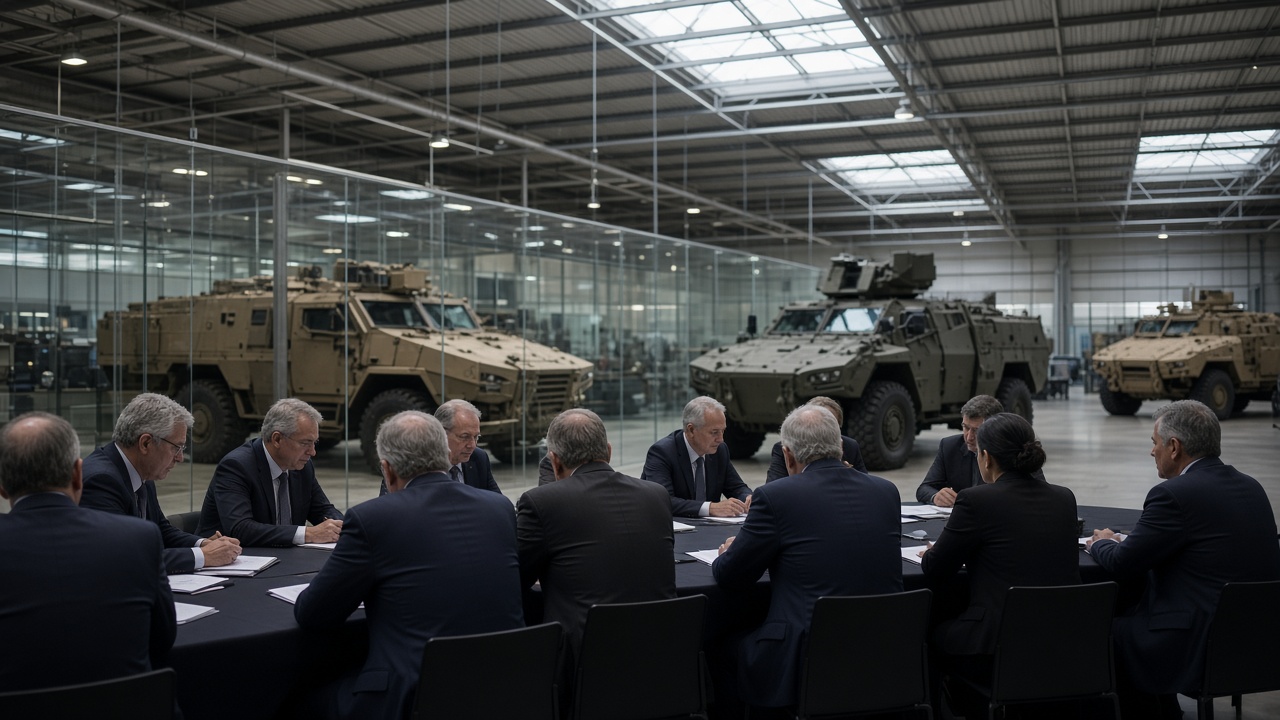
Australian and Indian defence industry leaders convened in Perth on Wednesday at a roundtable tied to the Land Forces International Land Defence Exposition, the first major industry forum since Prime Minister Anthony Albanese and Prime Minister Narendra Modi issued a joint declaration on defence and security cooperation in Melbourne in July.
The Australia India Institute hosted the session with support from the Department of Defence, framing the meeting as a shift from ministerial statements to supply-chain conversations: which platforms, components and research programs can be co-developed, and how export controls on both sides will be navigated.
From summit language to factory floors
At the July annual summit, the two governments announced an annual defence ministers’ dialogue, more complex combined exercises and work on a memorandum of understanding for defence articles and services. Wednesday’s roundtable was meant to tell Australian primes and Indian public-sector undertakings what those commitments mean for bidding, offset rules and technology transfer.
Australia India Institute chief executive Lisa Singh said the Indo-Pacific partnership would “strengthen regional stability” only if industry could integrate capabilities, not merely exchange delegations. Participants were expected to map overlapping priorities — maritime domain awareness, unmanned systems, logistics support under the mutual logistics arrangement — against each country’s procurement calendars.
Perth as a defence-industry stage
Holding the roundtable alongside Land Forces places the talks inside Australia’s largest land-defence trade show, where Canberra has been keen to showcase local armor, communications and sustainment vendors to Indo-Pacific buyers. Indian delegations have grown at recent expos as New Delhi diversifies suppliers beyond traditional Russian and European lines.
Officials on both sides have also reiterated Australia’s role as a uranium supplier for India’s civil nuclear program, a constraint that shapes how sensitive defence technologies can be shared. Any final defence-articles memorandum will have to align with those export regimes and with Australia’s AUKUS commitments.
The Department of Defence did not immediately publish a communique listing contracts signed on the expo floor. Industry attendees said the immediate goal was matchmaking: pairing Australian SMEs with Indian tier-one integrators ahead of the next bilateral exercise season.
For Albanese’s government, the Perth event is a chance to show defence industry jobs in Western Australia benefit from the India partnership, not only east-coast shipbuilding programs. For Modi’s delegation, it is a visible step toward the “comprehensive strategic partnership” both capitals declared after years of slow defence trade growth.