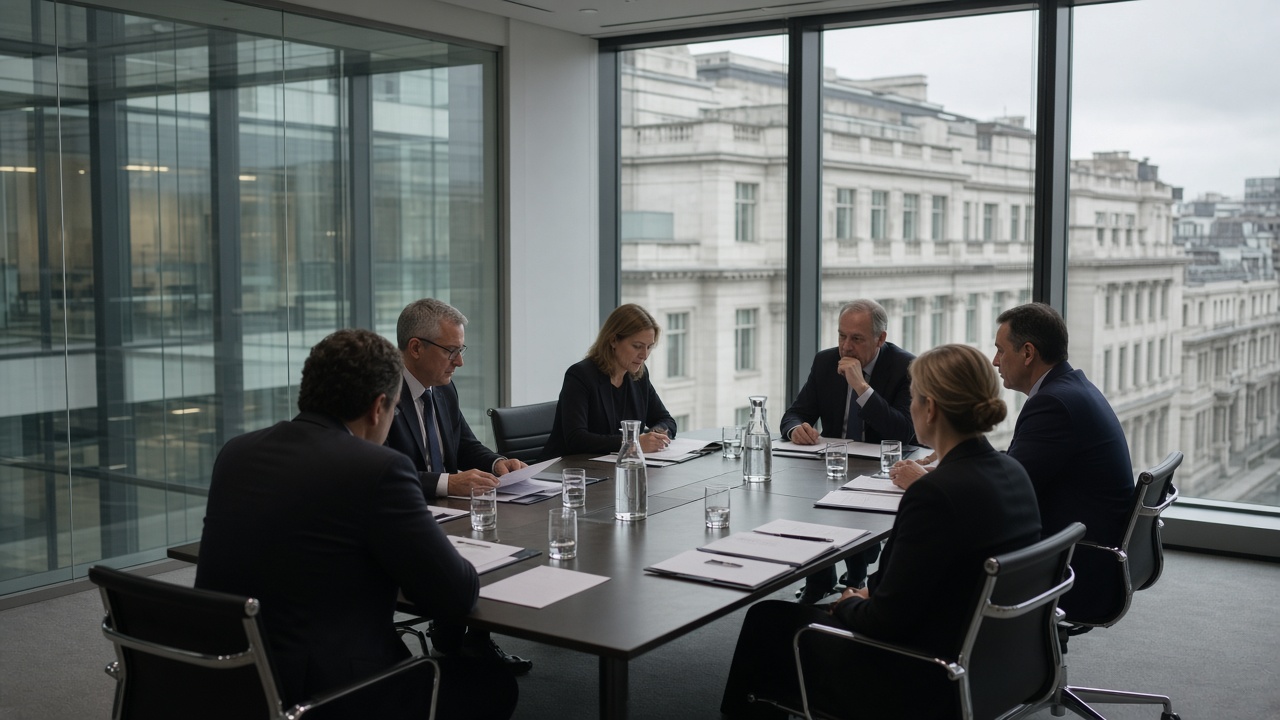
Chancellor John Healey told Britain’s largest bank chief executives on Tuesday that the fiscal outlook remains “challenging,” offering no commitment on whether November’s Budget will lean on a higher banking surcharge, tighter Basel III buffers, or a mix of both. The closed-door session, reported by City commentators and confirmed in briefing notes circulating among lenders, landed as gilt yields eased from last week’s spike but markets still price a near-certain Bank of England rate move before Christmas.
What bankers heard
Healey’s message, according to executives who attended, was deliberately non-committal on headline tax rates while stressing that any revenue-raising measure must be seen as part of a wider growth plan. Housing Secretary Angela Rayner has previously argued for lifting the sector surcharge from three per cent toward the eight per cent level that applied before Jeremy Hunt trimmed it. Analysts at Jefferies told clients this week that swapping a blunt surcharge hike for more flexible capital rules could raise between £1 billion and £2 billion in near-term receipts without the same drag on lending appetite—if the Treasury publishes the trade-offs.
Why the timing hurts
Banks are already fielding questions from shareholders about persistent-debt rules and the cost of holding gilts on balance sheets after the volatility that followed Middle East supply shocks. Iwoca’s annual report, also released this week, underscored how non-bank lenders are capturing satisfaction scores from small firms even as traditional branches retrench. Healey’s team is under pressure to fund welfare and defence commitments without repeating the mini-Budget shock of 2022, when gilt markets repriced UK risk within hours.
Executives leaving the meeting said Treasury officials asked for written scenarios on how a five per cent surcharge would flow through to net interest margins versus a staged release of countercyclical capital buffers. None of those submissions have been made public, which leaves opposition MPs arguing the government is negotiating in private while retail borrowers face higher mortgage quotes.
Investor read-through
London bank shares have lagged the broader FTSE 100 rebound that followed softer Brent prices on Monday, with traders treating defence and energy names as the immediate winners from calmer commodity markets. For domestic lenders, the more binding constraint may be funding costs tied to long gilt yields rather than the corporate tax line alone. If Healey opts for a surcharge increase without simultaneous clarity on implementation of global Basel standards, credit strategists say syndicated loan margins for mid-market firms could widen by single-digit basis points before year-end.
The Chancellor is expected to hold a second pre-Budget session with insurers and asset managers later this month. Until then, bank treasuries are likely to keep shortening the duration of their liquidity portfolios, a defensive posture that helps balance sheets but does little to expand net lending to first-time buyers in the South East.
What comes next
Labour backbenchers want any bank levy to be paired with measurable lending targets for regional small and medium enterprises. The Treasury has not endorsed that linkage. Healey’s office said only that discussions with the sector will continue and that policy will be set out at the Budget. For now, the story is less about a leaked rate and more about whether the government will show its arithmetic before asking the City to absorb another bill.
Small-business spillover
Regional lenders told InfoHandle that any surcharge hike would arrive just as the British Business Bank’s guarantee schemes roll off for hospitality firms carrying pandemic-era debt. While the Treasury has expanded the Recovery Loan Scheme for exporters, accountants in Manchester and Bristol said clients are delaying capex until Budget day clarity lands. Healey’s team has promised a “pro-business” statement, but without published numbers the Federation of Small Businesses says members cannot model wage increases for 2027.
Insurers attending a parallel session on cyber premiums echoed bank concerns about operational resilience spending. If AI vendors raise prices after the Bank of England’s July warning, combined tax and insurance bills could squeeze mid-market firms harder than the large banks Healey hosted on Tuesday.