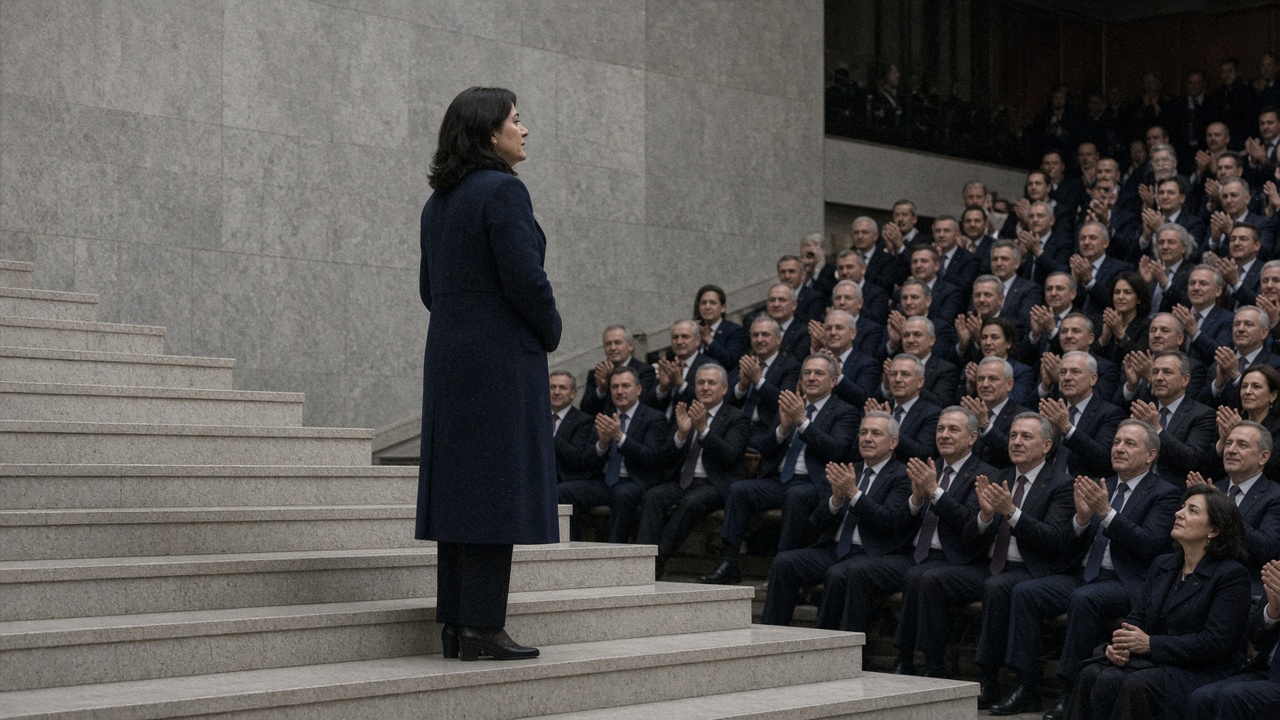
Kosovo’s parliament elected Justina Shiroka Pula as the country’s seventh president in the first minutes of Wednesday, giving her 81 votes in the 120-seat legislature — one more than the two-thirds majority required — and clearing a constitutional deadline that would otherwise have forced a new general election.
The vote ended weeks of deadlock that had spilled onto Pristina’s streets. Opposition supporters protested Tuesday over cases at the Kosovo Specialist Chambers in The Hague, while party leaders raced to settle on a compromise candidate before the clock ran out.
A cross-party deal averts snap polls
Prime Minister Albin Kurti’s Vetevendosje Movement and the opposition Democratic Party of Kosovo agreed on Shiroka Pula’s candidacy, a pairing that gave her a broader parliamentary base than recent presidents who relied on narrower coalitions. Failure to elect a head of state would have dissolved the assembly and sent voters back to the polls for the second time since June.
“This mandate does not belong to just one person. It belongs to our citizens,” Shiroka Pula told lawmakers after the tally, according to Reuters. “I will be the president of all citizens.”
Reporting from Pristina described the ballot as held shortly before midnight on Tuesday, with 83 members present. Kurti later called the outcome a sign of “institutional stability” on social media, while opposition leaders framed the deal as protecting the country from another destabilizing campaign season.
Who Shiroka Pula is — and what protesters wanted
Shiroka Pula, 73, is an economics professor and president of Kosovo’s Academy of Sciences and Arts. She served as economy minister from 2008 to 2011 and previously sat in parliament for the PDK. She becomes Kosovo’s third woman president, following Atifete Jahjaga and Vjosa Osmani.
The presidency is largely ceremonial, but the office carries weight in a young republic still negotiating its place in Europe. Wednesday’s inauguration outside the government building included a handover of the constitution and presidential keys, according to local outlets.
Demonstrators had demanded political action on the Specialist Chambers, the Hague-based court handling former Kosovo Liberation Army cases. As part of the election bargain, parties also agreed to pursue amendments to the legal framework governing the court — a concession aimed at calming the street without collapsing the government.
What comes next
Shiroka Pula now faces the quieter work of unifying a polarized capital after a near-miss on elections. Western diplomats had watched the deadline closely; another snap vote would have reopened questions about governance in one of Europe’s poorest states.
Parliament must still translate the Specialist Chambers compromise into law, and opposition groups that stayed off Tuesday’s deal could test the new president early. For now, Kosovo has a full set of institutions again — elected by a single vote to spare.