Japanese manufacturers are uploading factory safety checklists to match METI’s Version 1.2 AI business guidelines as Digital Minister Toshiharu Furukawa prepares a late-October review of the year-old AI Basic Act.
Guidelines meet shop floors
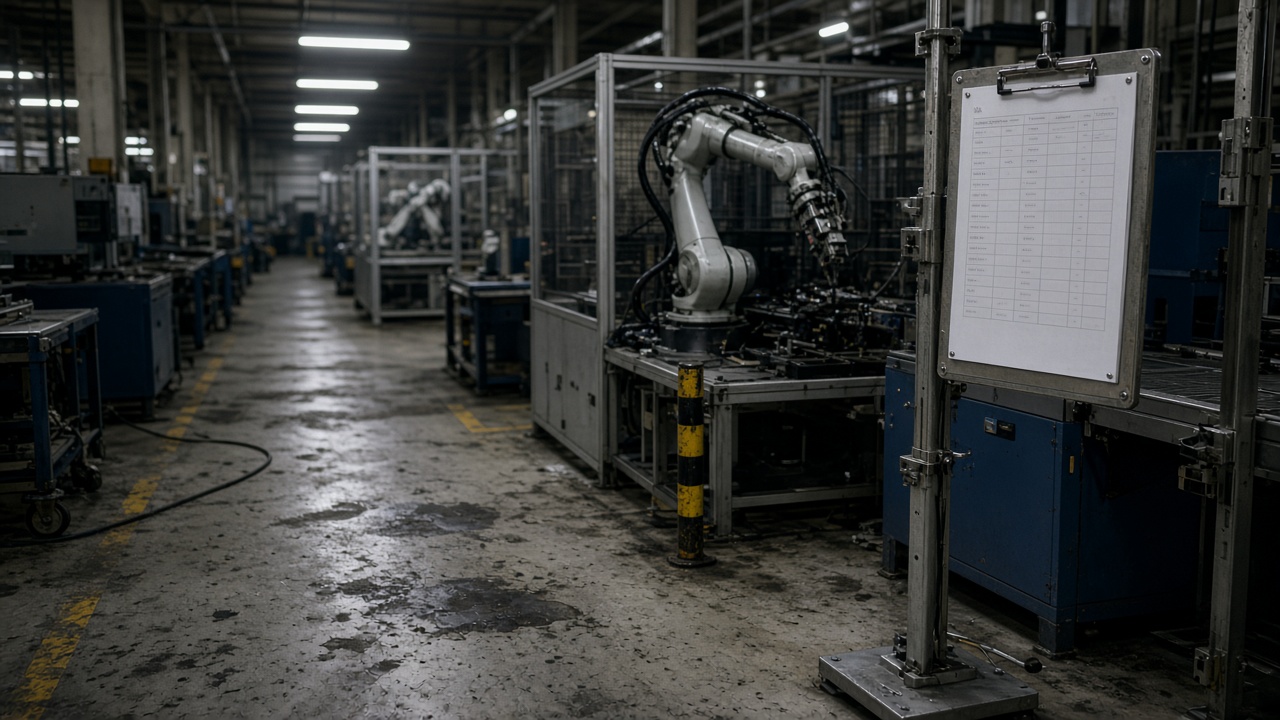
The March 2026 revision merged earlier governance documents into a single lifecycle framework covering procurement, deployment, and incident logging. Auto parts makers and electronics plants use the template to document how vision systems monitor welds or how large language models summarize maintenance logs without exposing trade secrets.
Unlike the European Union’s binding AI Act, Japan’s approach remains soft law—firms volunteer compliance to win government contracts and insurer discounts. METI secretariat staff said Version 1.2 added clearer expectations for human oversight when models recommend shutdowns on production lines.
Regulatory calendar
Furukawa told reporters Monday that a panel will study whether malicious AI operators need penalties beyond today’s disclosure rules. Deepfake fraud and autonomous agents probing corporate networks were cited as gaps the Basic Act did not fully address when it passed last year.
In parallel, the Cabinet Office will open a web form on October 19 for companies to flag rules blocking robot deployment, autonomous vehicles, or agentic software. Submissions feed the Council for Promotion of Regulatory Reform and may influence revisions to the national AI Basic Plan approved in July.
Factory pilots in focus
Hitachi, FANUC, and smaller Nagoya suppliers have publicized “physical AI” partnerships that pair sensors with generative models. Plants testing those stacks must show auditors where training data lives, how outputs are validated before actuators move, and what happens when models hallucinate torque settings.
Export-heavy firms also watch U.S. scrutiny of frontier models that probe external systems. METI officials want Japanese plants to document red-team tests so customers in North America and Europe trust cross-border data flows.
What comes next
Hard law changes require Diet time, and the extraordinary session is already crowded with food-tax legislation. For now, Version 1.2 uploads are the practical compliance step plant managers can finish this month while lobbyists prepare October pain-point filings.