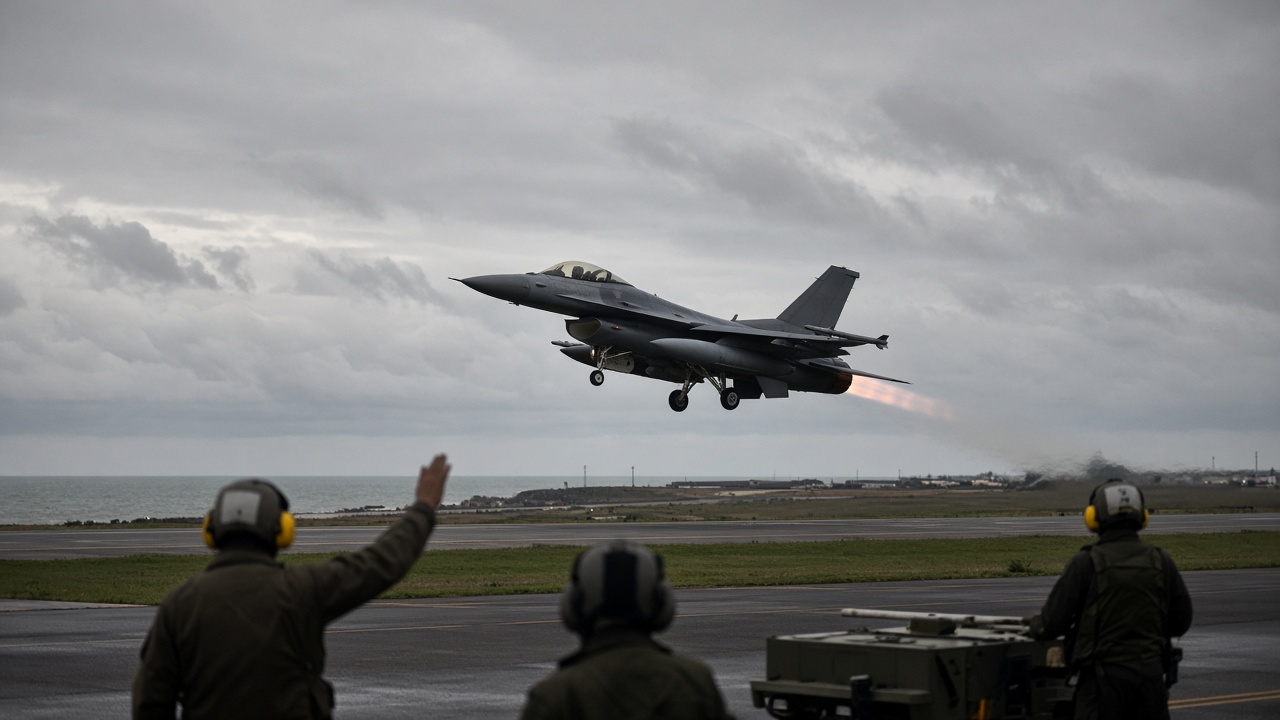
Taiwan's Ministry of National Defense said China's military flew 14 aircraft and drones toward the island from mid-afternoon Tuesday in another joint combat readiness patrol, with nine platforms crossing the Taiwan Strait median line into northern and central airspace while coordinating with People's Liberation Army warships. The sortie landed four days before Taiwan's Oct. 10 National Day events and marked the fifth such patrol Taipei has publicly logged in just over a month.
Median-line crossings return
In an evening statement, the ministry said the flights included fighters and support aircraft operating with surface vessels under the Eastern Theater Command, the PLA formation responsible for pressure campaigns around Taiwan. Crossing the median line—an informal boundary both sides once treated as a buffer—has become a routine signal during political windows in Beijing and Taipei.
Taiwanese outlets including Newtalk quoted defense officials saying ROC forces tracked the group with combat air patrols and missile systems, responding under existing rules of engagement. The ministry did not attribute a single motive to the timing but noted the patrol coincided with rehearsals for the National Day ceremony in front of the Presidential Office.
Holiday pressure pattern
Analysts cited by Taiwan-focused defense media counted four publicly announced joint readiness patrols in September alone, on the 5th, 9th, 17th, and 30th. Tuesday's activity extends that cadence into China's week-long National Day holiday, when PLA units often raise alert levels across coastal commands.
Beijing has not issued a separate statement matching Taipei's aircraft tally, but state media regularly describe such missions as training to safeguard sovereignty. The PLA also flew balloons and drones in earlier September tranches that Taipei classified separately from traditional fighter sorties, complicating how analysts compare year-over-year totals.
Strait stakes before Oct. 10
Taiwan is preparing layered air defenses and civil mobilization drills around National Day, when leaders deliver addresses watched closely in Washington and Tokyo. Any sustained median-line presence during rehearsal week forces ROC pilots to cycle more frequently and raises the risk of miscalculation if intercepts crowd congested approach corridors to Taipei Songshan and Taoyuan airports.
Officials in Taipei reiterated that they will continue to publish track data to allies and will not negotiate away patrol rights in response to PLA flights. Japan's defense ministry, which tracks PLA movements around the southwestern islands, has not linked Tuesday's patrol to new notices, but Tokyo routinely shares radar feeds with Washington when median-line crossings spike.
For now, the bulletin is numerical—nine crossings, fourteen total tracks—but the pattern shows Beijing is willing to keep pressure elevated even as cross-strait tourism and trade remain constrained. Legislators from the opposition and ruling camps both called for continued transparency in the daily MND graphics, arguing that voters heading into National Day weekend deserve a clear picture of airspace risk without alarmist rhetoric.