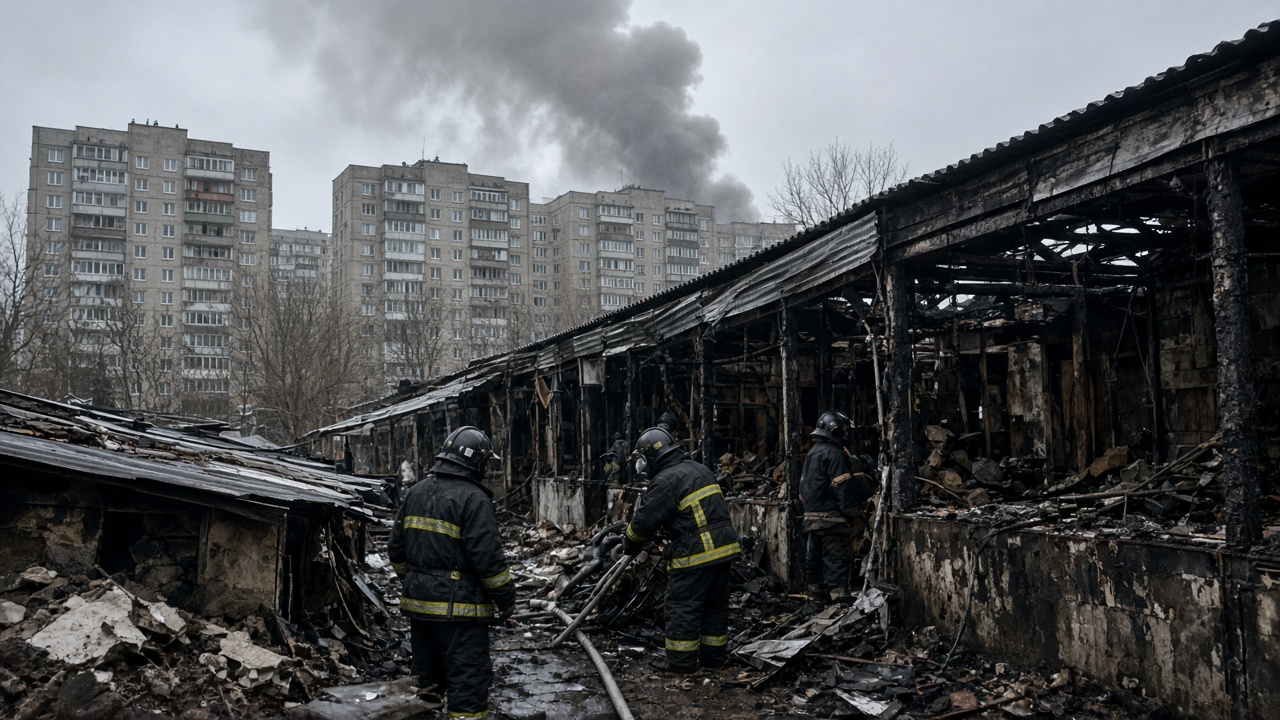
Russia fired ballistic missiles and drones across Ukraine before dawn on Wednesday, killing at least 11 people and injuring more than 34 in strikes that President Volodymyr Zelenskyy said targeted energy infrastructure and civilian blocks from Kyiv to Chernihiv region.
Moscow’s defence ministry said its forces carried out a “massive strike” on military and energy targets in Kyiv and other regions, including port facilities in Odesa and sea vessels linked to Ukrainian armed forces. Ukrainian officials gave a different accounting, describing apartment buildings, garages and warehouses ablaze as rescue crews pulled survivors from rubble in freezing rain.
What changed overnight
Zelenskyy said the barrage hit Pryluky, Dnipro, Kremenchuk, Zaporizhzhia and the capital, calling it “one of the most vile strikes” of the war and framing the assault as a “birthday gift” for Russian President Vladimir Putin, who turned 74 on Wednesday. Ukraine’s foreign minister, Andrii Sybiha, said Russian generals had delivered “war crimes” as a present and urged partners to tighten sanctions on missile production and expand air-defence support before winter.
In Kyiv, Mayor Vitali Klitschko said two people were killed in the densely populated Darnytskyi district when a fire broke out during the attack. Emergency workers rescued two others from the blaze before finding the bodies. Reuters images showed firefighters hosing smouldering garage complexes and residents walking past shattered glass as air-raid alerts continued to sound across the city.
Energy and interceptors
Ukrainian grids and substations have absorbed repeated Russian missile campaigns for three winters. Zelenskyy said ballistic weapons remain the hardest threat to intercept and that Ukraine is still hunting Patriot missiles and other Western air-defence packages capable of stopping them. Energy officials have not yet published a full damage tally, but social media footage from Pryluky showed a residential tower with collapsed floors, and the state emergency service posted images of crews stabilising a damaged apartment block in Chernihiv region.
Russia’s ministry did not detail civilian casualties and rarely acknowledges strikes on urban areas. Independent verification of each impact site is ongoing, but the combined death toll reported by Zelenskyy exceeds the two fatalities Klitschko confirmed in Kyiv alone, suggesting additional losses in regional cities.
What partners are weighing
Sybiha linked the strikes to diplomatic pressure, repeating Kyiv’s push for a special tribunal on the crime of aggression and warning that accountability for Russian leaders would eventually reach The Hague. Western capitals have not announced new military aid in the immediate hours after the attack, though the timing — on Putin’s birthday and weeks before another heating season — is likely to feature in this week’s NATO and European Union discussions on ammunition and generator shipments.
For residents in Kyiv, the practical question is how long repaired power lines will hold. Sirens have run day and night for weeks, and officials continue to urge people to shelter in basements and metro stations whenever drones or missiles approach. Wednesday’s deaths add to a steady climb in civilian losses each time Russia combines ballistic and cruise weapons in a single wave.