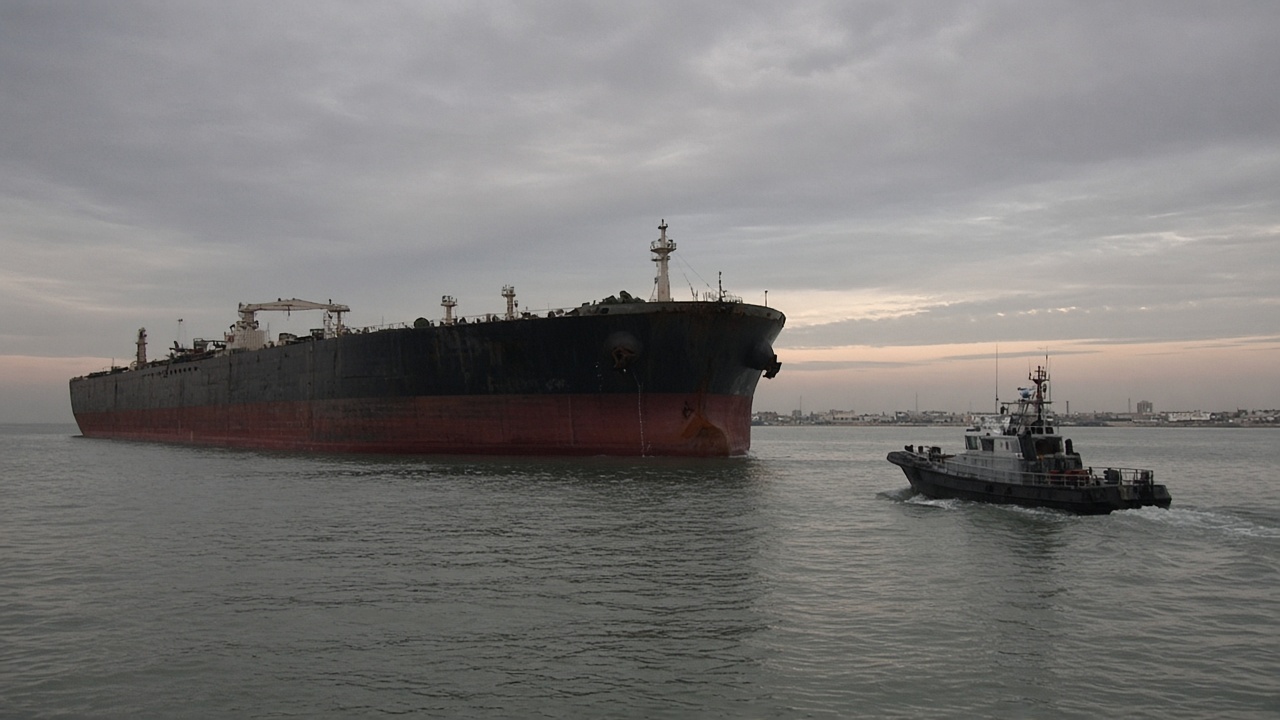
A tanker transiting the Arabian Gulf reported being hit by multiple projectiles on Tuesday evening about 51 nautical miles north of Madinat ash Shamal, Qatar, and casualties were reported aboard, the United Kingdom Maritime Trade Operations center said in a verified warning.
What UKMTO reported
UKMTO, which is operated by the Royal Navy and tracks commercial traffic in high-risk waters, logged the incident at 1900 UTC on 7 October. The bulletin classified the event as an attack and said authorities were investigating. It did not name the vessel, its flag, cargo, or the number of people hurt, following the agency’s usual practice for initial alerts.
The position sits in open Gulf waters roughly 300 miles from the Strait of Hormuz, the narrow exit through which much of the region’s oil and liquefied natural gas moved before the wider Middle East war intensified shipping risk this year. TradeWinds and other maritime outlets noted that if confirmed, it would be among the first reported strikes on a tanker in the western half of the Gulf in weeks, outside the heavily contested Hormuz approaches.
Why the location matters
Since the U.S. and Israeli campaign against Iran expanded earlier in 2026, Iran has restricted transit through Hormuz and fired on vessels Tehran says crossed without authorization, while Washington has maintained a counter-blockade and occasional strikes on Iranian-linked shipping. Most recent tanker incidents publicized by insurers and naval trackers have clustered nearer Hormuz, where U.S. airborne patrols have tried to shield a coastal corridor.
Analysts quoted by maritime trade press said American surface combatants no longer maintain a significant presence west of the strait, and the U.S. Navy’s former Fifth Fleet hub in Bahrain has been drawn down as drone and missile threats pushed forces to more defensible bases. That leaves Qatar, Kuwait, Saudi Arabia, and Bahraini export routes more exposed to opportunistic attacks even when Hormuz itself is partially guarded.
Market and diplomatic context
Qatar is one of the world’s largest liquefied natural gas exporters, and any confirmed projectile strike off its northern coast would be watched by European and Asian buyers already paying risk premiums on Gulf cargoes. UKMTO advised vessels in the area to transit with caution and to report suspicious activity, but did not issue a wider exclusion zone in its first notice.
Diplomatic efforts to pause the regional war have stalled for months, and Qatari mediators were still awaiting an Iranian response to a U.S. counterproposal on nuclear issues as of this week, according to reporting from Washington. Until investigators identify the projectile source and the tanker’s identity is released, insurers and charterers are likely to treat the bulletin as a signal that the risk map for Gulf tankers has widened again—not just around Hormuz.
What happens next
UKMTO said the report was source-verified, meaning the agency had direct contact with the ship or a trusted relay, but further detail typically follows once coastal states and the vessel’s operator publish statements. Shipping databases and Lloyd’s market reporters will be watching for AIS gaps, port diversions, or injury manifests that could confirm severity.
For now, the attack remains an unclaimed strike in a lane that feeds global energy markets. Any escalation in the western Gulf would test whether limited U.S. patrols can be extended—or whether owners begin avoiding the entire basin except under government escort.