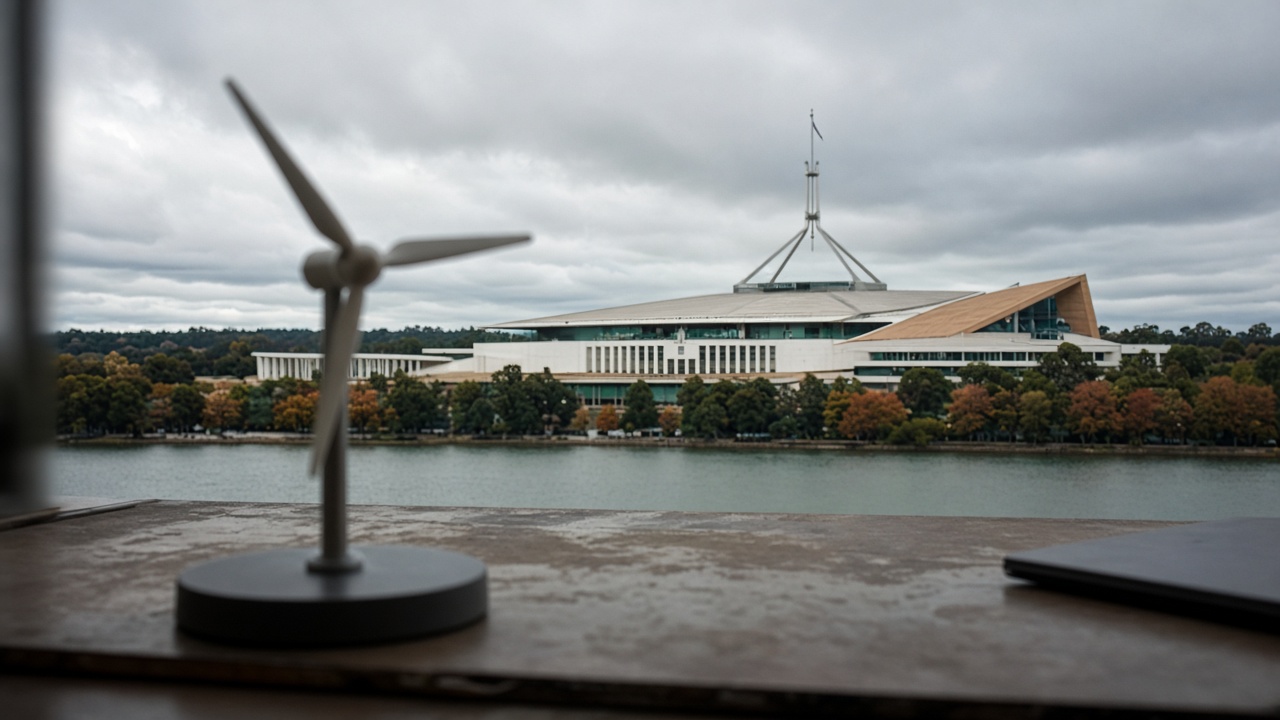
Stakeholders have until Friday to lodge submissions on Australia’s proposed mandatory AI standards, the first tranche of rules that will move the government from voluntary guidance to enforceable obligations on large data-centre developers. Industry and Innovation Minister Tim Ayres used a round of broadcast interviews to stress that standards will initially target energy, water, siting and community outcomes at hyperscale sites, rather than regulating every workplace chatbot.
The consultation sits inside a wider National AI Plan that also establishes an AI Safety Institute to test frontier models and an Office of AI inside the Department of the Prime Minister and Cabinet to coordinate policy across portfolios. Existing privacy, consumer, online-safety and copyright laws remain the baseline; the standards are meant to fill gaps where infrastructure scale creates national risks.
Copyright and training data
Ayres reiterated that the government has ruled out a broad text-and-data-mining exemption for AI training, leaving Attorney-General Michelle Rowland to work through payment mechanisms with media and creative industries. Prime Minister Anthony Albanese told a business audience that AI training must occur “on Australia’s terms,” a line aimed at both domestic voters and foreign labs negotiating data-centre deals.
Unions, including the ACTU, want worker consultation requirements embedded in standards for AI deployments that affect rosters, surveillance or safety systems. Ayres said large data-centre rules are the first priority, but acknowledged that workplace standards will be debated as the government responds to submissions.
What developers need to model
Grid operators and state planning ministers have grown vocal about water use and backup diesel at proposed campuses in Sydney’s west and Melbourne’s north. Mandatory standards could force developers to publish net energy and water accounts, or to locate where renewable capacity already exists. Treasury’s foreign investment framework already signals that aligned projects move faster through review.
Smaller AI vendors argue that a data-centre-first approach ignores consumer-facing harms such as deepfakes and automated decision making in welfare systems. The AI Safety Institute’s mandate includes sharing test results with regulators such as the ACCC and the OAIC, which may eventually recommend sector-specific rules without waiting for a second standards tranche.
With the Friday deadline approaching, law firms and infrastructure funds are racing to file detailed comments on definitions—what counts as a “large” centre, how offsets are verified, and whether legacy facilities must retrofit. Canberra’s message is that Australia wants AI investment, but not at the expense of power bills and dry catchments. The submissions box will show how sharply industry pushes back on that bargain.