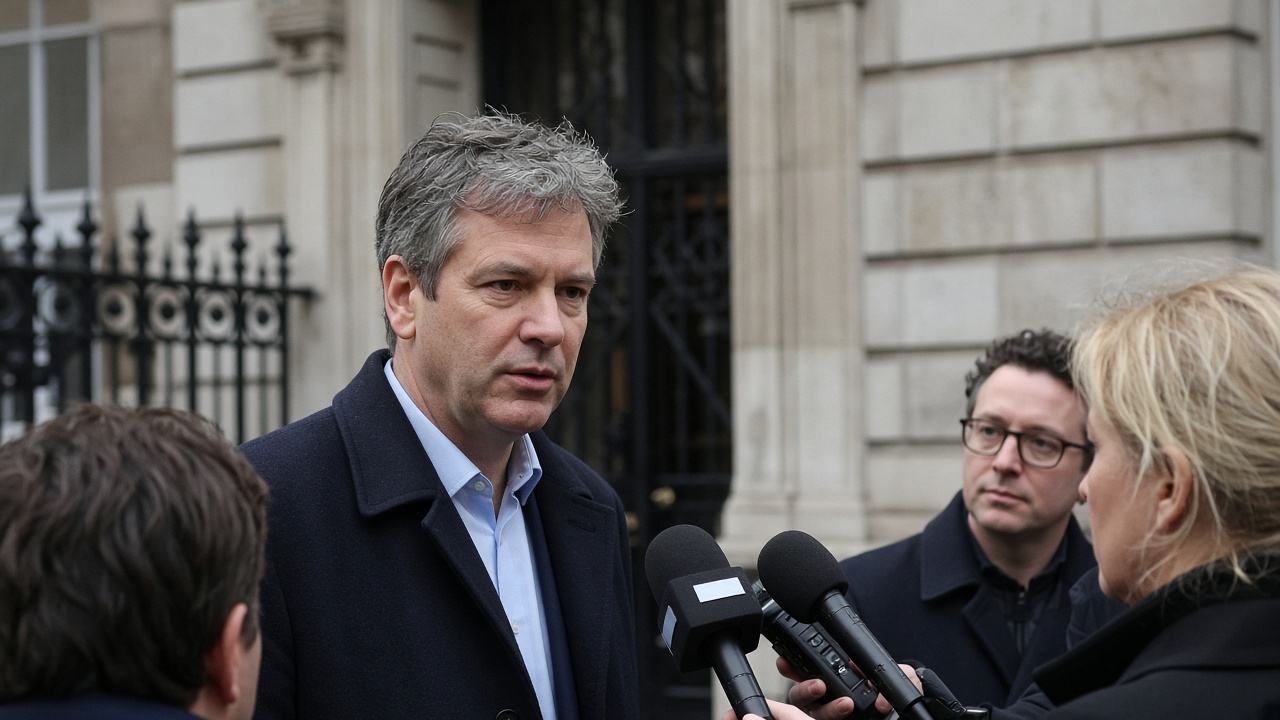
Northern Ireland Secretary Chris Bryant said the government will table a "big package of amendments" on Monday to its Troubles legacy bill, telling The Independent that former service personnel should not face repeated prosecutions decades after the conflict.
Bryant, four months into the role, framed the changes as an answer to veterans' fears of "lawfare" while insisting there is "no equivalence" between lawful security force operations and terrorist violence. The pledge lands amid renewed scrutiny of special forces actions after The Independent's podcast SAS: The Shadow War featured operators describing split-second decisions during covert missions.
What Labour's bill would change
Conservative legacy legislation in 2023 offered conditional immunity and limited how evidence to the Independent Commission for Reconciliation and Information Recovery could be reused in court. Labour's replacement Troubles bill, now before Parliament, removes several protections that veterans groups say shielded regular and special forces personnel involved in operational killings.
Bryant said Monday's amendments will explicitly bar the new Legacy Commission from reopening processes already completed elsewhere. "I don't want people to have to undergo processes time and time and time again," he told the newspaper.
Operational context in law
One amendment, Bryant said, will require decision-makers to "bear in mind the operational context in which somebody was functioning" when weighing cases involving veterans. He reiterated that more than 300,000 personnel served under Operation Banner between the 1970s and 1990s.
Veterans who spoke to the podcast cautiously welcomed the direction but warned that unpublished draft text makes analysis impossible before Monday. An SAS commander involved in the 1991 Coagh operation that killed three IRA members said "hasty law is almost always bad law" and urged ministers not to rush.
Families and unanswered killings
Bryant argued the legislation must still deliver information to bereaved families on all sides. He described meeting a man in Northern Ireland who still sees the person he believes murdered his father in a shop, with no official acknowledgment of the killing.
He said roughly a quarter of legacy cases raised by families relate to murdered service personnel and about 17 percent to police victims, figures he used to stress that "terrorism" drove many deaths. Critics of immunity-style provisions counter that narrowing prosecutions risks closing routes for families seeking accountability.
What happens next
MPs will see amendment text when it is lodged for Monday's proceedings. Veterans' legal advisers are preparing line-by-line analysis, while nationalist and unionist parties will test whether Bryant's operational-context language satisfies Belfast's political red lines. For Westminster, the fight is timing: deliver protections service groups demand without collapsing cross-community support for a commission meant to replace endless court cycles.