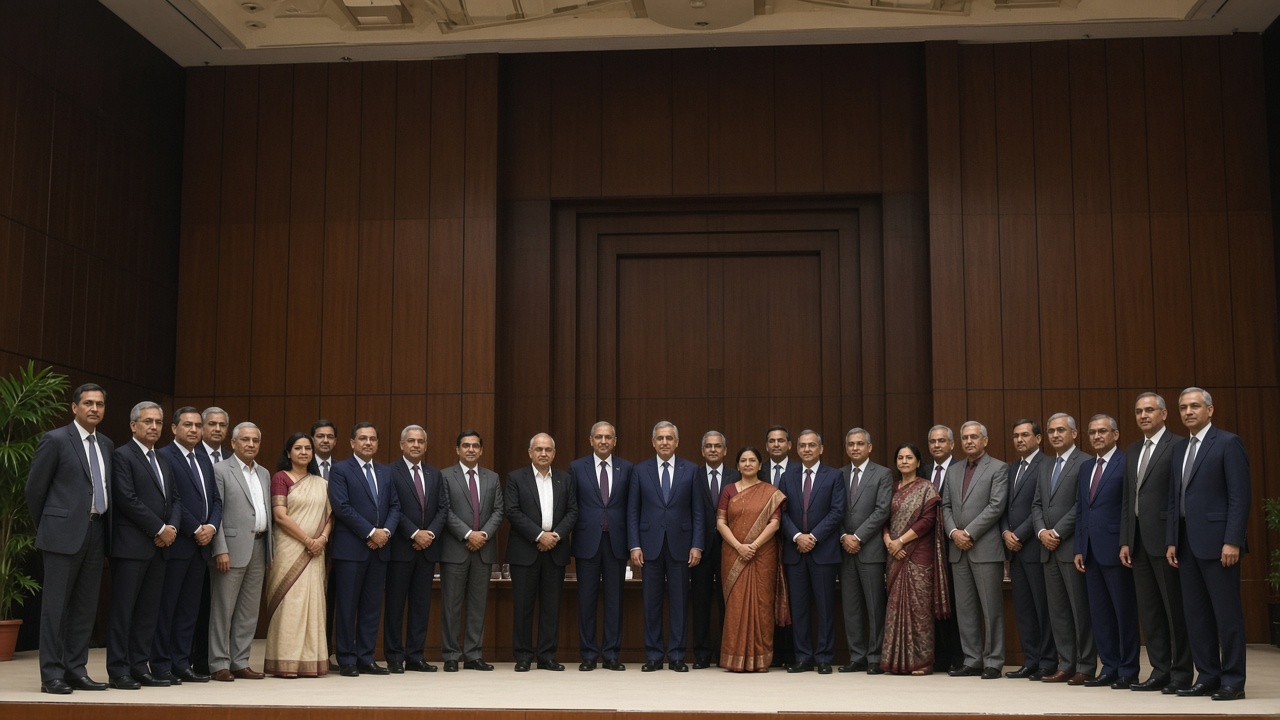
India’s GST Council voted Thursday to revoke arrest powers for goods-and-services tax officers and to raise the monetary threshold for launching prosecutions to ₹5 crore from ₹1 crore, a pair of administrative changes that shift how the nationwide levy is enforced even as opposition parties staged parallel protests over election administration in Delhi.
What ministers decided in New Delhi
Union Finance Minister Nirmala Sitharaman chaired the 57th Council meeting at Bharat Mandapam, with state finance ministers from Jammu and Kashmir, Haryana, Karnataka, Delhi and other governments joining a group photograph before negotiations. The Finance Ministry said rate structure questions are now “settled,” allowing the Council to focus on day-to-day compliance mechanics rather than headline slab changes.
Officials told reporters that GST rate adjustments will be limited to once-a-year windows, giving businesses a more predictable calendar after years of ad hoc tweaks. The Ministry did not immediately publish full legal text, but secretariat notes circulated to states said arrest powers would be formally withdrawn through forthcoming rules and amendments.
Why the prosecution bar moved
Traders and chartered accountants have long argued that the ₹1 crore prosecution trigger exposed small and mid-sized firms to criminal risk for accounting disputes. Raising the bar to ₹5 crore aligns with demands from industry chambers that tax differences should be resolved through audits and tribunals before prosecutors become involved.
Opposition-led states had pressed for safeguards on input-tax-credit denials as well. The Council responded by creating a committee of officers to study how to protect buyers who hold valid invoices, received goods and paid suppliers in full. That panel must report within three months, with recommendations slated for the next Council agenda.
Political backdrop in the capital
The tax meeting unfolded as INDIA bloc lawmakers continued demonstrations demanding the resignation of Chief Election Commissioner Gyanesh Kumar over a Special Intensive Revision of voter rolls. Congress leader Rahul Gandhi led MPs to Raj Ghat on Thursday, and Delhi Police said they were reviewing video evidence from earlier confrontations near Jantar Mantar.
Government spokespeople insisted the GST decisions were unrelated to the election row, framing them as technical improvements after a September rate rationalisation. Still, the dual headlines—administrative easing for businesses and street-level tension over electoral rolls—underscored how New Delhi’s policy calendar and protest politics are running on parallel tracks this week.
What businesses should track
Accountants said companies should watch for circulars clarifying how officers may still invoke summons, attachment orders and penalty proceedings once arrests are off the table. States with large manufacturing bases, including Gujarat and Tamil Nadu, had pushed for faster dispute resolution; they welcomed the committee on input credits but warned that three months is a long window for exporters awaiting refunds.
For now, the Council’s message is that enforcement will emphasize documentation and higher-value cases, not midnight arrests at factory gates—a shift that could calm nerves ahead of the Diwali sales season even as political fights over voter lists show no sign of easing.