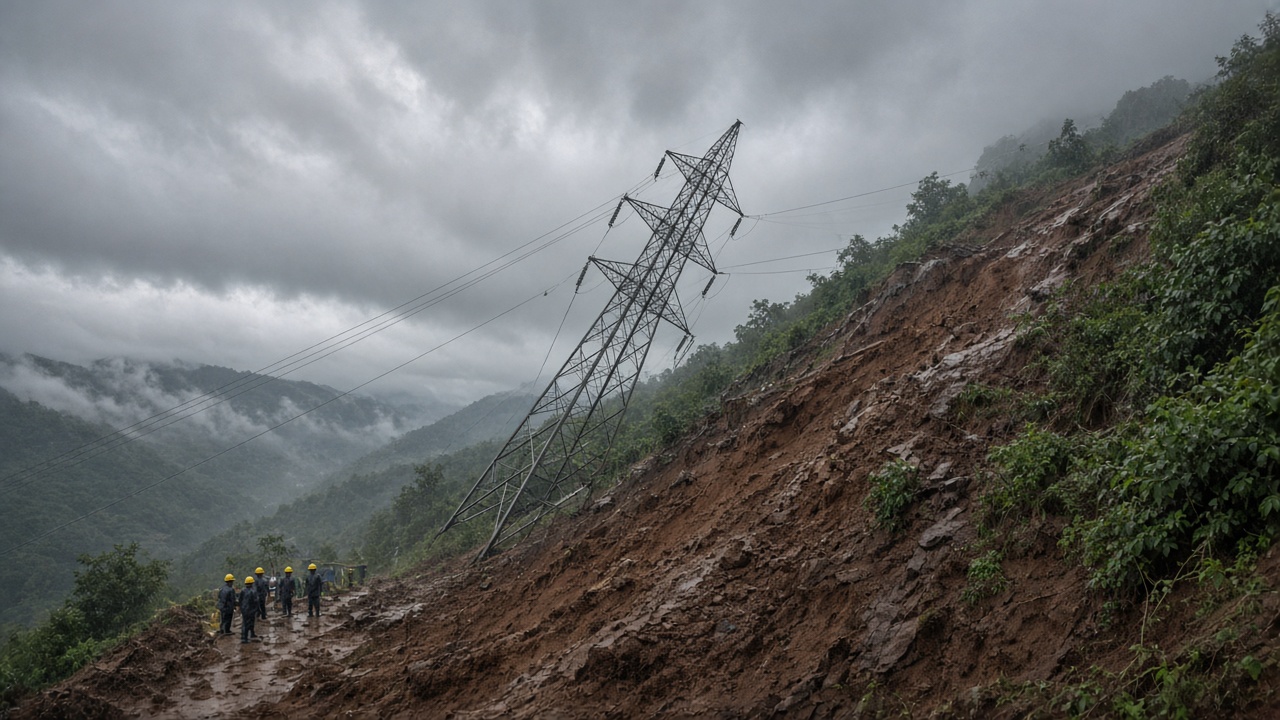
Kerala State Electricity Board announced four-hour rotating load-shedding across Ernakulam district starting Thursday morning after a monsoon landslide tore down a 110 kilovolt transmission line near Aluva. The outage plan affects industrial estates in Kalamassery and Kakkanad as well as coastal feeders in Fort Kochi, where tourism operators had booked full houseboats for the long weekend.
What failed on the grid
Board engineers said saturated soil on a rubber estate hillside pulled down two towers on the line that imports power from the Idukki hydro complex when local generation dips. Crews cannot restring conductors until geotechnical teams certify the slope, a process that may take 72 hours if rain continues.
Backup diesel generation at the Cochin Special Economic Zone is limited to critical pharmaceutical plants, leaving seafood exporters scrambling for cold-storage alternatives. The Kochi Metro said it will run trains on stored traction power but warned of reduced frequency if feeder substations in Aluva stay offline.
Political pressure
Opposition legislators demanded an emergency session briefing on right-of-way maintenance, noting similar landslide damage in 2024 that triggered shorter outages. Power Minister K. Krishnankutty told reporters the government will compensate small businesses if outages exceed the published schedule, though details on eligibility were not released.
Consumer impact
Residential feeders will rotate by zone numbers published on the KSEB mobile app. The board asked large consumers to shed at least 30 percent of contract demand during peak evening hours to keep hospital circuits stable.
Kerala relies on hydro imports during dry spells, making transmission corridors through the Western Ghats a perennial monsoon vulnerability. Until the Aluva line returns, Ernakulam’s economy runs on diesel gensets and patience—both in short supply during festival week.
Grid planning
KSEB has long studied a second 220 kV corridor through the Ghats to reduce dependence on the Aluva line, but land acquisition stalled in ecologically sensitive stretches. Wednesday’s collapse revives financing questions about underground cabling in landslide-prone segments, which costs more but fails less often during storms.
Hotels along the backwaters switched to candle-lit dinners for booked tables, while fish auctions moved earlier to beat afternoon outages. The tourism department asked homestays to disclose generator availability on booking platforms so travellers are not surprised at check-in.
Industrial response
Seafood processors in Willingdon Island rented portable gensets at spot diesel prices nearly 20 percent above contract rates, squeezing margins on shrimp exports timed for Japanese holiday demand. Pharmaceutical plants in Kalamassery operated on captive gas turbines but limited air-conditioning in packaging halls, raising humidity concerns for tablet coating lines.
The Kerala High Court declined an urgent plea to exempt hospitals from rotation, noting that critical care units are already on protected feeders. Private hospitals in Kochi said they have 48 hours of diesel for backup generators if outages run longer than scheduled.