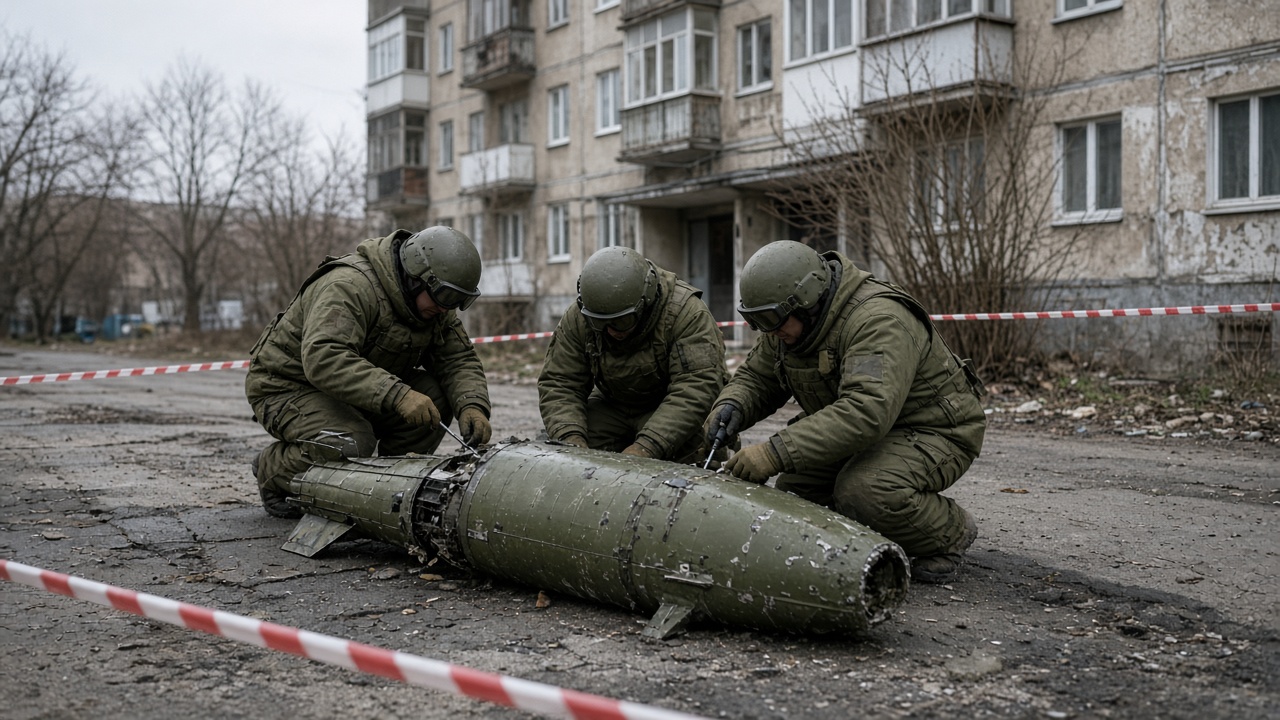
Kyiv police said bomb disposal specialists defused two unexploded ballistic missile warheads on Thursday, each weighing roughly half a ton, after the munitions landed near residential buildings during another night of Russian strikes on the capital. The operation unfolded as Ukraine's national grid operator ordered emergency power cuts in Kyiv and as rescuers in northern Pryluky continued to pull bodies from an apartment block hit a day earlier.
What police confirmed in Kyiv
The Kyiv force said technicians worked through the morning to make safe the two warheads, which had come down intact rather than detonating on impact. Officials did not publish street-level coordinates, citing security, but described the scene as apartment blocks in densely built districts where residents had already spent hours in shelters. No additional injuries were reported from the disposal work itself.
The disclosure followed a drone and missile barrage late Wednesday that police said struck the Obolonskyi and Desnianskyi districts, killing four people and wounding 12, including four children. Those strikes were part of a wider Russian campaign that also targeted commuter buses in Kramatorsk and a five-story building in Pryluky, where authorities have counted at least 22 dead.
Power cuts compound the crisis
Ukraine's largest private energy company, DTEK, said national grid operator Ukrenergo had instructed emergency outages in Kyiv, suspending the scheduled rolling blackouts that households had been following for weeks. DTEK warned that the emergency regime could last through the weekend depending on damage assessments and repair crews' access to high-voltage lines hit in earlier attacks.
Residents in several districts told local broadcasters they were charging phones at metro stations and boiling water on camping stoves because elevators and pumps were offline. City officials urged people to stay near shelter spaces when air-raid alerts sounded, noting that intact warheads can remain volatile for days after a strike.
How this fits the week's pattern
Ukrainian officials have framed the past 48 hours as among the deadliest for civilians away from the front line since spring, with Moscow launching combined missile and drone salvos while Kremlin spokesman Dmitry Peskov told reporters he saw no "clear path" to a negotiated end to the war. Ukraine's military, meanwhile, claimed long-range strikes on Russian energy and technology sites, including a petrochemical complex near Salavat and a Yandex cloud campus that the company said was burning.
For Kyiv's emergency services, the unexploded warheads underscored a separate risk from the headline casualty counts: even when interceptors or malfunctions prevent a full blast, heavy ordnance can turn apartment courtyards into no-go zones until engineers finish their work. Police asked residents who discover fragments or intact munitions to call dedicated hotlines rather than attempting to move debris.
What happens next
Prosecutors opened a criminal investigation into the overnight strikes under Ukrainian laws on violations of the laws and customs of war. International observers said documenting intact warheads could assist later accountability efforts, though battlefield access remains limited. In the capital, officials said normal scheduled outages would resume only after Ukrenergo lifts the emergency order, leaving households to plan around unpredictable blackouts as autumn temperatures drop.